

Coffee, Tea or Soda Stains? What Professional Teeth Whitening Can and Can’t Remove
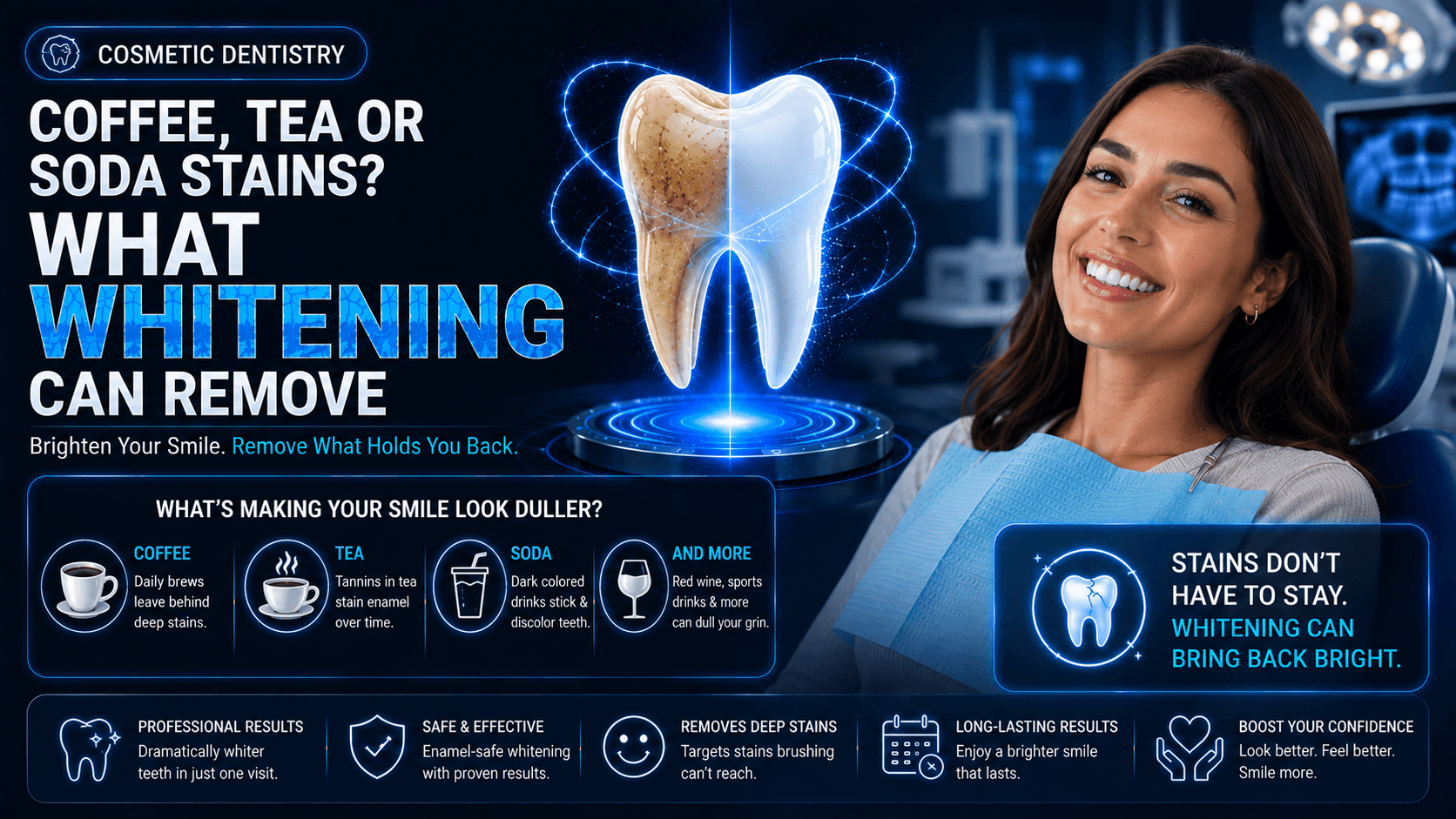
Coffee before work, tea throughout the day or a regular glass of dark-coloured soda can gradually change the appearance of teeth. These drinks contain pigments and compounds that can contribute to visible staining, particularly when exposure is frequent.
Professional whitening can improve many forms of discolouration, but it cannot correct every colour change in the same way. Before searching for teeth whitening services nearby, it helps to understand whether the staining is external, internal or related to dental restorations.
That distinction determines not only how well whitening may work, but also whether bleaching is the appropriate cosmetic treatment in the first place.
Why Do Coffee and Tea Stain Teeth So Easily?
Enamel appears smooth, but its surface can retain pigments from foods and drinks over time.
Coffee and tea contain chromogenic compounds that can contribute to external staining. Tea also contains tannins, which can facilitate the accumulation of coloured compounds on the tooth surface.
Frequent exposure matters. Someone who drinks several cups throughout the day repeatedly exposes the teeth to staining substances, particularly if oral hygiene is inadequate or plaque is allowed to accumulate.
Staining may become more noticeable:
- Around grooves and irregularities in enamel
- Between teeth
- Near the gumline
- Around areas where plaque accumulates
- On teeth with rougher surface texture
Professional cleaning can remove certain external deposits, while bleaching is intended to alter colour within the natural tooth structure.
What About Soda?
Soda can present a slightly different issue.
Dark-coloured varieties contain pigments that may contribute to staining, while many carbonated drinks are also acidic. Repeated acid exposure can temporarily soften the enamel surface and contribute to erosion over time.
This means discolouration associated with soda consumption is not always simply a matter of pigment sitting on healthy enamel.
As enamel becomes thinner through erosion, the naturally more yellow dentine beneath it can become increasingly visible. Whitening may improve tooth colour in some circumstances, but it cannot rebuild enamel that has already been lost.
That is why an oral assessment is useful before beginning cosmetic treatment.
Which Stains Usually Respond Better to Whitening?
Professional bleaching generally works best on natural teeth with discolouration that responds to peroxide-based whitening agents.
Common age-related yellowing and certain dietary stains may respond favourably. The degree of improvement, however, varies from patient to patient.
Professional teeth whitening services nearby can offer greater clinical control because the dentist can first establish whether the colour change is suitable for whitening.
Several factors can influence the final result:
- Starting shade of the natural teeth
- Type and depth of discolouration
- Age-related changes within the tooth
- Previous dental treatment
- Existing restorations
- Enamel and dentine characteristics
Whitening should therefore be approached as an individual treatment rather than a guaranteed number of shades of improvement.
Some Discolouration Is More Difficult to Whiten
Not every dark tooth has been stained by food or drink.
Intrinsic discolouration originates within the tooth rather than simply accumulating on its surface. It can be associated with dental trauma, developmental changes, certain medications during tooth development or changes within the pulp.
These colour changes may respond differently from ordinary coffee or tea staining.
A single tooth that becomes noticeably darker than neighbouring teeth deserves particular assessment. Whitening all the teeth without investigating why one has changed colour could overlook an underlying dental problem.
Crowns and Fillings Will Not Whiten Like Natural Teeth
This is one of the most important limitations of professional whitening.
Crowns, veneers, bridges and tooth-coloured fillings do not respond to bleaching agents in the same manner as natural enamel and dentine.
Imagine a front filling that currently matches the surrounding tooth. If the natural tooth becomes lighter after whitening, the restoration may remain at its original shade and become more noticeable.
Patients considering teeth whitening services nearby should therefore have visible restorations assessed before treatment. This allows potential shade differences to be discussed in advance rather than discovered afterwards.
Professional Cleaning and Whitening Are Not the Same Procedure
The two treatments are sometimes confused.
Professional dental cleaning removes plaque, calculus and certain surface deposits. Teeth may appear brighter afterwards because external build-up has been removed.
Whitening works differently. Peroxide-based agents penetrate the natural tooth structure and chemically alter coloured molecules.
Someone with predominantly surface staining may therefore benefit considerably from cleaning, while another patient may require bleaching to achieve a noticeable change in tooth shade.
A dental examination helps establish which issue is actually present.
Can Whitening Stop Coffee Stains From Returning?
No whitening treatment permanently prevents future staining.
If coffee, tea and pigmented drinks remain regular parts of the diet, discolouration can gradually recur. The speed varies according to consumption habits, oral hygiene and individual tooth characteristics.
Practical measures that may help include:
- Avoiding prolonged sipping of staining drinks
- Rinsing the mouth with water afterwards
- Maintaining consistent brushing and interdental cleaning
- Attending routine professional dental care
- Avoiding tobacco products that contribute to staining
For acidic drinks, repeatedly brushing immediately after consumption may not be advisable because the enamel surface can be temporarily softened.
Know What Whitening Can Realistically Achieve
Professional whitening can produce meaningful improvement in many cases of natural tooth discolouration, including staining associated with coffee, tea and other dietary habits. It cannot replace lost enamel, change the shade of existing restorations or guarantee that every type of intrinsic discolouration will respond equally.
Dual Arc Dental provides professional cosmetic dental care in Schertz, including whitening treatment. Patients looking for teeth whitening services nearby can have their teeth assessed to determine the nature of the discoloration and whether professional whitening is an appropriate option.
Frequently Asked Questions
1. Does professional whitening remove coffee stains?
It can improve many forms of coffee-related discolouration. Surface deposits may also be addressed through professional cleaning, depending on the type of staining present.
2. Are tea stains harder to remove than coffee stains?
Both drinks can contribute to staining. The extent depends on frequency of consumption, oral hygiene and individual tooth characteristics rather than the drink alone.
3. Can professional whitening remove soda stains?
Whitening may improve suitable natural tooth discolouration, but it cannot reverse enamel erosion caused by repeated acid exposure.
4. Will my crowns become whiter during treatment?
No. Crowns, veneers and fillings do not bleach like natural teeth and generally retain their existing shade.
5. Will my teeth stay white if I continue drinking coffee?
Whitening results are not permanent. Regular exposure to coffee, tea and other strongly pigmented substances can gradually contribute to renewed discolouration.