

How Long Does Professional Teeth Whitening Last? Tips to Keep Your Smile White for Years
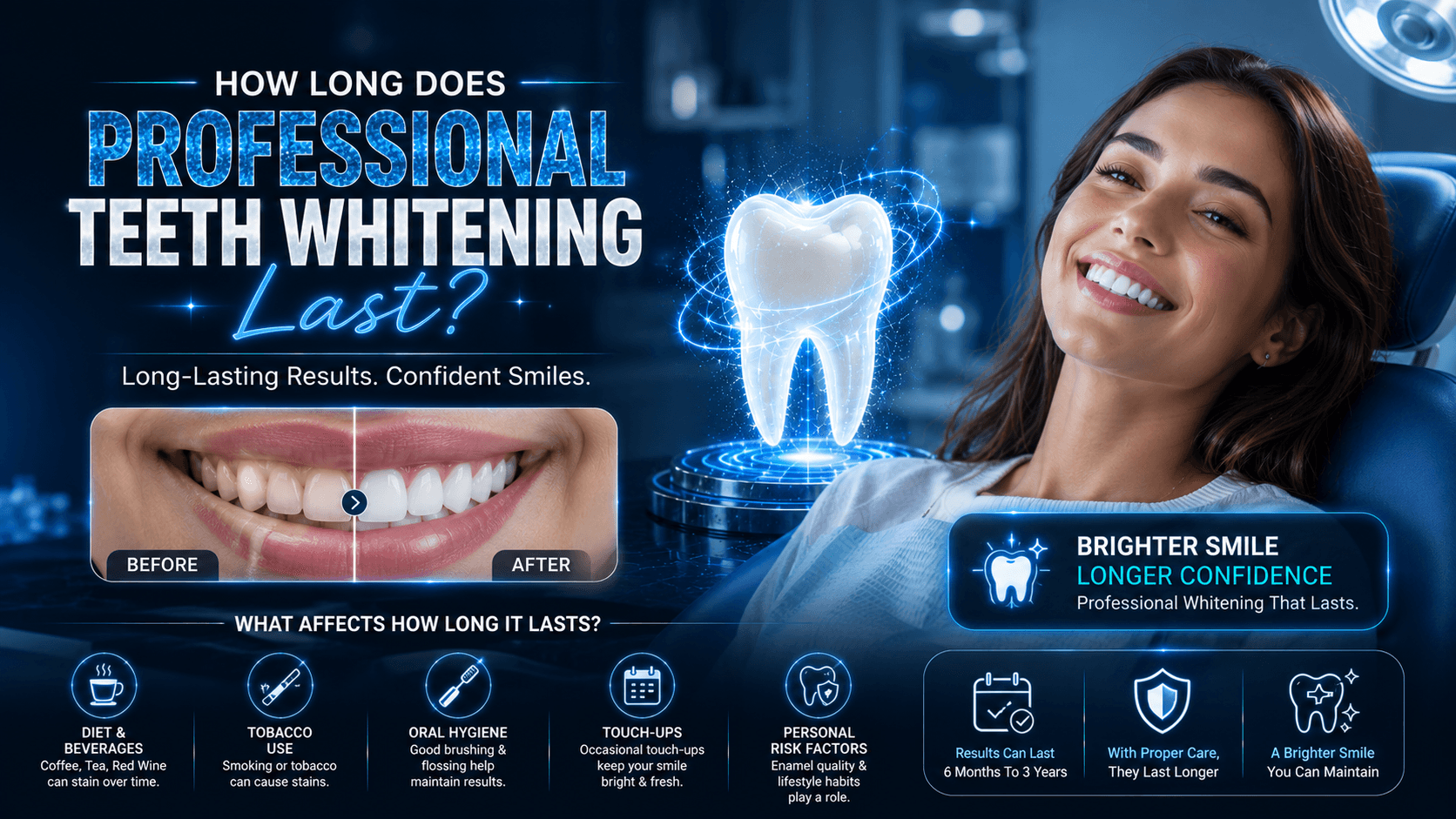
Here's the honest answer most people don't get before they book: professional teeth whitening lasts anywhere from six months to three years. That's a wide range. And the difference between six months and three years has almost nothing to do with the treatment itself, it has everything to do with what happens after.
Professional teeth whitening services work. The results are real, often dramatic, and noticeably better than anything you'll find at a drugstore. But whitened teeth aren't sealed teeth. They still stain. The enamel is still porous. And your daily habits will either protect that investment or quietly undo it.
What Actually Determines How Long Your Results Last?
The bleaching agents used in professional whitening, typically carbamide peroxide or hydrogen peroxide at clinical-grade concentrations, break apart the molecular chains of stain compounds inside the enamel. The tooth gets lighter. That part is reliable.
What's less reliable is the period after treatment. Enamel has microscopic pores. Pigmented food and drink get into those pores. Over time, the stains rebuild. How fast that happens depends on three things:
- What you consume regularly: Coffee, red wine, black tea, tomato-based sauces, and berries are the biggest offenders. Not because they're bad for you, but because their pigment molecules bind aggressively to enamel.
- Whether you smoke: Tobacco stains penetrate faster and deeper than most dietary stains. Whitening results fade significantly faster in people who smoke.
- Your oral hygiene routine: Surface stains that get cleared away during regular brushing and cleanings don't accumulate the way neglected stains do.
None of this is surprising. But knowing it in advance lets you make smarter choices about how to protect what you paid for.
The First 48 Hours Matter More Than Most People Realise
Right after a whitening treatment, the enamel's pores are temporarily more open. This is the window when staining happens fastest. Dentists often call it the "white diet" period.
For 48 hours post-treatment, avoid:
- Coffee and tea (yes, even with a straw)
- Red wine and dark sodas
- Soy sauce, balsamic vinegar, tomato sauce
- Colored sports drinks
- Berries and dark fruits
Stick to water, white foods, and clear liquids. It sounds inconvenient. It is. But protecting this window meaningfully extends how long your results hold.
Practical Habits That Keep Whitening Results Longer
Once the first 48 hours pass, the approach shifts from restriction to maintenance. A few consistent habits make a real difference:
Rinse after staining foods and drinks
You don't need to rush to a bathroom sink after every sip of coffee. A quick rinse with water right after reduces how long pigmented liquid sits against the enamel. Simple. Actually works.
Use a whitening toothpaste, but not every day
Whitening toothpastes use mild abrasives to clear surface stains. Used two or three times a week, they help maintain brightness. Used daily long-term, some formulas can wear enamel. Alternate with a regular fluoride toothpaste.
Don't skip professional cleanings
Plaque and tartar buildup create a surface that stains faster. Twice-yearly cleanings remove that buildup and give your whitened teeth a clean slate. Many people who invest in teeth whitening services extend their results significantly just by staying consistent with their hygiene appointments.
Consider a touch-up schedule
At-home touch-up trays, custom-fitted by your dentist, let you do a brief one or two-night refresh every few months. It's not a full whitening session. It just resets any early stain accumulation before it builds into something that needs the full treatment again.
When Results Fade Faster Than Expected?
A few specific situations accelerate fading that people don't always anticipate:
- Starting whitening before a cleaning: Stained plaque on the tooth surface blocks the bleaching agent from reaching enamel evenly. Whitening after a cleaning always produces better, more even results.
- Tetracycline stains or intrinsic discolouration: These are structural, not surface-level. External whitening lightens them to a degree, but they return faster and require different management.
- Dry mouth: Saliva helps buffer acids and clear debris from the tooth surface. Reduced saliva flow from medications or certain conditions means stains accumulate faster.
The Bottom Line On Making It Last
Professional whitening is an investment in your smile. Like most investments, it pays better when you protect it.
At Dual Arc Dental in Schertz, TX, Dr Viral Patel and Dr Vaidehi Mehta provide professional teeth whitening services alongside personalised aftercare guidance to help patients keep their results longer. Ready to brighten your smile? Call (210) 375-5256 or book your appointment online today.
FAQs
1. How long do professional teeth whitening results usually last?
Professional teeth whitening results can last from six months to three years, depending on your oral hygiene, diet, smoking habits, and how well you follow your dentist's aftercare recommendations. Regular dental cleanings and occasional touch-ups can help extend the results.
2. What foods and drinks should I avoid after professional teeth whitening?
For the first 48 hours, it's best to avoid staining foods and beverages such as coffee, tea, red wine, dark sodas, tomato-based sauces, soy sauce, and berries. These can stain teeth more easily immediately after whitening treatment.
3. Can I drink coffee after getting my teeth whitened?
Yes, but it's recommended to avoid coffee for at least 48 hours after treatment. After that, rinsing your mouth with water after drinking coffee can help reduce surface staining and preserve your whitening results.
4. Will whitening toothpaste help maintain my brighter smile?
Whitening toothpaste can help remove new surface stains and maintain your results when used as directed. However, it won't produce the same level of whitening as professional treatment or significantly change the natural color of your teeth.
5. How often should I have professional teeth whitening?
The ideal schedule varies from person to person. Many patients benefit from periodic touch-ups rather than repeating the full treatment every year. Your dentist can recommend a maintenance plan based on your lifestyle, oral health, and whitening goals.