

What to Do If Your Child Chips, Breaks, or Knocks Out a Tooth
Your child is running around the backyard one minute, playing sport or munching on something tough and the next, they are holding their mouth and crying. The main thing to remember in this case is that an emergency dentist nearby is important to have, but the initial options will be based on what exactly happened. A chipped, broken, loose or knocked out tooth cannot be treated the same.
First, Check Your Child Before Checking the Tooth
Before examining the tooth, always find out if your child is okay.
Other traumas may happen and result in a dental injury, so take some time to assess the situation as well as the mouth.
Check for:
- Injuries to the head, face, jaw, or lips
- Bleeding inside or around the mouth
- Which tooth appears to have been injured
- Broken pieces of the tooth nearby
- Whether the tooth looks loose or has moved from its usual position
- Swelling or difficulty closing the mouth normally
If your child experienced a significant head injury, lost consciousness, has difficulty breathing, or seems unusually confused or unwell, seek appropriate emergency medical care rather than treating the problem as only a dental injury.
Once you know your child is otherwise stable, you can focus on the tooth.
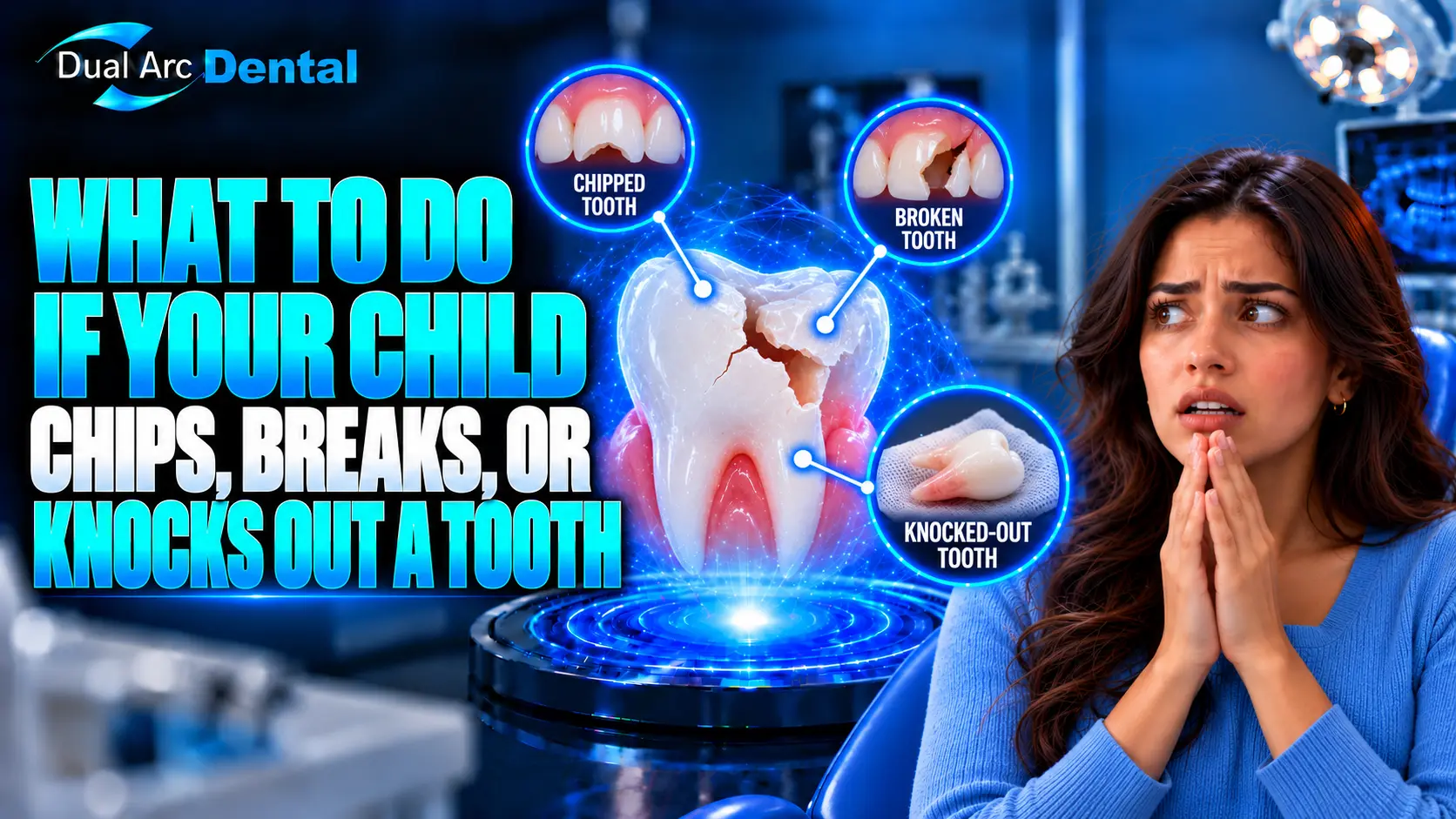
What Should You Do for a Chipped Tooth?
A small chip may look minor, but it is still worth having the tooth checked. Even a relatively small break can sometimes leave a rough edge or expose a more sensitive part of the tooth.
Do
- Rinse your child's mouth gently with clean water.
- Keep any recovered fragment in a clean container and take it to the dentist.
- Use a cold compress against the outside of the cheek if swelling develops.
Avoid
- Trying to file or smooth the tooth yourself
- Pulling on any loose pieces of tissue
- Applying household adhesives on the tooth
- Not taking your child's complaints of pain seriously
Some small chips primarily impact the external surface of the tooth. Others may be deeper than they may first seem, and the dentist must find out the level of tooth damage.
What Changes If the Tooth Is Broken?
However, a broken tooth requires more of your attention than a very small chip as the break may extend deeper into the tooth.
Parents may get an idea of how far the break is by its appearance, but cannot necessarily assess the extent of the break at home.
For example, a broken tooth may:
- Have a large section missing
- Feel sensitive to temperature or pressure
- Bleed from the center
- Have a sharp edge that irritates the tongue or cheek
- Hurt when your child bites down
- Look cracked even though the tooth has not separated
Before determining what happens next, the dentist might check the remaining tooth, nearby gums, the bite and supporting structures.
Treatment depends on factors such as the size of the break, whether the inner part of the tooth has been affected, and whether the tooth is a baby tooth or permanent tooth.
Even if your child seems comfortable shortly after the accident, a significant fracture should still be evaluated.
What If the Entire Tooth Has Been Knocked Out?
A completely knocked-out tooth calls for immediate action, especially if it's a permanent tooth.
If the tooth can be seen follow this sequence:
- Be careful and do not panic in picking up the tooth. Grip it by its crown, the part that can usually be seen in the mouth. Minimize touching of the root.
- Handle the tooth gently if it is dirty. Scrubbing, scraping and thorough cleaning of the root should be avoided.
- Find out if it is a milk or permanent tooth. This is important because the answer is different.
- Promptly visit a dentist. If a permanent tooth is completely knocked out, finding an emergency dentist nearby and setting up an appointment may be crucial since time may have an impact on the type of treatment that is available.
- Cover the tooth while you are on the way. Handle and transport the tooth according to the dental professional's guidelines.
Never try to put a baby tooth back in the tooth socket. This may impact the underlying developing permanent tooth.
Permanent teeth are treated differently, so it's important to find a dental professional as soon as possible.
Baby Tooth or Permanent Tooth: Why Does It Matter?
It can be difficult for parents to tell whether an injured tooth is a baby tooth or an adult tooth, particularly during those years when children are losing and replacing teeth.
That distinction can make a difference in the treatment of the injury.
Although baby teeth are eventually going to fall out on their own, they still serve a purpose in eating, talking, looks, and holding space for the permanent teeth.
However, the permanent teeth are meant to stay in the mouth for life, and it's important to save the tooth whenever possible.
If you are not sure what type of tooth was injured, don't guess.
Provide the dentist with your child's age and the location of the tooth. The dental team may be able to tell if it was likely to be a baby or permanent tooth.
Which Signs Mean You Shouldn't Wait?
Some dental injuries need faster assessment than others.
Contact a dentist promptly if your child has any of the following:
- A permanent tooth that has been completely knocked out
- A tooth that has shifted noticeably from its normal position
- Persistent or heavy bleeding around the tooth
- A large section of the tooth missing
- Severe or increasing dental pain
- Significant swelling
- Difficulty biting or closing the mouth normally
- A tooth that becomes unusually loose after an impact
- A visible crack extending through the tooth
- Ongoing sensitivity after the injury
- Injury involving several teeth at once
There are also cases when it is difficult to determine the extent of the damage. In such cases, you should consult an expert.
A tooth that has been damaged may not seem to be as painful at first glance, so children may stop crying shortly and resume playing.
What Happens After the Immediate Emergency?
The first dental visit is not always the last.
Certain damaged teeth must be watched for changes which may be evident days or weeks after an accident, and even longer.
A dentist may ask parents to watch for:
- Changes in the color of the tooth
- New sensitivity
- Pain while chewing
- Swelling around the gum
- A small bump developing above the tooth
- Increasing looseness
- Changes in how the child bites
Follow-up visits enable the dentist to see if the tooth and surrounding area are healing correctly.
This is especially crucial following a more serious trauma when the tooth first presents as stable.
Parents should also remind children not to constantly put their tongue and fingers on a loose or damaged tooth while it is healing.
A Dental Injury Is Easier to Handle When You Have a Plan
Dental accidents can occur in a flash, and by being familiar with some of the basic steps you can take it will be less overwhelming.
At Dual Arc Dental, we help families in Schertz understand the next steps and potential treatment or monitoring options available. Should your child suffer a dental trauma and require an emergency dentist nearby, contact our team to evaluate the situation and advise you on what to do.
Frequently Asked Questions
1. Does every chipped tooth in a child need a dentist?
It is sensible to have a chipped tooth evaluated, particularly if the chip is large, the tooth is sensitive, or the injury happened after a significant impact. A dentist can check whether the damage is limited to the outer surface or extends deeper into the tooth.
2. What if my child chips a tooth but says it doesn't hurt?
A lack of pain does not always mean the tooth is unaffected. Some injuries cause little discomfort initially. If the tooth is visibly damaged, loose, or has changed position, it should still be examined.
3. Should I put a knocked-out baby tooth back in?
No. A knocked-out baby tooth should generally not be placed back into its socket because doing so may interfere with the permanent tooth developing underneath it. Contact a dentist for advice instead.
4. Can a child's tooth become darker after an injury?
Yes, color changes can sometimes occur after dental trauma. A tooth that becomes darker should be assessed because the change may reflect what is happening inside the tooth. The dentist may recommend examination and ongoing monitoring.
5. What if I cannot find the broken piece of tooth?
Do not panic if you cannot locate it. The dentist can still examine the remaining tooth and determine what treatment may be appropriate. If you do find the fragment, keep it safe and bring it to the appointment.
6. How long should I monitor my child's tooth after an accident?
The required monitoring period depends on the injury. Some changes appear quickly, while others may develop later. Follow the dentist's recommended review schedule and contact the practice sooner if your child develops pain, swelling, color changes, or increasing looseness.