

Food Keeps Getting Trapped Around Your Wisdom Tooth: Why It Happens
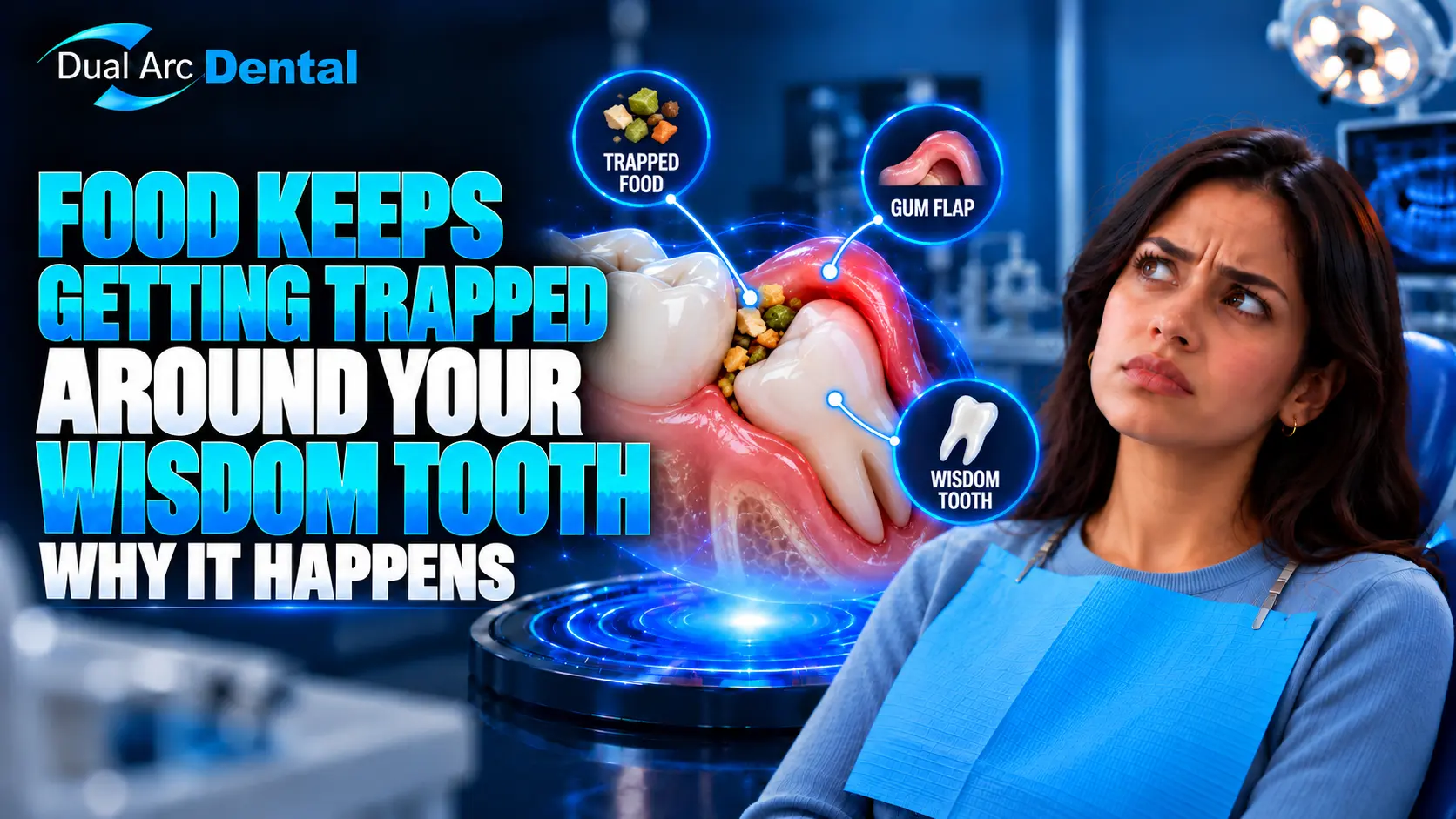
After eating, you notice that there's something lodged around the last back tooth. The area is cleaned, the discomfort subsides and everything is OK. Then it happens again at the next meal. If food is always getting trapped around a wisdom tooth, this may be due to the tooth's position and the adjacent gum rather than the food itself. If the issue persists, an evaluation for oral surgery Schertz TX can be used to help identify the cause of the food trap and if treatment is needed.
Why Are Wisdom Teeth So Good at Trapping Food?
Wisdom teeth sit at the very back of the mouth, where reaching them with a toothbrush or floss can be difficult. Their position alone can make cleaning less effective than it is around the front or middle teeth.
There may also be very little room around a wisdom tooth. Depending on how it has erupted, small spaces can develop between the tooth, gum, and neighboring tooth. Food particles can settle into these areas during meals.
This is particularly apparent when eating foods that crumble or are fibrous. Although you brush regularly, it can be difficult to get all surfaces around the back tooth.
Therefore, repeated food trapping doesn't necessarily indicate that you are not doing enough for your oral hygiene.
Is the Tooth Fully Through the Gum?
This is one of the first things worth considering.
Some wisdom teeth erupt completely and sit in a position that allows reasonably easy cleaning. Others may only partially emerge through the gum. A wisdom tooth can also come through at an angle or remain partly covered by gum tissue.
A partially erupted tooth can leave an area where food and debris are more difficult to remove.
You might notice:
- Food repeatedly getting caught behind or around the tooth
- Difficulty reaching the area with a toothbrush
- Tenderness when cleaning around the gum
- An unpleasant taste from the back of the mouth
- Occasional irritation around the tooth
These signs do not tell you by themselves whether the wisdom tooth needs treatment. A dental examination is needed to understand its position and the condition of the surrounding area.
The Food-Trap Cycle
The frustrating part is that the problem can become repetitive.
- Food collects
- Area becomes difficult to clean
- Irritation develops
- Cleaning becomes less comfortable
- More debris may remain
For example, you may initially be able to clean the area without much difficulty. If the surrounding gum becomes irritated, however, brushing or flossing there may feel uncomfortable.
You might then clean the area less thoroughly because it feels sensitive. That can allow more debris to remain.
Simply removing the trapped food may provide temporary relief without changing the reason food keeps collecting there.
When Is It Just Annoying and When Is It a Dental Problem?
An occasional piece of food getting stuck does not automatically mean something is wrong. What matters more is whether the problem keeps returning or is accompanied by other changes.
|
Occasional issue |
Reason to arrange an evaluation |
|
Food gets caught once in a while |
Food gets trapped after many meals |
|
Debris comes out easily |
The area is increasingly difficult to clean |
|
No ongoing discomfort |
Tenderness or discomfort keeps returning |
|
Gum looks and feels normal afterward |
Gum around the tooth remains irritated |
|
No persistent unpleasant taste or odor |
Unpleasant taste or odor repeatedly comes from the area |
|
Problem does not affect eating |
Chewing around that side becomes uncomfortable |
This is just a general comparison. The presence of symptoms does not rule in or rule out a dental disease, as there are various causes of symptoms around wisdom teeth.
Persistent pain, significant swelling, fever, difficulty swallowing, or difficulty opening your mouth deserves prompt professional attention.
Can Better Cleaning Solve the Problem?
Sometimes it can.
If the wisdom tooth can be seen and the tissue around it is healthy, it may be possible to improve cleaning the back of the mouth, thereby decreasing the incidence of food trapping.
A dentist or dental hygienist may also be able to help you find ways to more effectively access the area.
The limitation is anatomy.
Even with diligent brushing, a tooth that is partially covered by gum or is positioned awkwardly and creates a natural pocket may remain difficult.
This is important as repeating the trapping should not be considered a hygiene failure.
Why Does the Problem Keep Returning in the Same Spot?
When food consistently gets stuck in exactly the same place, there may be a physical reason that spot is acting like a trap.
Wisdom teeth are the last permanent teeth to emerge and may have less available space than other teeth. Their position can create areas that are simply harder to access.
The neighboring tooth matters too. A space between the wisdom tooth and the tooth in front of it may allow debris to collect where routine brushing does not easily reach.
That is why cleaning the food out solves the immediate annoyance but may not solve the underlying issue.
A dentist can examine the area and, when appropriate, use dental imaging to better understand how the wisdom tooth is positioned.
Does a Problematic Wisdom Tooth Always Need Removal?
No. Food trapping around a wisdom tooth does not automatically mean the tooth should be removed.
A dentist needs to consider the individual situation. The tooth's position, how fully it has erupted, whether it can be cleaned effectively, the condition of nearby tissues and teeth, and the pattern of symptoms can all influence what happens next.
Some situations may simply need monitoring and improved cleaning. Others may warrant further assessment or treatment.
If recurring symptoms lead to an evaluation for oral surgery Schertz TX, the purpose should be to understand the problem first, not to assume surgery is inevitable.
This is particularly important when the issue seems minor. A professional assessment can help distinguish a manageable cleaning challenge from a problem that may continue affecting the area.
When That Back Tooth Keeps Interrupting Your Meals
If you are continually digging your food out from around the same wisdom tooth, it can turn into more of a problem. If the area continues to get irritated or becomes harder to clean with each meal, it is better to know the cause of the problem than to clean it over and over.
At Dual Arc Dental, we evaluate wisdom teeth based on what is happening in your individual case. If you are looking for oral surgery Schertz TX because of recurring food trapping, discomfort, or another concern around a wisdom tooth, we can examine the area, discuss what we find, and explain the appropriate next steps without assuming that removal is necessary.
Frequently Asked Questions
1. Why does food keep getting stuck around my wisdom tooth?
The location or position of the wisdom tooth may create an area that is difficult to clean. Partially erupted or awkwardly positioned teeth can sometimes leave spaces where food collects more easily.
2. Can trapped food make the area smell bad?
Food debris that remains in a difficult-to-clean area may contribute to an unpleasant smell or taste. Persistent odor can have several causes, however, so recurring symptoms are worth discussing with a dentist.
3. How should I clean around a wisdom tooth?
Gentle, thorough brushing is important, but the best approach can depend on how the tooth has erupted and how accessible the area is. A dental professional can recommend suitable cleaning techniques after examining the tooth.
4. Why does the gum around my wisdom tooth keep getting irritated?
Several factors can contribute to irritation, including repeated food trapping and difficulty keeping the area clean. An examination can help identify what is happening rather than relying on symptoms alone.
5. Does food trapping mean my wisdom tooth needs to come out?
Not necessarily. Dentists consider the position of the tooth, surrounding tissues, cleaning access, symptoms, and other clinical findings before discussing whether removal or another approach is appropriate.
6. When should I have a wisdom tooth checked?
Consider arranging an evaluation when food repeatedly becomes trapped in the same area, cleaning becomes difficult, or you experience recurring tenderness, unpleasant taste, odor, or discomfort. More significant symptoms such as swelling, fever, trouble swallowing, or difficulty opening your mouth warrant prompt dental attention.