

Wisdom Tooth Pain Suddenly Getting Worse? Signs You May Need Oral Surgery
Wisdom tooth discomfort is common, but a sudden increase in pain should not automatically be dismissed as part of normal eruption. Worsening pain can indicate inflammation, infection, pressure on neighbouring structures or difficulty caused by an impacted tooth. For patients considering oral surgery in Schertz, TX, the key question is not simply how much the tooth hurts, but what is causing the symptoms and whether the tooth can remain safely in position.
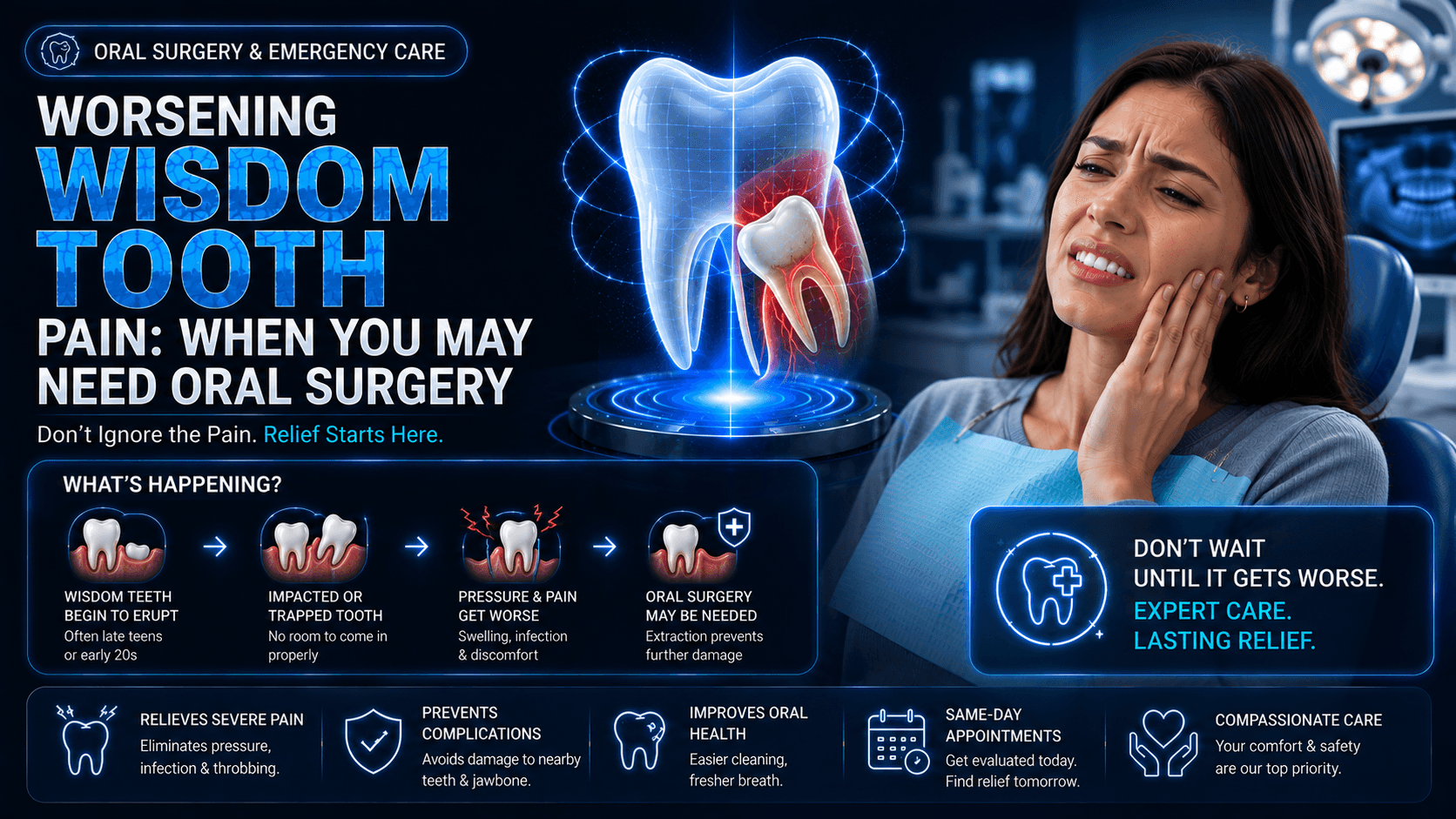
Wisdom teeth, or third molars, usually develop at the back of the mouth. When there is insufficient space for them to erupt normally, they may remain partially or completely impacted within the gum or jawbone. Problems often begin when these teeth become difficult to clean or start affecting the surrounding tissues.
Why Wisdom Tooth Pain Can Suddenly Intensify
A wisdom tooth may remain relatively quiet for months or even years before symptoms appear. Pain can worsen when inflammation develops around a partially erupted tooth or when bacteria accumulate beneath a flap of gum tissue covering part of the crown.
This condition, commonly known as pericoronitis, can cause considerable discomfort and may become more severe if infection develops.
Other possible causes of worsening wisdom tooth pain include:
- Pressure from an impacted tooth
- Dental decay affecting the wisdom tooth
- Gum inflammation around a partially erupted tooth
- Infection within surrounding soft tissues
- Damage or decay affecting the neighbouring second molar
- Cystic changes around an impacted tooth, although these are less common
- Trauma to swollen gum tissue during chewing
The exact cause cannot be determined from symptoms alone, which is why clinical examination is important.
Signs That the Problem May Need More Than Routine Monitoring
Not every impacted wisdom tooth requires removal. Some remain symptom-free and can be monitored depending on their position and overall oral health.
However, worsening symptoms can indicate that surgical assessment is appropriate.
You should arrange dental evaluation if you notice:
- Persistent pain at the back of the jaw
- Increasing swelling around the wisdom tooth
- Difficulty chewing comfortably
- Tender or inflamed gum tissue
- Recurrent episodes of infection
- An unpleasant taste or discharge around the tooth
- Difficulty opening the mouth fully
- Pain spreading towards the ear, jaw or surrounding teeth
When these symptoms continue or repeatedly return, oral surgery in Schertz, TX may be considered after the dentist has assessed the tooth's position and surrounding structures.
What Does an Oral Surgery Assessment Involve?
The decision to remove a wisdom tooth should be based on clinical findings rather than pain alone.
A dentist will usually assess the visible part of the tooth, surrounding gum tissue, adjacent teeth and jaw function. Dental imaging may also be required to establish whether the wisdom tooth is upright, angled, partially erupted or completely impacted.
Important factors include:
- The direction and depth of impaction
- Available space within the jaw
- Relationship to the neighbouring molar
- Presence of decay or infection
- Condition of the surrounding bone and gum
- Proximity to important anatomical structures
- Frequency and severity of previous symptoms
These findings help determine whether monitoring, non-surgical management or tooth removal is the more appropriate approach.
When Is Wisdom Tooth Removal Considered?
Removal may be recommended when a wisdom tooth is causing repeated or significant problems that are unlikely to resolve while the tooth remains in its current position.
Possible indications can include recurrent infection, decay that cannot be predictably managed, damage to an adjacent tooth, persistent pain or certain pathological changes associated with the impacted tooth.
A partially erupted wisdom tooth can be particularly difficult to maintain because food debris and bacteria may collect around the gum margin. Even if one episode of inflammation settles, symptoms may return if the underlying anatomical problem remains.
For this reason, patients exploring oral surgery in Schertz, TX should focus on whether the wisdom tooth presents an ongoing clinical risk rather than viewing extraction as an automatic response to any discomfort.
When Does Wisdom Tooth Pain Become Urgent?
Some symptoms require more prompt assessment.
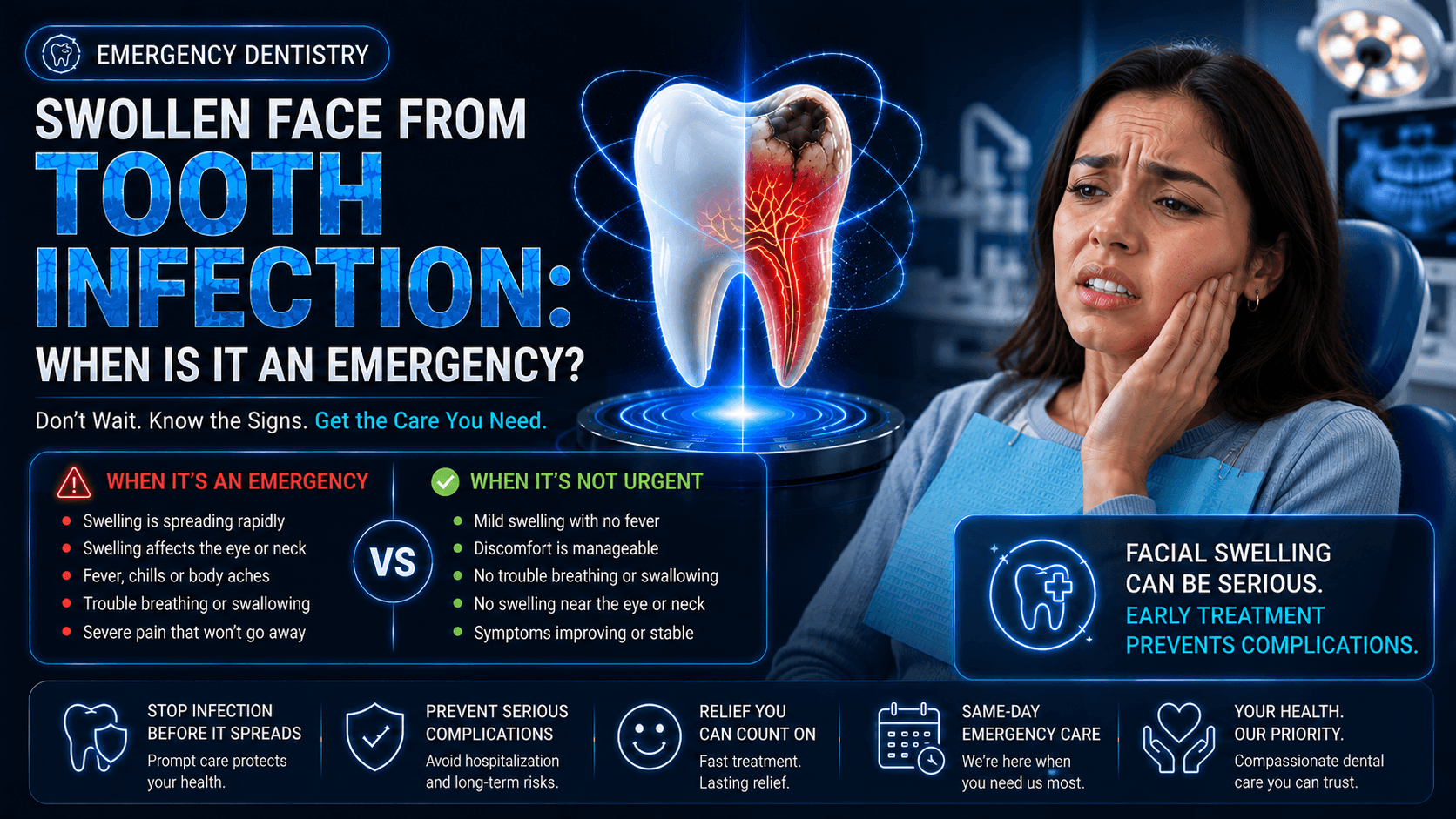
Increasing facial or jaw swelling, fever, significant difficulty opening the mouth, worsening infection or feeling generally unwell should not be ignored.
If swelling begins to interfere with swallowing or breathing, or spreads significantly into the neck or surrounding facial tissues, emergency medical attention is required.
These symptoms can indicate that infection is extending beyond the immediate area around the wisdom tooth.
What Happens After a Wisdom Tooth Is Removed?
Recovery varies depending on how the tooth is positioned and the complexity of the procedure.
After removal, patients are usually given specific instructions for protecting the surgical area while healing begins. This commonly includes guidance on oral hygiene, eating, activity levels and managing discomfort.
Following postoperative instructions is important because disturbing the healing site can increase the risk of complications.
Know When Worsening Pain Needs Assessment
A wisdom tooth that becomes increasingly painful deserves investigation, particularly when pain is accompanied by swelling, infection, limited jaw opening or recurring symptoms. The objective is to determine whether the tooth can be managed safely or whether removal offers a more predictable long-term solution.
Dual Arc Dental provides oral surgery in Schertz, TX, including wisdom tooth extraction and other surgical dental procedures. Patients experiencing worsening wisdom tooth symptoms can arrange an assessment to determine the cause and discuss appropriate treatment options.
Frequently Asked Questions
1. Does every painful wisdom tooth need to be removed?
No. Pain can have several causes, and removal depends on the position of the tooth, surrounding tissues and whether the problem can be managed predictably without extraction.
2. What is an impacted wisdom tooth?
An impacted wisdom tooth is one that cannot fully erupt into a normal position, often because there is insufficient space or because the tooth is angled within the jaw.
3. Can wisdom tooth infection spread?
Yes. Infection around a wisdom tooth can extend into surrounding tissues. Increasing swelling, fever, difficulty swallowing or restricted mouth opening require prompt assessment.
4. Why does wisdom tooth pain sometimes keep returning?
Partially erupted or impacted teeth can create areas where bacteria and food debris repeatedly accumulate. If the anatomical cause remains, inflammation or infection may recur.
5. Is wisdom tooth extraction always considered oral surgery?
Simple extractions may be straightforward, while impacted or partially buried wisdom teeth can require a surgical approach involving access through the gum and, in some cases, surrounding bone.