

Emergency Tooth Extraction vs Planned Extraction: What's the Difference?
Two people get a tooth pulled. Same procedure, same chair, same result, tooth gone. But the road that brought them there? Completely different. And that difference matters more than most tooth extraction services, especially when it comes to recovery, cost, and what happens to the rest of your mouth afterward.
Understanding where you fall on that spectrum helps you ask better questions, make faster decisions, and avoid the kind of delay that turns a manageable dental problem into an urgent one.
The Planned Extraction: Dentistry On Your Terms
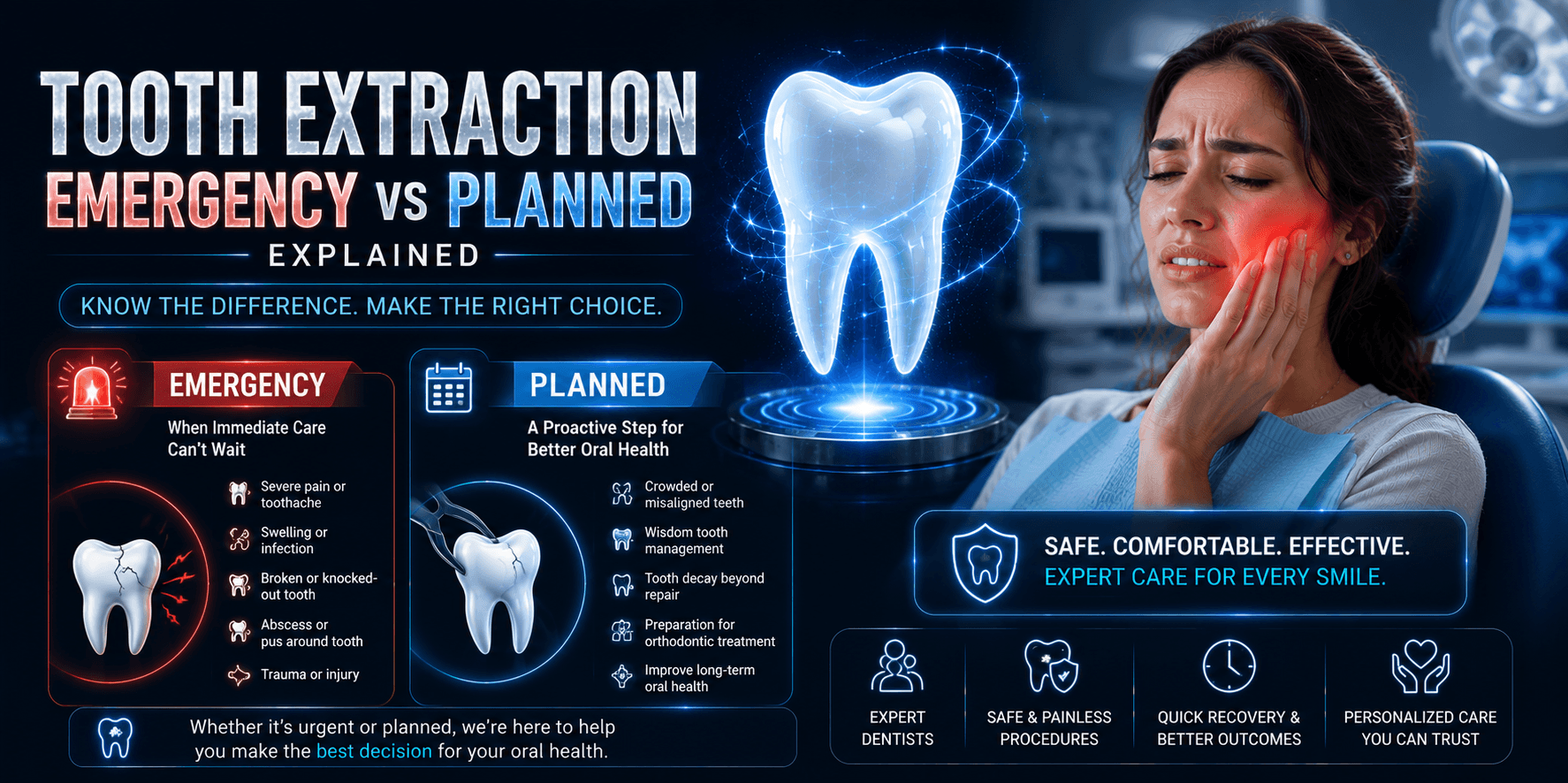
A planned extraction happens when there's time. The dentist identifies a tooth that needs to go, decay that's too far gone to restore, a wisdom tooth causing crowding, preparation for orthodontic treatment, and schedules the removal at a time that works for everyone.
That time matters for a few reasons.
The dentist can take full diagnostic X-rays before the appointment. They assess the root shape, the bone density, proximity to nerves. If the tooth is impacted or the roots are curved, they plan accordingly. Some planned extractions get referred to an oral surgeon in advance, not because something went wrong, but because the anatomy calls for it.
Patients also have time to:
- Stop blood-thinning medications if the dentist recommends it
- Arrange transportation home (sedation affects driving)
- Ask questions before being in a chair, not during
- Understand the aftercare before the numbness wears off
Recovery from a planned extraction is typically smoother. Not because the procedure itself is gentler, but because the patient arrives informed and the dentist arrives prepared.
The Emergency Extraction: When Waiting Isn't An Option
This one looks different from the start. A patient comes in with pain that's been building for days, a tooth that's fractured at the gum line, or swelling that's already spreading. The tooth extraction service that day isn't scheduled six weeks out, it's happening now, because leaving the tooth in place creates more risk than taking it out.
Emergency extractions happen most often because of:
- Severe infection that can't be resolved with antibiotics alone
- A tooth broken too far below the gumline to restore
- Trauma, a fall, accident, or blow that leaves a tooth unsalvageable
- Abscess that's beginning to affect surrounding bone or tissue
The clinical reality is that dentists doing emergency work are dealing with compromised conditions. Infection in the area makes local anaesthetic less effective, which means the procedure can be harder on the patient. The surrounding tissue is often inflamed. Bleeding control is more complicated.
None of this means the extraction is done carelessly. It means the circumstances are tougher, and patients should know that going in.
Where The Two Paths Actually Diverge
The extraction itself, physically removing the tooth, is the same basic act. What's different is everything around it.
Before the procedure: A planned extraction has preparation. An emergency extraction compresses that preparation into minutes or skips it entirely because the clinical priority is pain relief and infection control.
During the procedure: Planned extractions usually involve less complicated anaesthesia. Emergency extractions sometimes require higher doses to get adequate numbing in infected tissue, which resists anaesthetic more stubbornly than healthy tissue does.
After the procedure: Recovery timelines can differ. Patients coming out of emergency situations are often already fighting infection, which means healing takes longer and the risk of dry socket, where the blood clot at the extraction site dislodges, runs a little higher. Planned extractions heal on a cleaner timeline, assuming no post-procedure complications.
Cost: Emergency dental visits carry additional fees. Same-day tooth extraction service near Texas often includes emergency exam costs on top of the extraction itself. Not always avoidable, but worth knowing.
The Choice That Most People Actually Have
Here's the thing most patients don't realise until they're sitting in discomfort, googling their symptoms at midnight: a lot of emergency extractions started as planned ones.
A tooth that needed attention six months ago. A checkup that got skipped. A nagging ache that seemed manageable until it wasn't.
Routine dental visits catch the teeth that are heading toward trouble while they're still candidates for simple, scheduled treatment. That's not a lecture, it's just the math of how dental problems progress. Slow deterioration hits a threshold fast when it finally does.
When To Go In Without Waiting
If a tooth is cracked below the gum, visibly infected, causing swelling in the jaw or face, or producing pain that doesn't respond to over-the-counter relief, same day. That tooth is past the point of scheduling something three weeks out.
At Dual Arc Dental in Schertz, TX, Dr Viral Patel and Dr Vaidehi Mehta handle both planned and emergency extractions, with same-day appointments available for urgent cases. If a tooth is giving you trouble, call (210) 375-5256, getting it evaluated now is the move that keeps the decision in your hands.
FAQs
1. What is the difference between an emergency tooth extraction and a planned extraction?
A planned extraction is scheduled in advance after a dental evaluation, allowing time for preparation and treatment planning. An emergency extraction is performed when severe pain, infection, trauma, or extensive damage requires immediate removal of the tooth to prevent further complications.
2. How do I know if I need an emergency tooth extraction?
You may need emergency care if you have severe tooth pain, facial swelling, an abscess, uncontrolled bleeding, or a tooth that has been badly broken due to an accident or injury. A dentist can determine whether immediate extraction is the best treatment option.
3. Is recovery different after an emergency extraction?
Recovery is generally similar, but emergency extractions may involve additional healing time if there was significant infection or inflammation before the procedure. Following your dentist's aftercare instructions is important for reducing the risk of complications.
4. Can a damaged tooth always be saved instead of being extracted?
Not always. Many damaged or infected teeth can be restored with treatments such as fillings, crowns, or root canals. However, if the tooth cannot be repaired safely or predictably, extraction may be the most appropriate solution.
5. What should I do after having a tooth extracted?
Keep gentle pressure on the gauze as directed, avoid smoking, drinking through a straw, or vigorous rinsing during the first 24 hours, and follow your dentist's instructions regarding pain management, diet, and oral hygiene to support proper healing.