

Can You Get a Root Canal and Crown on the Same Tooth?
“Root canal and possibly putting a crown on the tooth is required.”
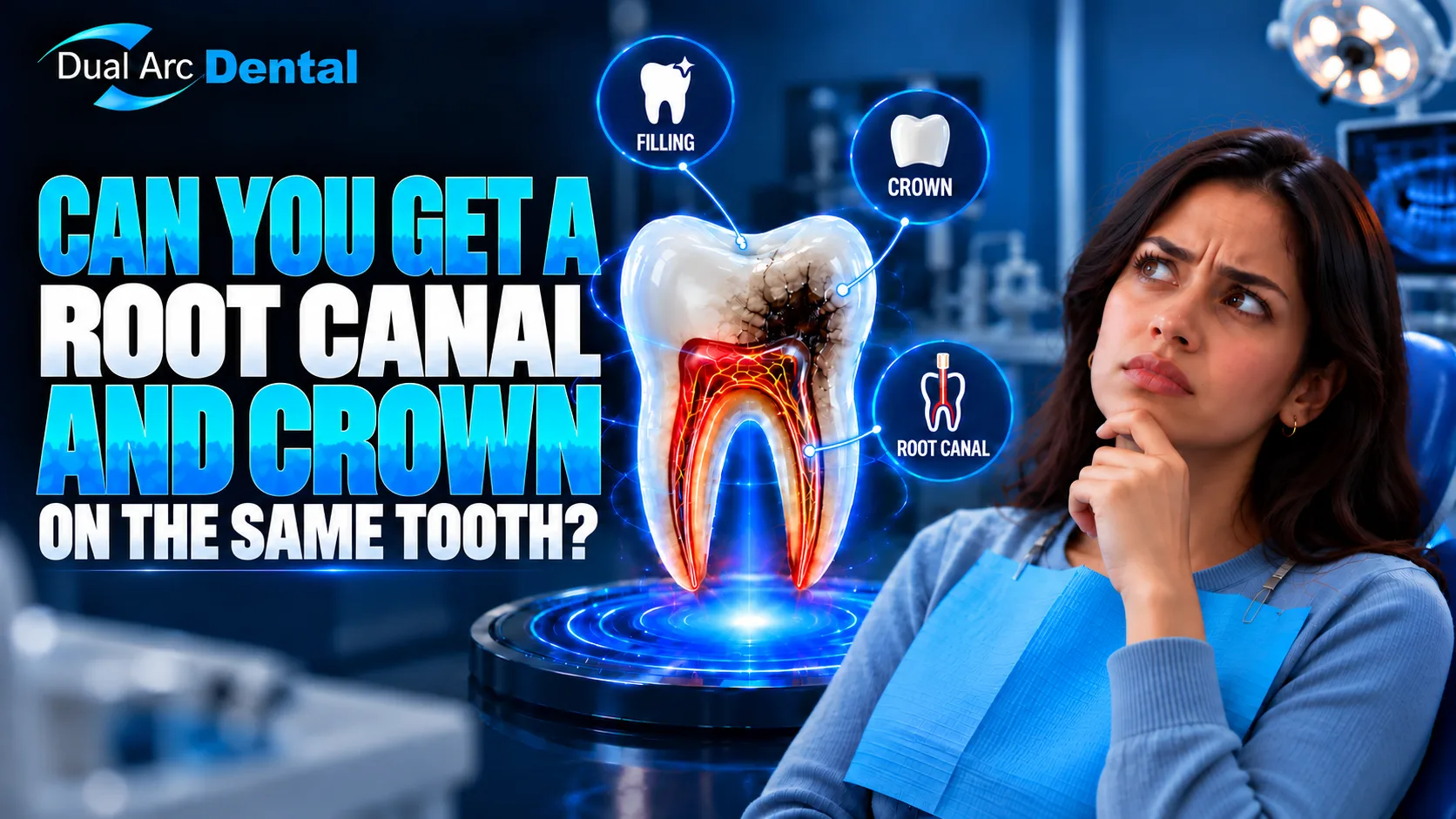
It might seem like two treatments for the same issue. If you're already looking for a root canal nearby, you might be wondering, why go ahead and fix the inside of the tooth? The answer is that a root canal and crown can have different functions, the root canal may be necessary to remedy a problem inside the tooth, while the crown may be indicated to protect and restore the rest of the tooth.
Root Canal and Crown Don't Do the Same Job
A root canal is designed to treat issues with the soft tissue, or pulp, within a tooth. A crown is a covering for the visible part of a tooth that restores its shape, function and protection when it is appropriate.
Therefore, a recommendation of both does not imply that the first treatment was unsuccessful in addressing the issue. Your dentist may have two different treatment needs with the same tooth.
For example, a tooth may have an internal problem that requires root canal treatment while also being weakened by decay, a large existing filling, a crack or loss of natural tooth structure. Treating what is happening inside does not automatically restore everything on the outside.
Think of the Tooth as Having Two Different Needs
Considering the tooth as an inside and outside structure can help.
The issue within the tooth: The pulp is where blood vessels, connective tissue and nerves are located. If this tissue becomes inflamed or infected, root canal treatment may be necessary to treat the internal issue.
Remaining tooth strength: After the internal cause is taken care of, the dentist needs to determine if sufficient healthy tooth structure is present to perform normal biting and chewing.
There is a simple analogy in which repairs are made to a house that has been broken into. Even if a problem has been resolved indoors, it does not mean that the house's exterior is no longer in need of repair. Both are important problems but the work is for different uses.
Why Might Both Be Recommended for One Tooth?
The decision is usually based on the condition of the entire tooth rather than the root canal alone.
A crown may be considered when a tooth has:
- Lost a significant amount of natural structure
- Been weakened by extensive decay
- A large existing filling
- Cracks or other structural damage
- A position in the mouth that places it under substantial chewing pressure
- A need for additional protection after treatment
The reason is that two patients treated for the same condition may end up with different treatment plans for their restorations.
Before deciding what treatment combination you need, if you've been searching for a root canal nearby due to ongoing pain in a tooth or other concern, you should have an examination performed.
Does Every Root Canal Automatically Mean a Crown?
No. Crowns do not have to be used in all scenarios.
These can all determine the type of restoration recommended following the type of tooth, how much healthy structure remains and the extent of previous dental work and the way the tooth functions.
Back teeth, for instance, generally handle considerable chewing forces. Front teeth have different functional demands. But treatment is not based solely on location.
Your dentist needs to evaluate the individual tooth before deciding whether a crown or another type of restoration is appropriate.
What Determines the Treatment Plan?
There are a number of factors that can make a difference in the likelihood of a tooth requiring root canal treatment or crown or both.
- Condition of the pulp: The dentist determines if the inner tissue of the tooth is healthy, inflamed, infected or damaged.
- Remaining tooth structure: If there is still a lot of natural tooth remaining there are different circumstances than when a tooth is badly damaged.
- Existing restorations: Large or older fillings can affect how much natural tooth structure remains.
- Cracks or fractures: The type, location, and extent of these defects may affect the ability to restore the tooth.
- Tooth location: Premolars and molars are subjected to different biting/chewing forces.
- Oral health: Treatment may also be planned considering the overall oral health including gums, surrounding tissues, bite and neighboring teeth.
These factors are not evaluated independently, but rather as a whole.
What Does the Treatment Journey Usually Look Like?
The exact sequence depends on the tooth and the patient's needs, but the journey generally begins with an examination and diagnostic assessment.
If the dentist determines that the inside of the tooth requires treatment, the root canal issue is addressed. The tooth is then reassessed from a restorative perspective. Depending on its condition, a suitable restoration may be recommended to rebuild or protect it.
In some cases, treatment may involve more than one appointment. Timing can vary based on the condition of the tooth, the restoration planned and other individual circumstances.
Your dentist can explain the expected timeline before treatment begins.
Why Your Treatment Plan May Differ From Someone Else's
Two people can both say, “I had a root canal,” while having very different teeth underneath that description.
One tooth might have a small amount of damage but plenty of healthy structure remaining. Another might contain a large filling, extensive decay or a crack. Previous dental treatment and the tooth's role in the bite can create further differences.
That is why another person's experience should not be treated as a template for your own care.
A treatment plan should come from an examination, appropriate diagnostic information and a discussion about what the dentist is trying to achieve for that particular tooth.
Questions Worth Asking Before Treatment
Understanding why each part of your treatment has been recommended can make the plan much easier to follow. Consider asking your dentist:
- What damage or problem is present in my tooth?
- Why is root canal treatment being recommended?
- Why is a crown or another restoration being considered?
- What is the goal of each treatment?
- How much healthy tooth structure remains?
- What should I expect after treatment?
- Will my treatment require more than one visit?
- What follow-up care will the tooth need?
You should feel comfortable asking for clarification if any part of the treatment plan is unclear.
Looking for a Root Canal Nearby?
Tooth pain is one reason people seek an evaluation, but symptoms are not always predictable. Some teeth with internal issues may be sensitive or uncomfortable, and others may have more subtle changes.
Instead of making decisions based on symptoms alone, a dental examination can help to decide what is going on within the tooth as well as if the rest of the tooth needs to be treated as well.
First we assess the tooth as a whole and discuss options for treatment. We want you to be aware of what has been discovered, why a specific treatment may be recommended and what it is designed to do.
Treat the Tooth, Not Just the Symptom
When a tooth needs more than one form of care, the treatments are not necessarily duplicating each other. Root canal treatment may address an internal problem, while a crown may be recommended to restore and protect the remaining tooth.
At Dual Arc Dental, we take the time to assess the condition of your tooth and explain your options before moving forward. If you have tooth pain, damage or concerns about a recommended root canal and crown, contact our Schertz dental office to arrange an evaluation.
Frequently Asked Questions
1. Can a root canal and crown be done on the same tooth?
Yes. A dentist may recommend both treatments for the same tooth because they address different needs. Root canal treatment deals with problems inside the tooth, while a crown may be used to restore and protect the remaining tooth structure.
2. Do I always need a crown after a root canal?
Not necessarily. Whether a crown is appropriate depends on factors such as the type of tooth, how much healthy structure remains, existing restorations, structural damage and functional demands. Your dentist will assess the individual tooth before recommending a restoration.
3. Why can't a crown alone fix the tooth?
A crown restores the visible structure of a tooth, but it does not by itself address an inflamed or infected pulp. If an internal problem is present, your dentist may recommend treatment for that issue separately.
4. What symptoms mean I might need a root canal?
Persistent tooth pain, prolonged sensitivity, discomfort when biting or other changes can sometimes be associated with problems inside a tooth, but symptoms alone cannot confirm the need for treatment. Some dental conditions can also produce few obvious symptoms. A dental examination is needed for diagnosis.
5. How does a dentist decide whether I need both treatments?
The dentist may consider the condition of the pulp, the amount of healthy tooth structure remaining, cracks, decay, previous restorations, tooth location and other clinical findings before developing a treatment plan.
6. What should I ask if my dentist recommends a root canal and crown?
Ask what problem has been identified, why each treatment is being recommended, what each treatment is intended to accomplish, what alternatives may be appropriate and what you can expect during recovery and follow-up care.