

Your Tooth Still Hurts When You Bite After a Root Canal: What's Normal and What Needs Checking?
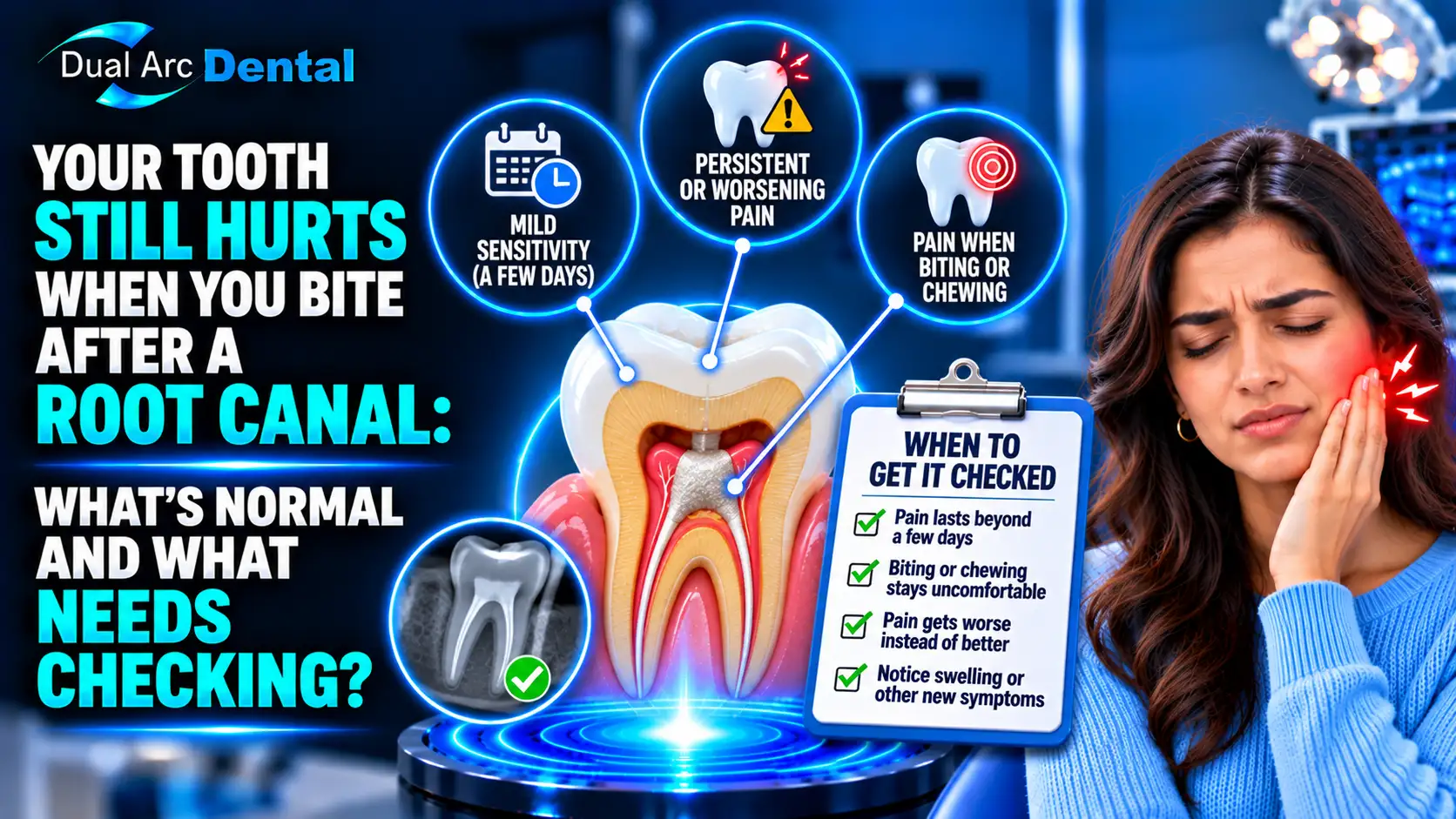
The toothache that sent you to the dentist is finally gone. You can drink water without that familiar jolt of pain, and you're sleeping better. But then you try chewing something, and the treated tooth feels sore when your teeth come together.
Wasn't the root canal supposed to fix that?
It probably did address the original problem. What many patients don't realize is that the tissues around a tooth can remain tender after the nerve inside it has been treated.
A little soreness isn't unusual. Pain that keeps getting worse, however, deserves another look.
If you've recently had treatment in Schertz, TX, here's what to pay attention to before assuming something has gone wrong.
Why Can a Tooth Hurt When the Nerve Has Been Removed?
During a root canal, the dentist removes inflamed or infected tissue from inside the tooth, cleans the canals, and seals them.
But the tooth doesn't exist on its own. Its roots are surrounded by bone and a thin layer of tissue called the periodontal ligament.
That ligament still contains nerves.
If there was inflammation or infection around the root before treatment, the surrounding tissues may need time to settle down. Pressure from chewing can make those areas feel tender.
This explains why a tooth can stop reacting to cold drinks yet remain uncomfortable when you bite.
The important question isn't simply whether there's pain. It's whether the discomfort is gradually improving.
How Much Soreness Is Normal After a Root Canal?
For the first few days, mild tenderness when touching or putting pressure on the tooth is fairly common.
You may notice it while eating, brushing near the tooth, or accidentally closing your teeth together a little harder than usual.
If the tooth was particularly painful before treatment, the surrounding tissues may be more sensitive afterward.
Most people notice improvement over several days. Some take longer, depending on the condition of the tooth and the extent of the original inflammation.
What you shouldn't do is keep chewing on the tooth to see whether it still hurts.
If your dentist has placed a temporary filling or recommended waiting for a permanent crown, avoid chewing on that tooth until you're cleared to do so.
Could Your Filling or Crown Be Slightly Too High?
There's another possible explanation for biting discomfort, and it doesn't necessarily involve infection.
Sometimes a new filling or crown makes contact with the opposite tooth a little earlier than the surrounding teeth.
You might notice that the treated tooth seems to hit first when you close your mouth.
Even a small difference can make the tooth feel uncomfortable under pressure.
Dentists refer to this as an uneven or high bite.
If you feel that your teeth no longer come together normally, contact the dentist who performed the treatment. They can check the bite and determine whether an adjustment is appropriate.
Don't try to wear the filling down by chewing on it or wait for severe discomfort to develop.
What if the Pain Is Sharp Instead of Dull?
A dull, improving ache shortly after treatment is different from a sharp pain that occurs every time you bite.
Sharp biting pain can have several causes, including a problem with the restoration, inflammation around the root, or a crack in the remaining tooth structure.
Sometimes the pain is most noticeable when you release biting pressure.
That detail is worth mentioning to your dentist because certain cracks produce symptoms when pressure is removed.
Not every painful tooth has a visible fracture, and not every crack shows clearly on a dental X-ray.
An examination helps determine whether the problem is related to the bite, the tooth itself, or the surrounding tissues.
Your Root Canal Was a Week Ago. Should the Tooth Still Hurt?
By this point, you would generally expect the discomfort to be improving.
That doesn't mean every tooth follows an exact recovery schedule. But persistent pain that hasn't eased, or pain that's becoming stronger, should be reported.
It's especially important to call if you notice swelling, renewed throbbing, or tenderness that makes ordinary activities difficult.
For patients searching for a root canal near me because an already-treated tooth still hurts, the next step is usually an examination rather than assuming another root canal is necessary.
At Dual Arc Dental's endodontic treatment service, the dentist can assess symptoms and determine whether additional treatment or specialist evaluation is appropriate.
What Will the Dentist Check at a Follow-Up Appointment?
Your dentist will probably start by asking something quite specific: when does it hurt?
Pain when your teeth first touch may suggest something different from discomfort that occurs after several minutes of chewing.
The examination may include checking your bite, looking at the filling or crown, gently testing the tooth, and taking X-rays when needed.
If infection was present before treatment, the dentist may also compare new images with earlier ones.
Healing around the root doesn't always appear immediately on an X-ray. Changes can take months to become visible.
In some cases, the dentist may recommend monitoring. In others, further treatment or an endodontic specialist's opinion may be needed.
Does Biting Pain Mean the Root Canal Has Failed?
Not automatically.
A tooth can be tender during normal healing without the treatment having failed.
However, persistent or returning pain sometimes indicates that the original problem hasn't fully resolved. A previously treated tooth can also develop a new infection or structural problem.
If further endodontic treatment is needed, the dentist will explain the findings and available options.
There may also be an issue with the tooth's final restoration. A weakened tooth that hasn't been properly protected can be vulnerable to cracking.
That's why follow-up restorative dentistry, including a crown when recommended, is an important part of treatment.
What Can You Do While the Tooth Is Healing?
There's no need to repeatedly test the tooth with crunchy foods.
Give it a chance to recover.
- Chew on the opposite side until your dentist says otherwise.
- Choose softer foods and avoid sticky or hard snacks.
- Continue brushing and flossing carefully.
- Take prescribed medication exactly as directed.
- Ask your dentist or pharmacist about suitable over-the-counter pain relief if needed.
Don't take leftover antibiotics without professional advice. Pain after a root canal doesn't automatically mean you have an infection requiring antibiotics.
And if your temporary filling or crown comes out, contact the dental office rather than waiting for your next scheduled appointment.
Still Feeling Pain When You Bite? Have the Tooth Checked
You don't need to assume the worst because a recently treated tooth feels tender. Some soreness is part of recovery.
But if chewing is becoming more uncomfortable, your bite feels different, or the pain isn't settling, it's worth contacting your dentist.
Dual Arc Dental provides root canal and general dental care for patients in Schertz, Cibolo, Universal City, Selma, and nearby communities.
Whether the tooth needs a bite adjustment, additional healing time, or further investigation, an examination can help identify the next step.
If you're experiencing persistent discomfort after a root canal, contact Dual Arc Dental to arrange an appointment.
Dual Arc Dental
1248 FM 78, Suite 105, Schertz, TX 78154
Phone: (210) 375-5256
A treated tooth should become more comfortable with recovery. If yours isn't heading in that direction, don't keep testing it at every meal.
Frequently Asked Questions
1. Is it normal for a root canal tooth to hurt when chewing?
Mild tenderness can occur during the first few days because tissues surrounding the root are still healing. Pain should generally improve rather than become more severe.
2. Why does my tooth hurt when I bite but not when I drink cold water?
Root canal treatment removes the pulp inside the tooth, but the supporting tissues around the root can still sense pressure. A high filling, inflammation, or a crack may cause biting discomfort.
3. Can a dentist fix a high bite after a root canal?
Yes, if an uneven restoration is responsible, the dentist may be able to adjust the biting surface. The tooth should first be examined to confirm the cause.
4. Should I worry if my tooth hurts a week after treatment?
Contact your dentist if the pain isn't improving, is worsening, or interferes with eating. Severe pain, swelling, fever, or returning symptoms need prompt attention.
5. Can a root canal-treated tooth become infected again?
Yes. Although root canal treatment is generally successful, reinfection can occasionally occur. A damaged restoration, a crack, or persistent bacteria may contribute.
6. When should I seek urgent dental care after a root canal?
Call promptly for severe or increasing pain, visible swelling, a lost temporary restoration, or a bite that feels uneven. Difficulty breathing or swallowing requires emergency medical attention.