

You Broke a Tooth but Feel No Pain: Does It Still Need Urgent Dental Care?
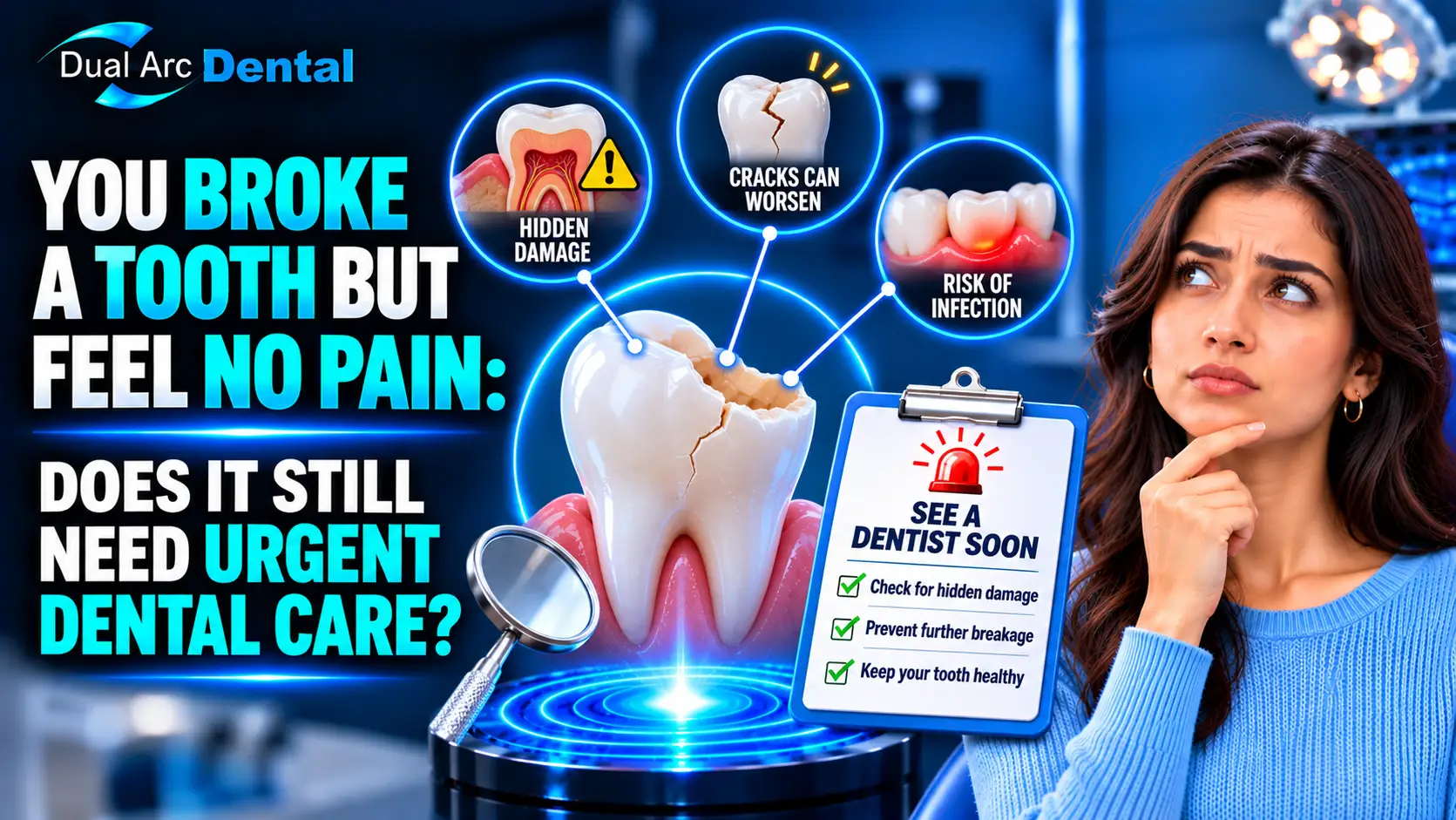
You bite into something crunchy and hear a small crack. A piece of your tooth has broken off. You run your tongue over it, check the mirror, and realize part of the tooth is missing.
Strangely enough, nothing hurts.
You can still talk, drink water, and close your mouth without discomfort. So, is there any reason to call the dentist right away?
There might be. A broken tooth doesn't always cause immediate pain, even when the damage extends beyond the outer enamel. Some fractures are relatively minor. Others can weaken the remaining tooth or leave the inner structure exposed.
If you've broken a tooth in Schertz, TX, understanding when to seek urgent dental care can help you avoid making the damage worse.
Why Doesn't a Broken Tooth Always Hurt?
The outer layer of your tooth is called enamel. It's incredibly hard, but it doesn't contain nerves.
If only a small piece of enamel breaks away, you might not feel anything at all. You may notice a rough spot or a change in the tooth's shape, but no actual pain.
Beneath the enamel sits dentin, which contains microscopic channels connected to the tooth's inner tissues. When dentin becomes exposed, the tooth may develop sensitivity to cold drinks, sweet foods, or pressure.
The pulp is deeper inside. It contains nerves and blood vessels.
A fracture that reaches this area can be more serious, although symptoms aren't always immediate.
That's what makes a painless broken tooth difficult to judge at home. The lack of pain doesn't tell you how far the damage extends.
A Small Chip and a Deep Fracture Are Very Different Problems
Not every broken tooth needs to be treated the same day.
Suppose you've chipped a tiny corner from a front tooth. The remaining edge is smooth, there's no sensitivity, and the tooth hasn't moved. You should still arrange a dental appointment, but it may not require immediate treatment.
Now consider a back tooth that breaks around an old filling.
You might not feel pain, but a significant portion of the chewing surface could be missing. The remaining tooth may be more vulnerable to breaking under normal biting pressure.
A crack that continues below the gumline creates another concern. These fractures can be difficult to see without a dental examination.
Rather than deciding based on pain alone, consider how much tooth is missing, whether the tooth feels stable, and how the injury occurred.
When Does a Painless Broken Tooth Need Urgent Attention?
There are situations where waiting several days isn't a good idea, even if you're comfortable.
A Large Piece of the Tooth Has Broken Away
If you can see a noticeable hole, a deep fracture, or a large missing section, contact a dentist promptly.
The exposed area may become sensitive later, and chewing could place additional pressure on the weakened tooth.
The Tooth Feels Loose or Has Changed Position
A tooth that moves after an accident needs prompt assessment.
The fracture may not be the only injury. The tissues or bone supporting the tooth could also be damaged.
You Can See Pink or Red Tissue Inside the Tooth
A pink or reddish area within a fresh fracture may indicate exposure of the pulp.
Don't touch or probe the area. Contact an emergency dentist immediately for advice and an urgent examination.
The Tooth Broke During a Fall or Facial Injury
Dental injuries aren't always limited to what you can see.
A fall or direct impact can damage the roots and surrounding bone, even if the visible portion of the tooth looks relatively intact.
An appointment for emergency dentistry allows the dentist to check for these less obvious problems.
If the accident also caused serious facial trauma, uncontrolled bleeding, or difficulty breathing or swallowing, seek emergency medical care.
What Should You Do Before Your Dental Appointment?
First, stop chewing on the damaged tooth.
It's tempting to test whether it can still handle food, especially when there's no pain. But a weakened tooth can fracture further when pressure is applied.
If you can find the broken piece, place it in a clean container with milk or saliva and bring it to your appointment. Depending on its condition, the dentist may be able to reattach it.
Rinse your mouth gently with warm water to remove any debris.
Avoid particularly hard or sticky foods. If the tooth has a sharp edge that's rubbing against your tongue or cheek, temporary dental wax from a pharmacy may help cover it.
Don't attempt to smooth the tooth with a file or attach the broken piece using household glue.
Most importantly, don't assume you can continue eating normally simply because the tooth isn't hurting.
How Will the Dentist Know Whether the Tooth Can Be Repaired?
A dentist will examine the remaining tooth structure, check your bite, and look for signs that the fracture extends deeper than the visible surface.
Dental X-rays may help identify damage to the root or surrounding bone, although not every crack appears on an X-ray.
The dentist may also perform sensitivity tests to assess the condition of the pulp.
Sometimes the examination reveals a small chip that needs only a simple repair. Other cases require treatment to protect the remaining tooth.
Through general dentistry, patients can have the injury assessed before deciding on the next step.
Will You Need a Filling, Bonding, or Crown?
Treatment depends on the size and location of the break.
For a small chip, the dentist may simply smooth the rough edge or use tooth-colored bonding material to replace the missing portion.
Bonding can be especially useful for minor damage to visible front teeth. It's also among the options available through cosmetic dentistry.
A larger fracture may require a dental crown. Crowns cover the remaining tooth structure and help protect it during chewing.
If the pulp has been damaged or infected, root canal treatment may be necessary before the final restoration.
These procedures are part of restorative dentistry, which focuses on repairing damaged teeth and restoring normal function.
Occasionally, a fracture extends too far below the gumline for the tooth to be saved. If extraction becomes necessary, your dentist can discuss replacement options, including dental implants, when appropriate.
However, a broken tooth doesn't automatically mean you'll need a crown, root canal, or extraction.
Can the Tooth Get Worse If You Leave It Alone?
Yes, particularly if a crack has weakened the tooth.
A small piece of missing enamel may remain stable until it's repaired. But deeper cracks can extend when the tooth is repeatedly subjected to chewing forces.
There's also the possibility of bacteria entering exposed areas of the tooth.
The concern isn't that every chip will become a serious dental problem. It's that you can't reliably identify the depth of the fracture without an examination.
That's why arranging an appointment early makes more sense than waiting for the tooth to begin hurting.
Broke a Tooth? Have It Checked Before It Becomes Painful
It's understandable to feel relieved when a broken tooth doesn't hurt. And in some cases, the damage really is minor.
But a painless fracture can still affect the strength and health of the tooth.
At Dual Arc Dental, patients in Schertz, Cibolo, Universal City, and surrounding communities can receive an examination to understand the damage and discuss suitable treatment options.
If you've broken a tooth, contact the practice to find out how soon you should be seen.
Dual Arc Dental
1248 FM 78, Suite 105, Schertz, TX 78154
Phone: (210) 375-5256
You don't have to wait for a toothache to find out whether a broken tooth needs attention.
Frequently Asked Questions
1. Is a chipped tooth an emergency if there's no pain?
A tiny enamel chip without sensitivity, looseness, or other symptoms may not require same-day treatment. However, the tooth should still be examined. Larger fractures and injuries involving the pulp need more urgent attention.
2. Can I wait a week to fix a broken tooth?
It depends on the damage. A minor chip may be able to wait for a scheduled visit, but a significant break should be assessed promptly. Call your dentist and describe the injury before deciding to delay.
3. Can a cracked tooth heal on its own?
No. Unlike a broken bone, a fractured tooth cannot repair itself. Dental treatment may protect the remaining structure and prevent the crack from progressing.
4. Why did my molar break without hurting?
A molar may fracture around a large filling, an area weakened by decay, or a cusp exposed to heavy chewing pressure. If the pulp wasn't affected, the break might cause little or no pain.
5. Can a dentist repair a broken tooth in one visit?
Sometimes. Small chips may be repaired with bonding or a filling during a single appointment. Larger fractures may require a crown or additional treatment, depending on the findings.
6. Where can I find urgent dental care in Schertz, TX?
Dual Arc Dental provides emergency dental evaluations in Schertz and offers same-day appointments when available. Call the office, explain how the tooth broke, and describe whether any pieces are missing or the tooth feels loose.