

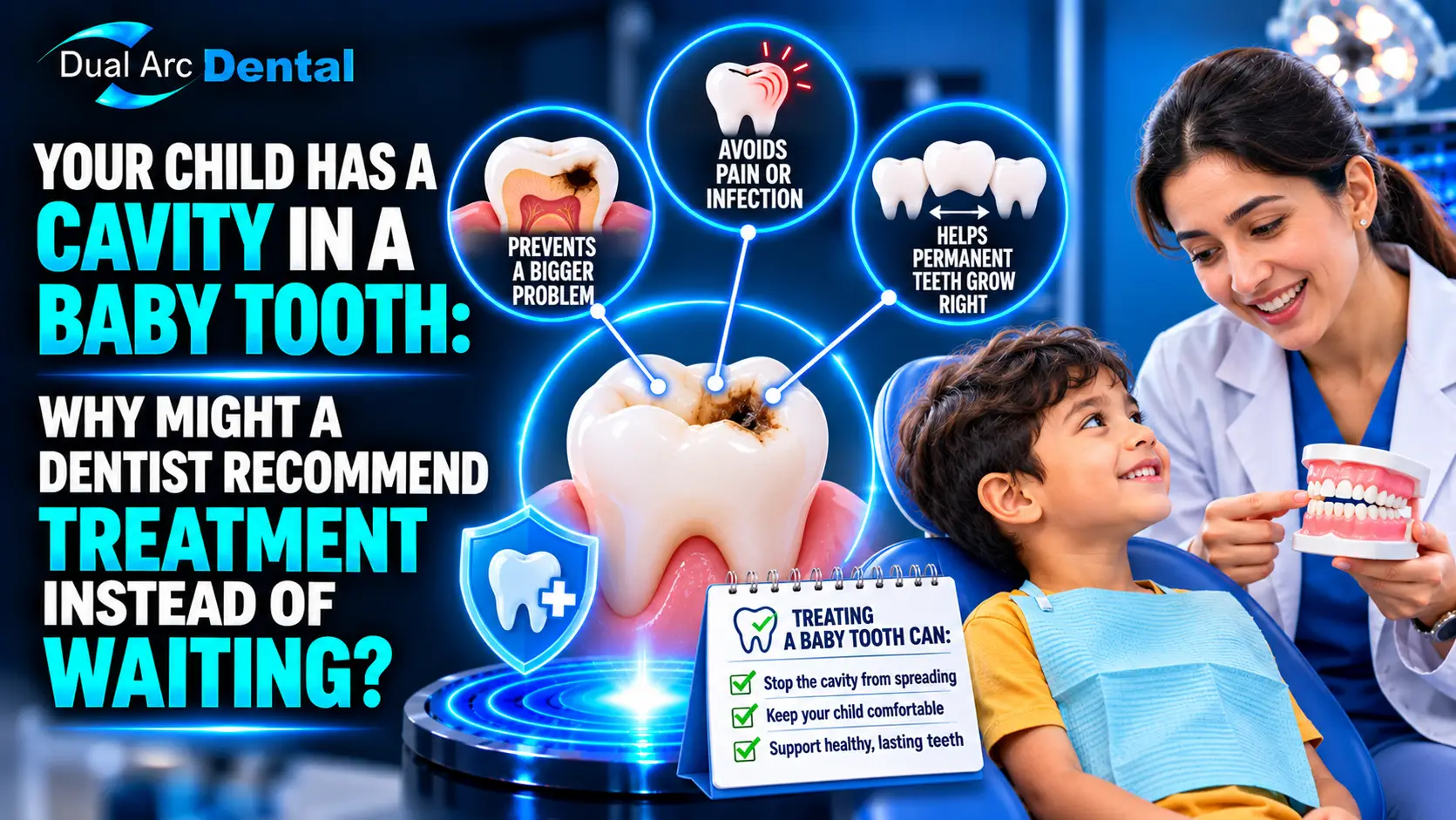
Your Child Has a Cavity in a Baby Tooth: Why Might a Dentist Recommend Treatment Instead of Waiting?
Your child's dentist finds a cavity in a back tooth. It isn't causing pain, your child is eating normally, and the tooth is going to fall out eventually.
So why does it need a filling?
It's a question many parents have, especially when the cavity is in a baby tooth. Nobody wants their child to go through a dental procedure that might not be necessary.
But there's something worth knowing about baby teeth. They don't all fall out at the same age, and some need to last considerably longer than parents expect.
Whether a cavity needs treatment depends on which tooth is affected, how deep the decay has gone, and how much longer the tooth is expected to remain in place.
That Baby Tooth May Have Years Left
Most children begin losing their front baby teeth around age six. Back teeth are a different story.
Baby molars often remain until roughly ages nine to twelve, sometimes longer.
Imagine a five-year-old with a cavity in a baby molar. That tooth might need to handle another five or six years of chewing before its permanent replacement is ready.
Leaving an active cavity untreated for that long isn't necessarily a harmless option.
Decay can gradually destroy more of the tooth, making it difficult for your child to chew comfortably. If it reaches the nerve, pain or infection may develop.
Baby teeth also help maintain the spaces needed for permanent teeth to come through.
This doesn't mean every cavity needs immediate drilling. It means the expected lifespan of the tooth matters when deciding what to do.
But What if the Cavity Doesn't Hurt?
Children can have cavities without experiencing any discomfort.
Early decay often affects enamel, the tooth's outer layer. As it progresses, it may reach dentin and eventually the inner pulp, where nerves and blood vessels are located.
The absence of pain doesn't tell the dentist how far the decay has spread.
In fact, some cavities between back teeth are difficult to see without dental X-rays.
During a family dental examination, the dentist looks at the cavity's location, size, and activity before recommending treatment.
If your child isn't complaining, that's encouraging. But it isn't a reliable reason to leave the cavity unchecked.
Does Every Cavity in a Baby Tooth Need a Filling?
No, and this is an important distinction.
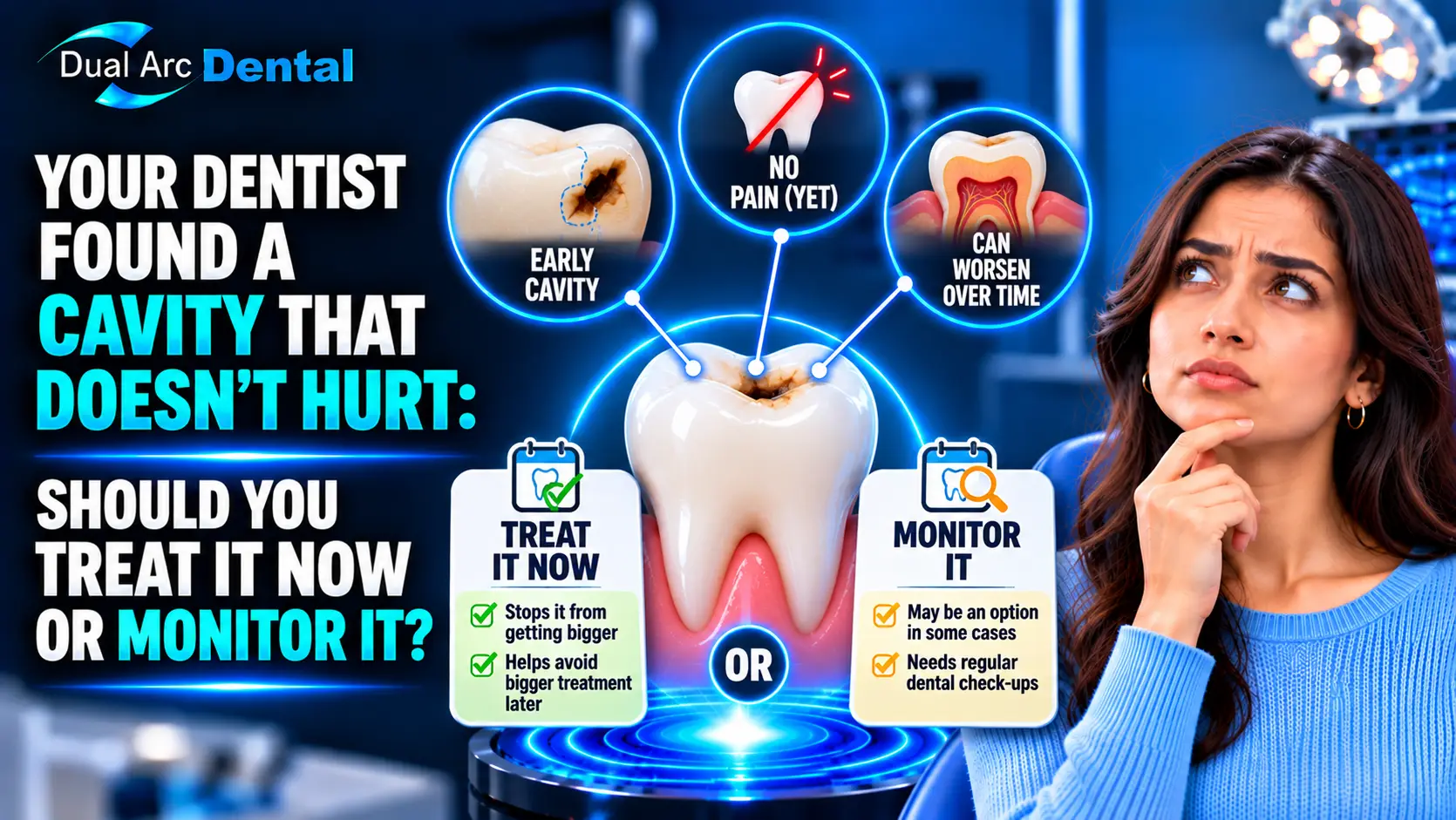
A very early area of decay that hasn't formed a hole may sometimes be managed with fluoride, improved brushing habits, dietary changes, and regular monitoring.
The dentist may also recommend another non-surgical approach for certain cavities.
For example, silver diamine fluoride can help stop decay from progressing in selected cases. One trade-off is that it permanently darkens the decayed area, which parents should understand before agreeing to treatment.
If a cavity has already formed and is trapping food, a filling or another restoration may be the better option.
Ask your dentist whether the cavity is still at a stage where non-drilling treatment could work.
There isn't one correct treatment for every baby tooth. The child's age, cavity risk, cooperation, and condition of the tooth all play a part.
What Happens if You Wait Too Long?
Sometimes a small cavity stays manageable for a while. Other times, decay progresses more quickly than expected.
Baby teeth have thinner protective layers than permanent teeth, so decay can reach the inner tissues relatively quickly.
A child might begin avoiding certain foods or chewing on only one side without explaining why.
If bacteria reach the pulp, the tooth may become painful or infected.
At that point, a small filling may no longer be sufficient.
The dentist might recommend treatment to preserve the remaining tooth, or extraction if the damage is too extensive.
That's one reason restorative dental care is sometimes recommended before a baby tooth begins hurting.
The intention is to manage the existing problem while keeping as much healthy tooth structure as possible.
Why Not Just Remove the Tooth Instead?
Extraction may sound simpler than repairing a tooth that's going to fall out anyway.
But removing a baby molar years before its normal shedding time can create another problem.
Neighboring teeth may drift into the empty space. That can reduce the room available for the permanent tooth developing underneath.
When a baby tooth is lost too early, the dentist sometimes recommends a space maintainer to help preserve that room.
Not every early extraction requires one. The decision depends on the child's age, the missing tooth, and how the permanent teeth are developing.
If the damaged tooth can reasonably be preserved, keeping it until its natural shedding time may be preferable.
What Treatment Might the Dentist Recommend?
For a small to moderate cavity, a tooth-colored filling may be enough.
If a baby molar has lost a significant amount of structure, a crown may offer better protection.
Deep decay involving the pulp sometimes requires a procedure called a pulpotomy, which removes affected pulp tissue from the crown portion of the tooth while preserving suitable remaining tissue.
If the tooth is severely infected or cannot be restored, extraction may be necessary.
Your child's dentist should explain why a particular option makes sense, what alternatives exist, and whether treatment can be staged.
There should be room for questions, especially if your child has never needed a filling before.
What if Your Child Is Afraid of Dental Treatment?
Children don't always understand why a tooth that feels fine needs attention.
Telling a nervous child that a dentist needs to drill their tooth can make the appointment more difficult before it even begins.
Instead, explain that the dentist found a small area that needs fixing so the tooth can keep doing its job.
Avoid promising that absolutely nothing will feel uncomfortable. It's better to explain that the dental team will help keep them comfortable and tell them what's happening in age-appropriate language.
If your child has significant dental anxiety or needs more involved treatment, discuss the available sedation dentistry options and whether they're appropriate for their age and medical needs.
For some children, shorter appointments or a gradual introduction to dental care may also help.
A Baby Tooth Is Temporary, but Its Job Isn't
Finding out your child has a cavity can be frustrating, particularly when you thought their brushing routine was going well.
It doesn't mean every tooth needs extensive work. And it doesn't mean you should agree to a filling without understanding the reason.
Ask how deep the cavity is, whether it's growing, when the tooth is expected to fall out, and what might happen if you choose to monitor it.
At Dual Arc Dental, families in Schertz, Cibolo, Selma, Universal City, and nearby communities can schedule dental examinations for children and discuss appropriate treatment options.
If your child has been diagnosed with a cavity, or you've noticed a dark spot on a baby tooth, contact the office to arrange an appointment.
Dual Arc Dental
1248 FM 78, Suite 105, Schertz, TX 78154
Phone: (210) 375-5256
Sometimes a small cavity can be monitored. Sometimes a filling is the sensible choice. The important thing is understanding which situation applies to your child.
Six Questions Parents Often Ask
1. Should every cavity in a baby tooth be filled?
No. Some early cavities can be managed without drilling, particularly when the enamel hasn't developed an open hole. Larger or progressing cavities may need a filling or another treatment.
2. How long can a baby tooth stay in the mouth?
It depends on the tooth. Front baby teeth often fall out around ages six to eight, while baby molars may remain until roughly ages nine to twelve.
3. Can a cavity in a baby tooth affect the permanent tooth?
A severe infection involving a baby tooth can sometimes affect the developing permanent tooth or surrounding tissues. However, a small cavity doesn't automatically mean the adult tooth is damaged.
4. What happens if my child needs a baby tooth removed early?
The dentist will assess whether the missing tooth could affect spacing. In certain situations, a space maintainer may be recommended until the permanent tooth is ready to erupt.
5. Can brushing reverse a cavity in a baby tooth?
Good brushing and fluoride can help remineralize early decay before a hole forms. Once a cavity has developed into a physical hole, brushing alone generally won't restore the lost tooth structure.
6. How do I find a family dentist in Schertz, TX, for my child's cavity?
When searching for a family dentist schertz tx, look for a practice that examines children, explains treatment options clearly, and considers your child's comfort. Dual Arc Dental offers family dental examinations and treatment planning in Schertz.