

Why “Waiting Until It Gets Worse” Can Make a Dental Problem Harder to Treat
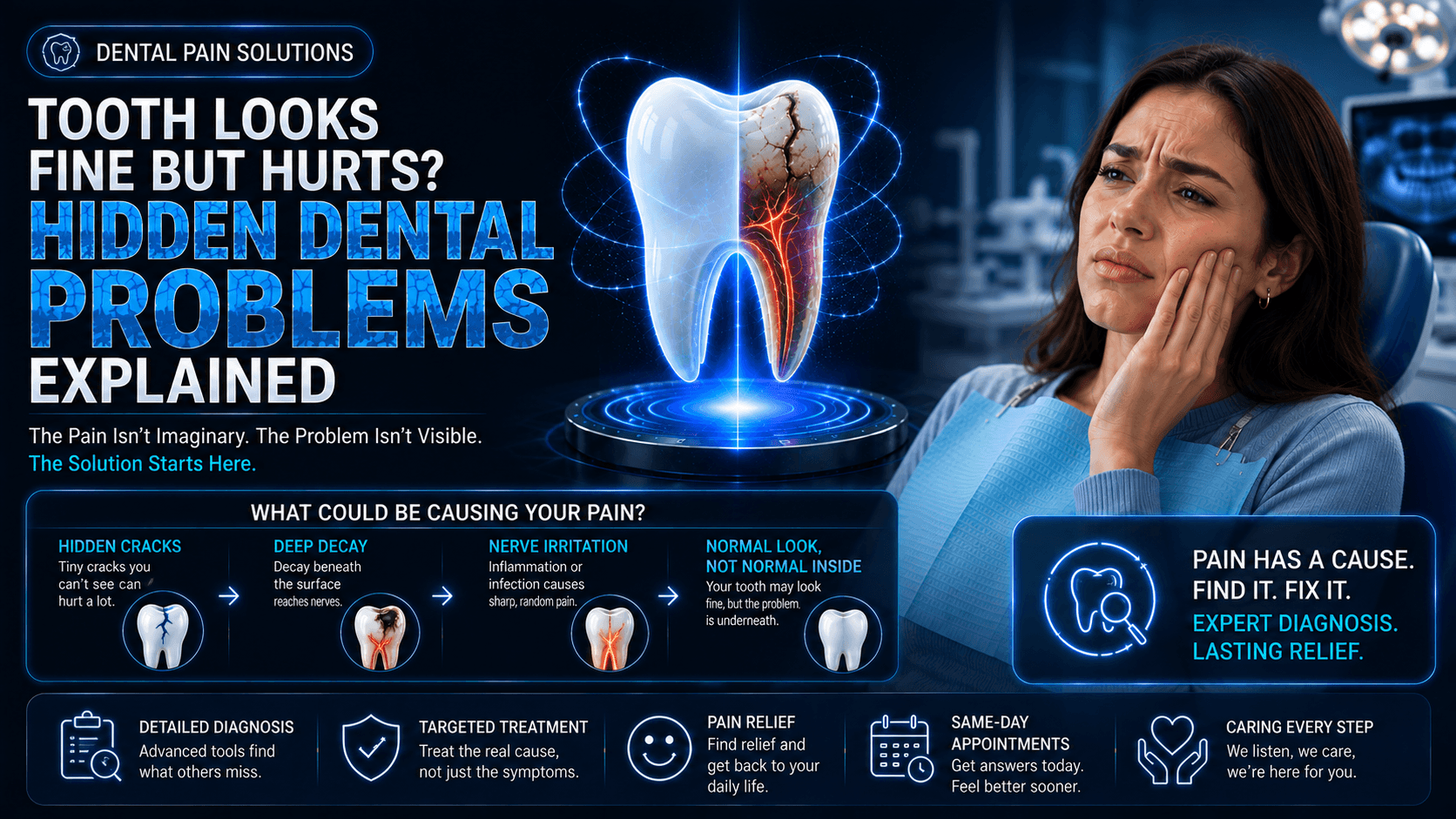
Dental problems do not always produce symptoms that reflect their true severity. A small cavity may cause no pain. A cracked tooth may only hurt occasionally when chewing. Gum inflammation can progress quietly, and even an infected tooth can temporarily become less painful as the pulp loses vitality.
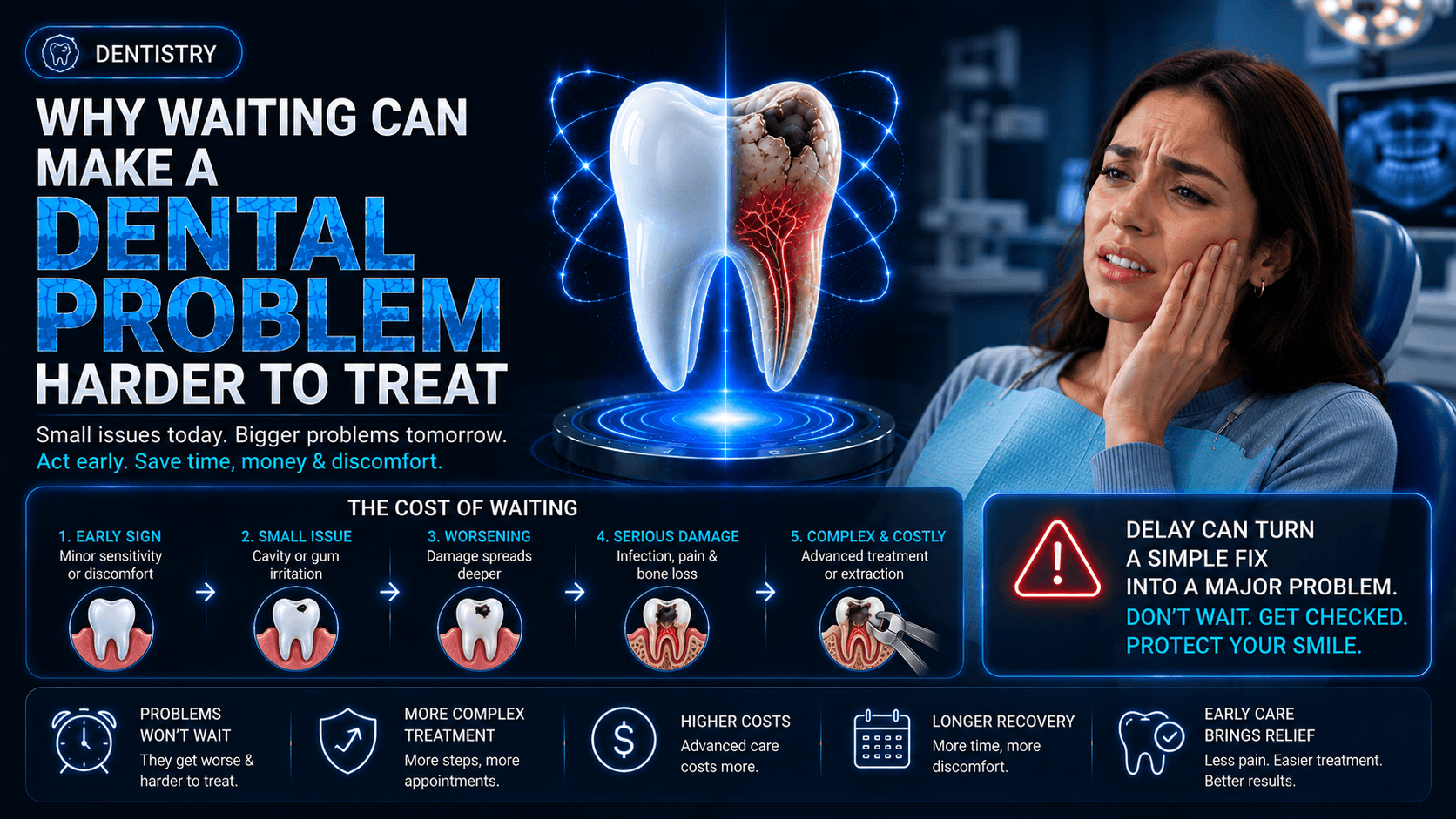
This is why delaying urgent dental care until symptoms become intolerable can turn a relatively localised problem into one requiring more complex treatment.
The important clinical principle is simple: absence of severe pain does not necessarily mean absence of disease.
Dental Disease Often Progresses Before Pain Becomes Severe
Many dental conditions develop gradually through different tissues.
Consider dental decay. It usually begins with demineralisation of the outer enamel. Because enamel does not contain nerves, early decay may produce little or no discomfort. Once decay progresses into dentine, sensitivity may become more noticeable. If bacteria eventually reach the dental pulp, inflammation or infection can develop.
The treatment required at each stage can be very different.
An early lesion may sometimes be managed conservatively depending on its extent. A cavitated tooth may require a filling. Once the pulp is irreversibly affected, root canal treatment or extraction may become necessary.
Waiting for severe pain therefore does not simply postpone the same treatment. It may change what treatment is clinically possible.
A Cracked Tooth Is Another Good Example
Cracks can be difficult for patients to interpret because symptoms are often intermittent.
There may be sharp pain when biting on a particular part of the tooth, sensitivity to temperature or discomfort that disappears quickly. Because the pain is not constant, it can be tempting to continue using the tooth normally.
However, cracks can propagate further through tooth structure.
If a crack remains limited and sufficient healthy tooth structure is available, restorative treatment may sometimes protect the tooth. If it extends into the pulp or deeply towards the root, the prognosis can become considerably more complicated.
Seeking urgent dental care when new biting pain or sudden structural damage develops gives the dentist an opportunity to assess the tooth before additional damage occurs.
Why Dental Pain Can Disappear Without the Problem Healing
One of the more misleading situations occurs when severe toothache suddenly improves.
Inside each healthy tooth is pulp tissue containing nerves and blood vessels. When the pulp becomes severely inflamed, pain can be intense. If the pulp subsequently becomes necrotic, nerve activity can diminish and the original pain may decrease.
That reduction in pain can create the impression that the tooth has recovered.
It has not necessarily healed.
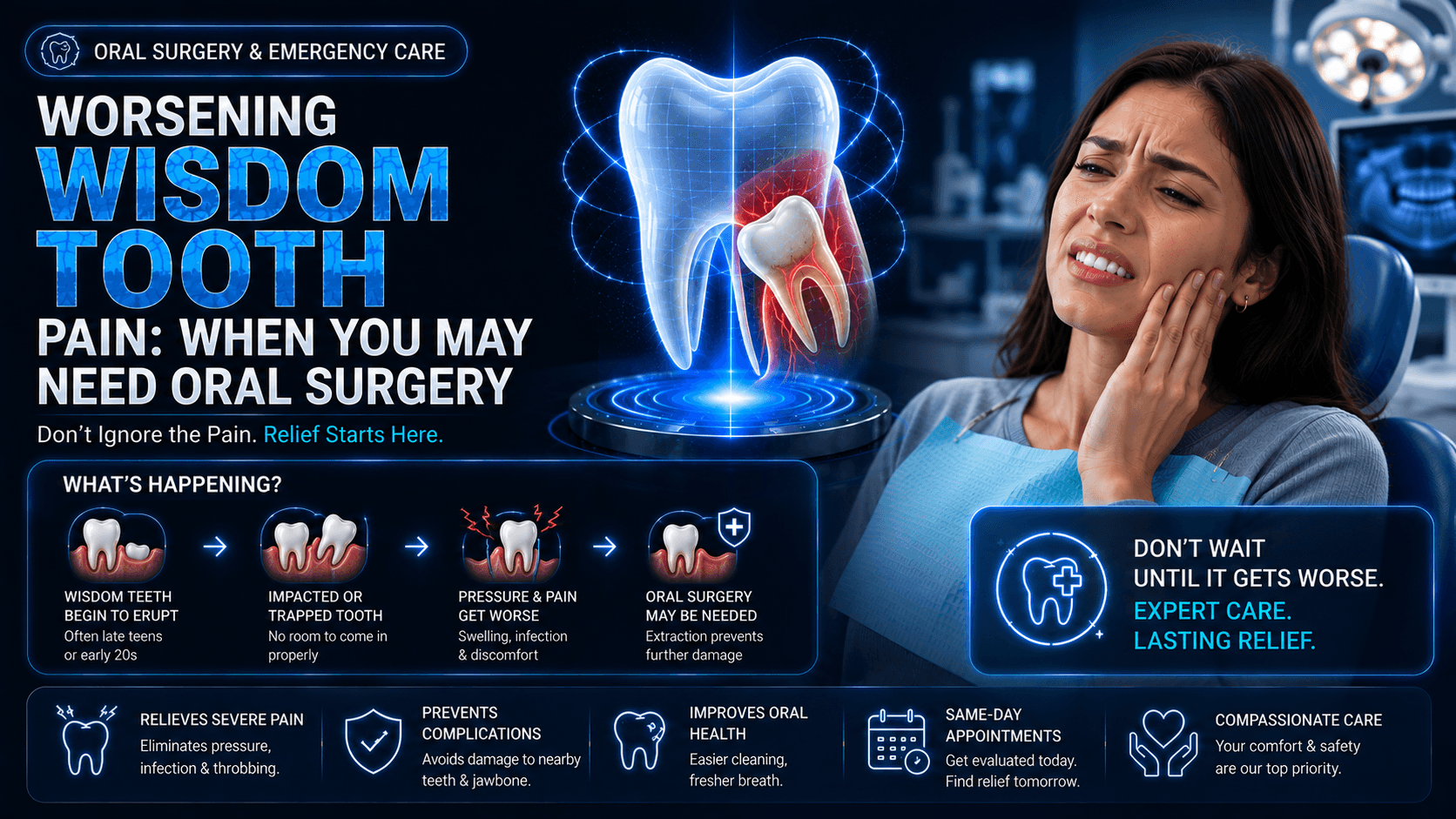
Bacteria may remain within the root canal system and infection can extend through the root into surrounding tissues. Later symptoms may include biting tenderness, gum swelling, drainage or a dental abscess.
Pain disappearing is therefore not a reliable reason to cancel an assessment.
What Changes When Infection Begins to Spread?
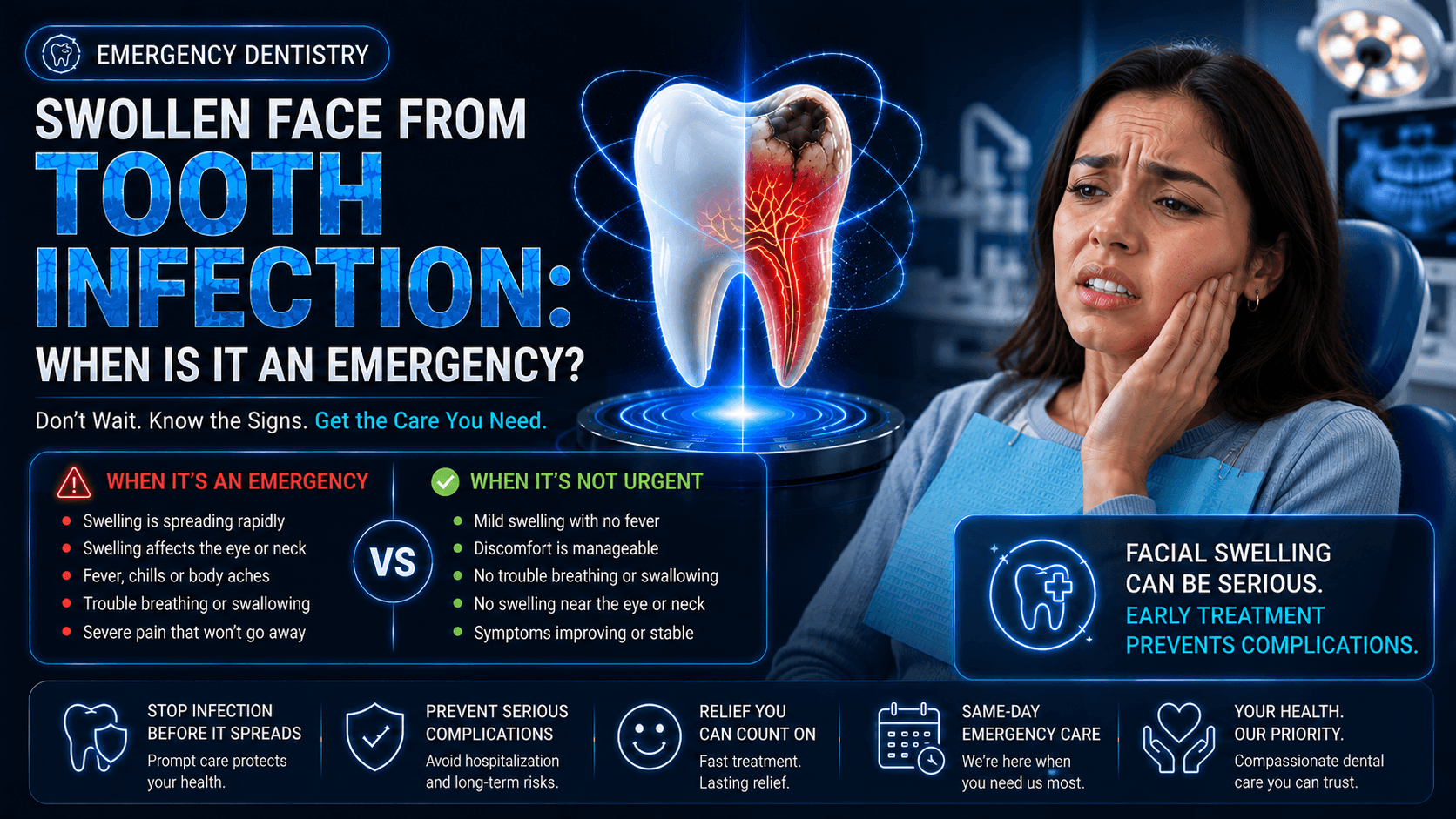
A dental infection that remains confined to a tooth presents a different clinical situation from one that has spread into surrounding tissues.
As infection progresses, patients may develop:
- Localised gum swelling
- Facial or jaw swelling
- Increasing tenderness
- Pus or an unpleasant taste
- Difficulty opening the mouth
- Fever or general illness
- Swollen or tender tissues around the affected area
At this stage, urgent dental care becomes particularly important because the dentist needs to determine the source and extent of the infection.
Difficulty breathing or swallowing, rapidly increasing swelling or significant swelling extending into the neck requires immediate emergency medical attention.
Delaying Gum Problems Can Also Reduce Treatment Options
Not every significant dental problem begins with toothache.
Periodontal disease affects the tissues supporting the teeth, including the gums and underlying bone. Early gum inflammation may cause bleeding, redness or swelling without significant pain.
If disease progresses and supporting structures are damaged, teeth can eventually become mobile or develop changes in their periodontal support.
Because periodontal problems can advance without dramatic symptoms, waiting for pain is a poor method of deciding when treatment is necessary.
Regular dental examinations are particularly important for identifying conditions that patients may not be able to detect themselves.
The Goal of Early Assessment Is Not Always Immediate Treatment
Seeing a dentist promptly does not mean that every symptom will result in an invasive procedure.
An assessment is primarily about establishing a diagnosis.
The dentist may evaluate the tooth, gums, bite and surrounding structures, perform appropriate diagnostic tests and use dental imaging where necessary. The findings determine whether treatment is required immediately, can be scheduled routinely or whether the area can simply be monitored.
That distinction is important. Earlier assessment often provides more information and potentially more treatment choices.
Know Which Symptoms Should Move Up Your Priority List
Certain symptoms should make a dental appointment more urgent rather than something to postpone indefinitely.
These include persistent toothache, new swelling, a broken tooth, significant biting pain, dental trauma, prolonged temperature sensitivity or signs of infection.
Prompt urgent dental care is particularly appropriate when symptoms are worsening rather than remaining stable.
The objective is not to wait until pain becomes unbearable. It is to identify what is happening while the problem may still be more manageable.
Earlier Diagnosis Can Protect More Than Comfort
Delaying a dental problem can allow decay, structural damage, pulpal disease or infection to progress. By the time symptoms become severe, preserving the affected tooth may require more extensive treatment than would have been necessary earlier.
Dual Arc Dental provides comprehensive and emergency dental care for patients in Schertz. If a dental problem is worsening or has developed suddenly, the team can assess the cause and discuss appropriate treatment based on the clinical findings.
Frequently Asked Questions
1. Should I see a dentist if tooth pain comes and goes?
Yes. Intermittent pain can still indicate decay, a crack, pulpal inflammation or another dental condition. The absence of constant pain does not rule out a problem.
2. Why has my toothache suddenly stopped?
One possibility is that inflammation has reduced, but pain can also disappear if severely damaged pulp tissue loses vitality. A previously painful tooth should still be assessed.
3. Does every cavity become a root canal if untreated?
Not every cavity progresses at the same rate, but decay that reaches and irreversibly damages the pulp may require root canal treatment or extraction.
4. When does dental swelling become an emergency?
Rapidly increasing swelling, difficulty breathing or swallowing, significant neck involvement or serious systemic symptoms require immediate emergency medical attention.
5. Can a dentist treat a problem before it becomes painful?
Yes. Dental examinations and diagnostic imaging can identify many conditions before severe symptoms develop, potentially allowing earlier and more conservative management.