

Swollen Face From a Tooth Infection: When Is It an Emergency?
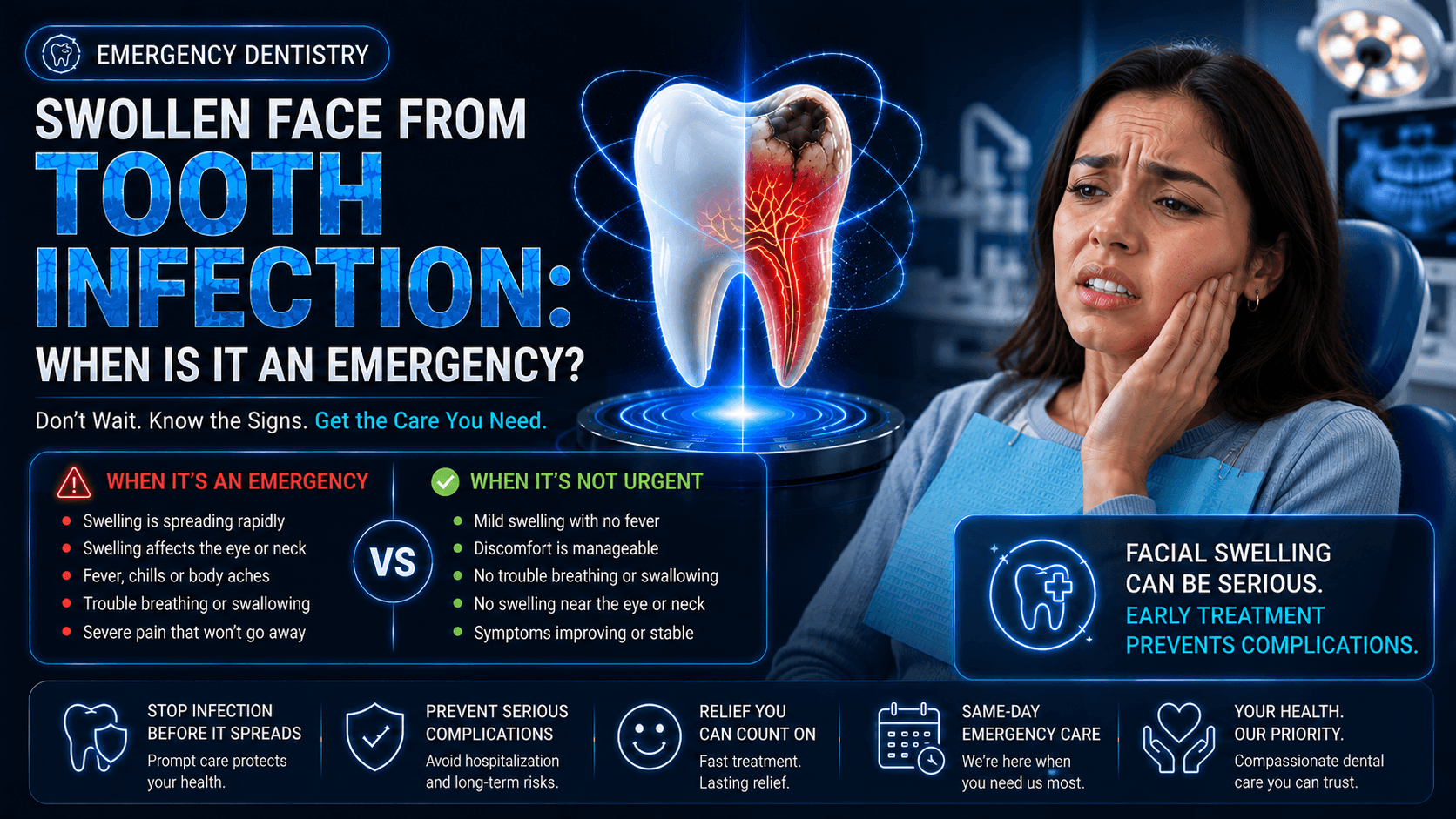
Facial swelling associated with tooth pain should be treated differently from an ordinary toothache. It can indicate that an infection originating in a tooth or the surrounding tissues has extended beyond its initial site. While some dental infections remain localised, others can progress and require urgent intervention. If swelling is increasing, particularly around the jaw, cheek or neck, seeking emergency dental care nearby should become a priority rather than waiting for the problem to resolve on its own.
The degree of swelling alone does not determine the severity of an infection. Its location, rate of progression and accompanying symptoms are equally important.
How Does a Tooth Infection Cause Facial Swelling?
Dental infections commonly develop when bacteria reach tissues that are normally protected. Deep dental decay, a cracked tooth, trauma or advanced infection within the pulp can provide a pathway for bacteria.
When infection extends through the root of a tooth, it may affect the tissues and bone around the root tip. Pus can accumulate as part of the body's inflammatory response, potentially producing a dental abscess.
As inflammation progresses beyond the immediate area, swelling may become visible externally.
Depending on the affected tooth and direction of infection, swelling can appear around the:
- Gum adjacent to the infected tooth
- Cheek or lower face
- Jaw
- Area beneath the jaw
- Upper lip or side of the nose
- Tissues surrounding the eye in certain upper-tooth infections
This progression is one reason facial swelling requires professional assessment.
When Does Facial Swelling Require Immediate Attention?
A small area of gum swelling and rapidly expanding facial swelling are not clinically equivalent.
Certain symptoms can suggest that infection is spreading or beginning to affect important anatomical structures. Urgent assessment is particularly important when facial swelling is accompanied by:
- Fever, chills or feeling generally unwell
- Rapidly increasing swelling
- Significant difficulty opening the mouth
- Swelling extending towards the eye or neck
- Increasing difficulty swallowing
- Changes in speech or voice
- Persistent or severe dental pain
Difficulty breathing or swallowing, significant neck swelling, rapidly progressing swelling or signs of serious systemic illness require immediate emergency medical attention.
For less severe but definite facial swelling associated with a tooth, arranging emergency dental care nearby promptly allows the source and extent of the infection to be assessed before further progression.
Why Waiting for the Swelling to Reduce Can Be Risky
Dental infections do not reliably follow a predictable pattern.
Pain may temporarily improve if pressure changes or an abscess begins draining. Swelling may also fluctuate. Neither necessarily means that the source of infection has been eliminated.
The infected tooth or surrounding tissue can remain diseased even when symptoms temporarily become less noticeable.
This is particularly important because dental infections generally require treatment directed at their source. Managing discomfort alone does not remove infected tissue or correct the underlying dental problem.
What Will a Dentist Assess?
Urgent dental assessment focuses on identifying where the infection began and determining its extent.
The dentist may examine the teeth, gums, face and surrounding tissues. Dental radiographs may be required to investigate the tooth roots, supporting bone and other structures that cannot be evaluated fully through visual examination alone.
The assessment may consider:
- Whether the dental pulp is infected or non-vital
- Whether an abscess is present
- The amount and location of swelling
- Whether infection appears localised or spreading
- Whether the affected tooth can be retained
- Which dental procedure is appropriate for controlling the source
Treatment will depend on the diagnosis. Root canal treatment, drainage or tooth extraction may be considered in appropriate cases. Antibiotics may also be prescribed when clinically indicated, particularly when there are signs of spreading or systemic infection.
Are Antibiotics Enough for a Dental Abscess?
This is an important misconception.
Antibiotics can be necessary in certain dental infections, but they do not automatically eliminate the source of an abscess. If bacteria are present within infected pulp tissue or another dental source remains untreated, definitive dental treatment may still be necessary.
For this reason, someone searching for emergency dental care nearby should expect the dentist to investigate the cause rather than simply focus on reducing the swelling.
The objective is not only symptom control. It is to manage the source of infection and reduce the risk of recurrence or further spread.
What Should You Do While Waiting to Be Seen?
If you are waiting for an urgent dental appointment, avoid attempting to drain or puncture the swollen area yourself.
Continue gentle oral hygiene where tolerable and avoid chewing around the affected tooth. If pain relief is required, use appropriate over-the-counter medication only according to its directions and provided it is suitable for you.
Most importantly, monitor the swelling. A noticeable increase, new fever, difficulty swallowing, breathing changes or extension towards the neck or eye should change the level of urgency.
Do Not Treat Facial Swelling as Just Another Toothache
A swollen face associated with dental infection is a clinical warning sign, not merely a cosmetic consequence of tooth pain. Early assessment can determine whether the infection remains localised and what treatment is required to control its source.
Dual Arc Dental provides emergency dentistry and comprehensive dental care in Schertz. If dental pain has progressed to facial or jaw swelling, contacting the practice for emergency dental care nearby can help you obtain an appropriate assessment and understand the next treatment steps.
Frequently Asked Questions
1. Can a tooth infection make one side of my face swell?
Yes. Infection originating from a tooth can spread into surrounding tissues and cause localised swelling of the cheek, jaw or other areas of the face.
2. Should I go to the hospital for facial swelling caused by a tooth?
Immediate emergency medical care is appropriate if swelling is affecting breathing or swallowing, spreading rapidly towards the neck or eye, or accompanied by signs of serious illness. Other dental swelling still warrants prompt dental assessment.
3. Can a dental abscess disappear without treatment?
Symptoms can temporarily improve, particularly if an abscess drains, but the underlying source of infection may remain. Professional assessment is still required.
4. Will antibiotics reduce facial swelling from an infected tooth?
Antibiotics may be appropriate when specific clinical indications are present, but they may not replace treatment of the underlying dental source.
5. What dental treatments may be used for an infected tooth?
Treatment depends on the diagnosis and condition of the tooth. Options can include root canal treatment, drainage or extraction, with additional medication when clinically indicated.