

Your Tooth Looks Fine, So Why Does It Hurt? Hidden Dental Problems Explained
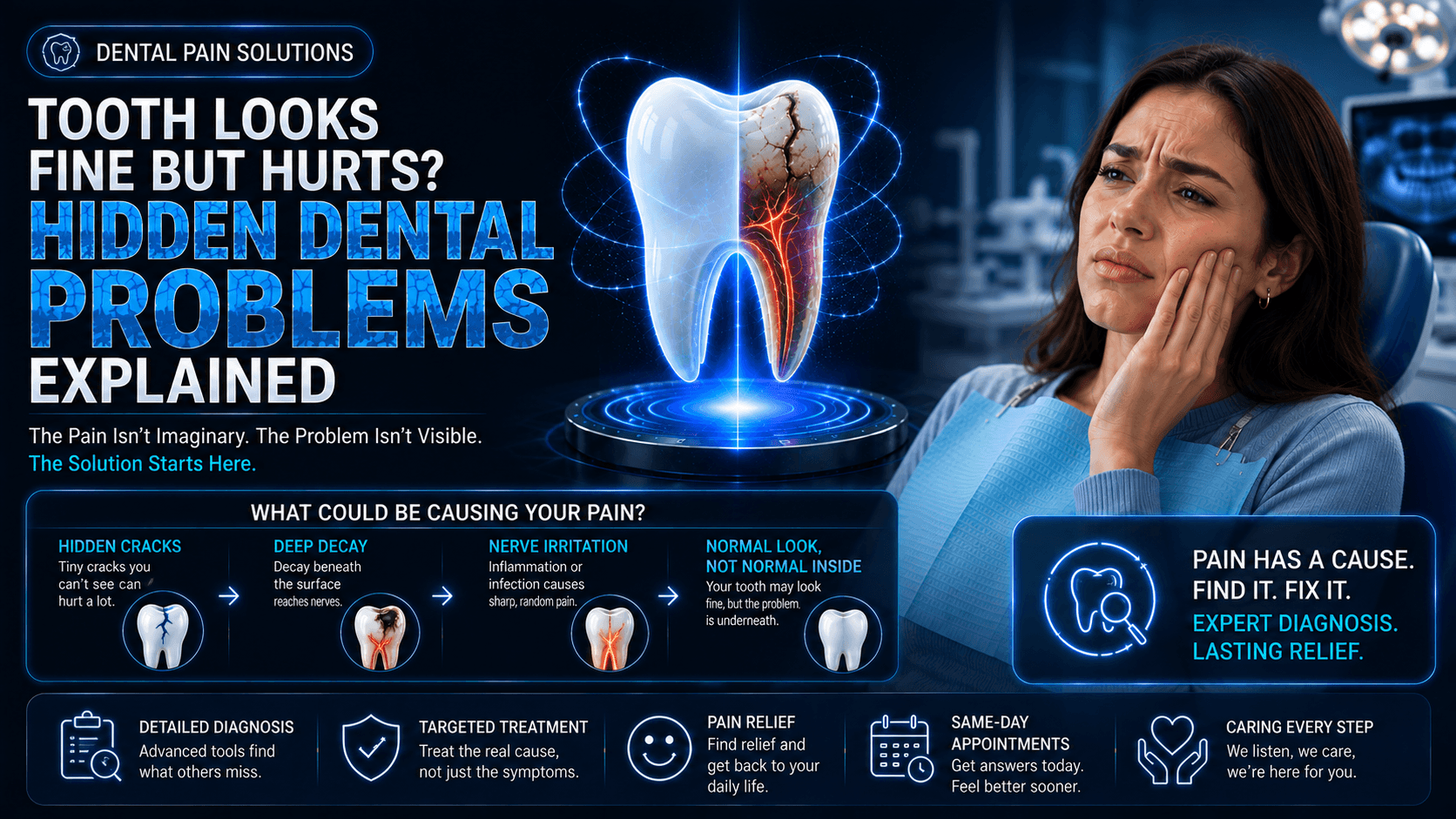
A tooth can look completely normal in the mirror and still have a significant problem beneath the surface. Dental pain is not determined by appearance alone. Cracks may be microscopic, decay can develop between teeth, and inflammation can occur inside the pulp without producing an obvious external change. If unexplained pain persists, searching for an endodontist nearby may become relevant
when symptoms suggest that the tissues inside or around the tooth require closer evaluation.
The location, duration and triggers of the pain often provide more useful clinical information than what the tooth looks like.
A Healthy-Looking Surface Does Not Tell the Whole Story
Only part of a tooth can be examined visually without diagnostic testing. Beneath the enamel is dentine, followed by the pulp chamber containing nerves, blood vessels and connective tissue. The roots extend below the gum and are surrounded by supporting bone.
Disease can therefore develop in areas that are not visible when looking into the mouth.
A dentist may need to combine the patient's symptoms with clinical tests and dental radiographs to determine what is happening internally.
Several conditions can produce significant pain despite minimal visible changes.
1. A Crack May Be Too Small to See
Cracked teeth can be diagnostically challenging.
A fine crack may not be visible without magnification or specialised examination. Yet movement of the cracked segments during chewing can irritate the pulp and surrounding tissues.
Typical symptoms can include:
- Sharp pain when biting or releasing pressure
- Sensitivity to cold
- Pain that comes and goes
- Difficulty identifying exactly which tooth hurts
- Discomfort when chewing particular foods
The depth and direction of the crack determine whether the tooth can be restored and whether the pulp has been affected.
A superficial crack and one extending deeply towards the root require very different management.
2. Decay Can Develop Where You Cannot See It
Not all cavities form on an easily visible chewing surface.
Decay frequently develops between neighbouring teeth, where it may remain concealed during normal visual inspection. A tooth can therefore appear intact from the front while demineralisation and cavitation progress along a contact surface.
Early decay may produce no symptoms. As it advances through enamel into dentine, sensitivity can develop. Once the pulp becomes significantly inflamed, pain may become spontaneous or persist after exposure to temperature.
Dental radiographs can be particularly useful for detecting decay in areas that cannot be directly examined.
3. The Problem May Be Inside the Dental Pulp
Pulpal inflammation is another reason a normal-looking tooth can hurt.
Deep decay, repeated dental procedures, trauma or cracks can irritate the pulp. Depending on the severity, inflammation may be reversible or may progress to a stage where the pulp cannot recover.
Symptoms suggesting more significant pulpal involvement may include:
- Lingering pain after hot or cold exposure
- Spontaneous toothache
- Throbbing pain
- Pain that disrupts sleep
- Difficulty localising the source
When these symptoms are present, an endodontist nearby or a dentist providing endodontic care can assess whether the pulp is still healthy or whether root canal treatment may be required.
4. An Old Injury Can Become Relevant Years Later
Dental trauma does not always cause immediate visible damage.
A tooth that was struck during sport, a fall or another accident may initially appear to recover. However, the pulp can sometimes deteriorate gradually after trauma.
Months or even years later, the tooth may develop pain, discolouration, sensitivity changes or infection around the root.
This is why a history of previous dental trauma is clinically relevant, even when the incident occurred long before the current symptoms began.
5. Pain May Be Referred From Somewhere Else
The tooth that appears to hurt is not always the tooth causing the problem.
Dental nerves share complex pathways, and pain can sometimes be referred between neighbouring teeth or even between different regions of the mouth.
Muscles and jaw joints can also produce pain that patients interpret as dental discomfort. In some situations, sinus-related pressure may create symptoms around the upper teeth.
Accurate diagnosis therefore matters before treatment begins. Treating the tooth that merely feels painful without confirming the source could fail to resolve the actual problem.
Why Endodontic Testing Can Be Important
When pulpal or root-related disease is suspected, diagnosis can involve more than simply taking an X-ray.
A dental professional may assess:
- Response to cold or other pulp sensibility testing
- Tenderness when the tooth is tapped
- Pain during biting
- Gum and periodontal findings
- Mobility
- Existing restorations
- Radiographic changes around the roots
These findings are interpreted together. No single test necessarily provides the complete diagnosis.
For patients searching for an endodontist nearby, this diagnostic process is particularly important because root canal treatment should only be performed when clinical findings indicate that endodontic disease is present.
Do Not Wait for the Tooth to Look Damaged
Visible deterioration is often a late sign of dental disease.
A tooth can have significant pulpal inflammation, an internal infection or a structural crack while still appearing relatively normal externally. Persistent pain, particularly spontaneous pain or prolonged sensitivity, deserves investigation even when there is no obvious cavity.
Similarly, a toothache that suddenly disappears should not always be interpreted as recovery. If pulp tissue loses vitality, pain can reduce before infection later develops around the root.
Diagnosis Comes Before Treatment
Unexplained tooth pain requires investigation, not guesswork. Cracks, hidden decay, previous trauma and pulpal disease can all exist beneath a tooth that appears healthy, and identifying the source determines whether restorative, endodontic or another form of treatment is appropriate.
Dual Arc Dental provides endodontic care and comprehensive dental services in Schertz. If persistent or unexplained tooth pain has you searching for an endodontist nearby, the dental team can assess the affected tooth and discuss treatment according to the clinical findings.
Frequently Asked Questions
1. Can a tooth hurt even when an X-ray looks normal?
Yes. Some cracks, early pulpal changes and other conditions may not produce obvious radiographic findings. Diagnosis can require clinical testing alongside imaging.
2. Why does my tooth only hurt when I bite?
Pain on biting can be associated with several conditions, including a crack, inflammation around the root or problems with the bite. A dental examination is required to identify the cause.
3. Does lingering cold sensitivity mean I need a root canal?
Not automatically. The duration, intensity and pattern of sensitivity must be considered with other clinical findings before determining whether the pulp is irreversibly inflamed.
4. Can an old dental injury cause pain years later?
Yes. Trauma can sometimes affect pulp health gradually, meaning complications may become apparent months or years after the original injury.
5. Why can I not tell which tooth is causing the pain?
Dental pain can be referred through shared nerve pathways, making localisation difficult. Clinical testing helps compare neighbouring teeth and identify the likely source.