

Can You Get Professional Teeth Whitening if You Have Fillings, Crowns or Veneers?
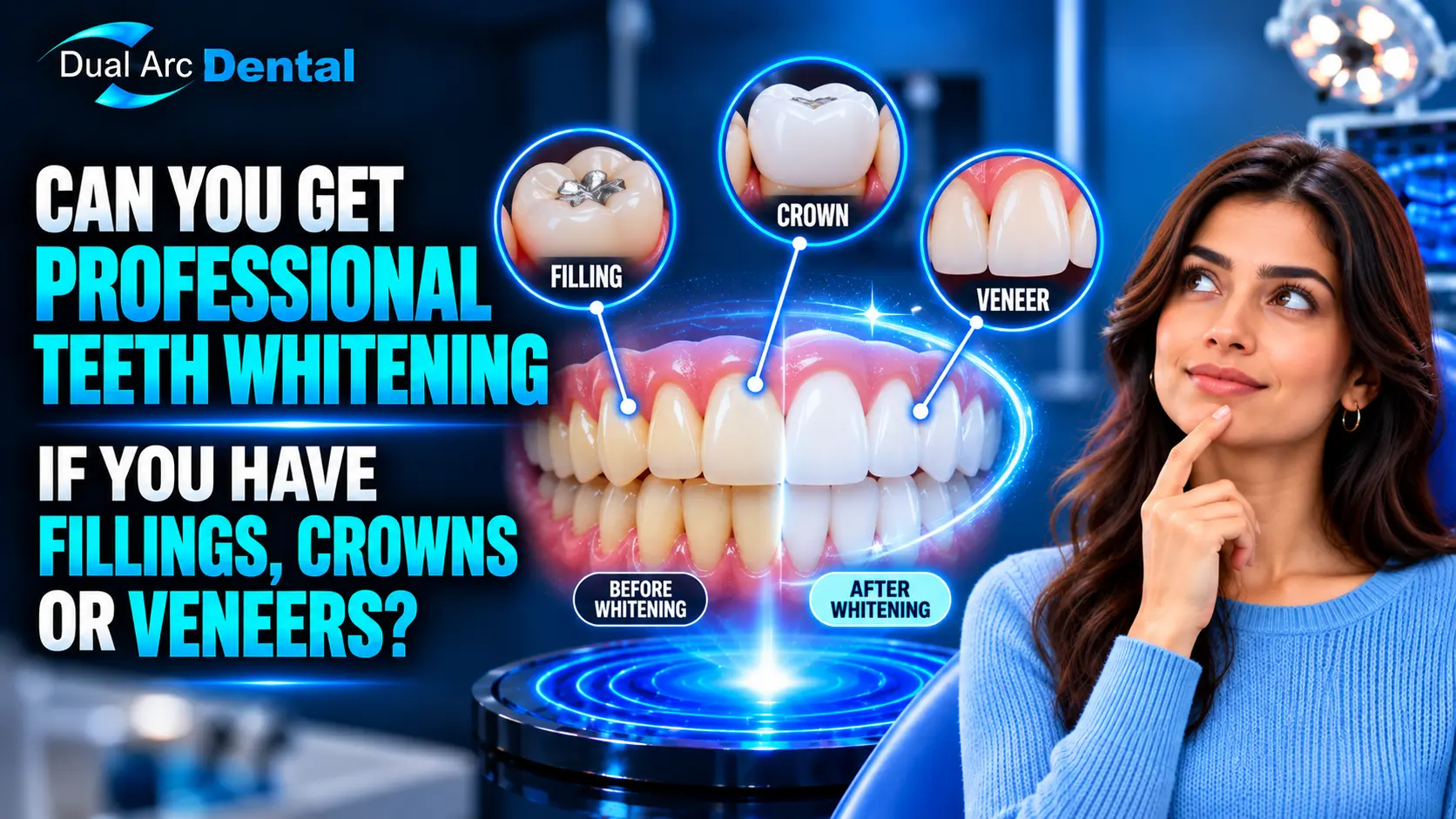
One of the first things worth checking before a whitening appointment is whether you have any dental work that shows when you smile.
That front tooth with a filling might blend in perfectly today. Your crown may be an almost exact match to the teeth beside it. But if you whiten your natural teeth, the color difference could become noticeable.
This doesn't mean whitening is off the table. Plenty of people with fillings, crowns, or veneers can still have their natural teeth whitened. The question is whether the final result will look the way they expect.
At Dual Arc Dental in Schertz, TX, patients considering professional teeth whitening can have their existing dental work assessed before choosing a treatment.
Why Whitening Doesn't Change the Color of Dental Work
Natural teeth and dental restorations are made of very different materials.
Professional whitening products generally use hydrogen peroxide or carbamide peroxide. These ingredients act on discoloration within natural tooth structure, helping make teeth appear lighter.
Fillings, crowns, and veneers don't respond in the same way.
Their shades are selected when they're made or placed. A porcelain crown that matched your teeth five years ago will retain essentially the same underlying shade after whitening.
The natural teeth around it, however, may become lighter.
This is why dentists ask about previous dental work during a whitening consultation. They're not just checking whether whitening is suitable. They're also considering how your teeth will look afterward.
What Happens if You Have Tooth-Colored Fillings?
It depends on where the fillings are.
A small filling on a back molar may not matter much to the appearance of your smile. Even if the surrounding enamel becomes lighter, the difference might be difficult for anyone to notice.
A filling on a front tooth is another matter.
Imagine having bonding along the edge of a front tooth. It currently matches the enamel well enough that you barely notice it. After whitening, the natural portion of that tooth may become brighter while the bonding stays its original shade.
You could end up with a visible color difference on the same tooth.
That doesn't necessarily mean the filling needs replacing. Your dentist will consider how noticeable the mismatch is and whether the restoration is otherwise healthy.
If the filling is old, stained, or damaged, replacing it may make sense. But removing a sound filling purely because you're considering whitening isn't always necessary.
Can You Whiten Teeth When You Have a Crown?
Yes, although the crown itself won't become lighter.
The location of the crown makes a considerable difference.
A crown on a back tooth might not affect your whitening plans very much. But if you have a crown on one of your front teeth, you need to consider how it will match the neighboring teeth.
For example, suppose your front crown was made to match teeth that have gradually darkened over the years.
Whitening the natural teeth could leave the crown looking slightly darker.
In some cases, your dentist may recommend whitening first and then discussing whether the crown needs to be remade to match the new shade.
Replacing a crown is a separate dental procedure with its own cost and considerations, so it's worth understanding the possibility before beginning treatment.
What About Porcelain Veneers?
Porcelain veneers are designed to maintain their appearance, but that doesn't mean they never collect surface stains.
Coffee, tea, tobacco, and other habits may affect the appearance of the veneer surface or its margins over time.
A professional cleaning or polishing may help remove certain surface deposits.
However, bleaching gel won't change the underlying color of the porcelain.
If you have veneers on your front teeth, whitening the uncovered natural teeth may create an uneven appearance.
Sometimes patients ask whether they can simply keep using whitening strips until the veneers match.
Unfortunately, additional bleaching won't make porcelain veneers lighter. It may only increase the difference between the restorations and your natural teeth.
A cosmetic dentistry consultation can help determine whether cleaning, whitening, or another approach is appropriate.
Should You Whiten Your Teeth Before Getting New Veneers or Crowns?
If you're planning new cosmetic dental work, timing matters.
Let's say you're considering veneers on two front teeth but also want the rest of your smile to look brighter.
Your dentist may recommend completing whitening first. Once your natural tooth color has stabilized, the new restorations can be shade-matched more accurately.
This approach can help avoid choosing a crown or veneer color that no longer matches after whitening.
Your dentist may recommend allowing approximately one to two weeks, sometimes longer, between whitening and certain bonding procedures, depending on the treatment.
There's no need to make that decision yourself. What's important is telling your dentist about your whitening goals before the new restoration is made.
Planning the sequence may save you from being dissatisfied with the color later.
Can Professional Cleaning Be Enough?
Not every stained smile needs bleaching.
Some discoloration is caused by surface deposits rather than changes within the natural tooth.
Coffee stains, tobacco deposits, and accumulated plaque may make teeth appear darker or duller.
A professional cleaning can remove certain stains and deposits. That may improve the appearance of both natural teeth and some restorations without changing their underlying shades.
If you haven't had a cleaning recently, it may be worth starting with a general dental examination.
Your dentist can distinguish surface staining from discoloration that might respond to bleaching.
It's a useful step before committing to cosmetic treatment.
What Should Your Dentist Examine Before Whitening?
Existing restorations are only part of the picture.
Your dentist should also check for cavities, gum inflammation, exposed roots, cracked teeth, and areas of sensitivity.
Whitening products can temporarily increase tooth sensitivity. If you already have discomfort, an examination may identify problems that should be addressed first.
The dentist will also consider the original tooth shade and the kind of discoloration you're trying to improve.
Yellowish discoloration often responds differently from gray or deeply internal stains.
If you're searching for the best dentist near me because you want a whiter smile, look for a dentist who explains these limitations rather than promising that every tooth will become the same bright shade.
At Dual Arc Dental's teeth whitening service, patients can discuss whitening options and how existing dental work may affect the outcome.
Thinking About Whitening? Check Your Existing Dental Work First
Having a crown, filling, or veneer doesn't automatically prevent you from whitening your natural teeth.
But it's worth knowing whether the result could make an existing restoration more noticeable.
Sometimes whitening alone is reasonable. In other cases, your dentist may recommend cleaning first, planning a future restoration around your preferred shade, or discussing alternatives.
Dual Arc Dental provides cosmetic and general dental care for patients in Schertz, Cibolo, Selma, Universal City, and nearby communities.
If you're considering professional whitening, contact the practice to arrange a consultation and discuss what will work with your existing dental work.
Dual Arc Dental
1248 FM 78, Suite 105, Schertz, TX 78154
Phone: (210) 375-5256
The most useful thing to establish before whitening isn't how many shades lighter you could go. It's whether your natural teeth and existing dental work will still look right together.
Frequently Asked Questions
1. Will professional whitening damage my fillings or crowns?
Dentist-supervised whitening generally can be used in patients with sound restorations, but existing dental work should be examined first. Whitening may cause temporary sensitivity or gum irritation, and it won't change restoration color.
2. Can a dentist whiten a porcelain crown?
No. Whitening products don't change the underlying shade of porcelain crowns. If a visible crown no longer matches your natural teeth, your dentist can discuss whether replacement is appropriate.
3. Should I replace my fillings after whitening?
Not automatically. A replacement may be considered if a visible filling no longer matches or is already defective. Fillings that remain healthy and aren't noticeable may not need changing.
4. Can I use whitening strips if I have veneers?
Whitening strips may lighten exposed natural teeth but won't lighten veneers. That can leave visible shade differences, so consult your dentist before using them.
5. Is it better to whiten before getting veneers?
Often, yes, when you want both your natural teeth and new veneers to match a lighter shade. Your dentist can recommend the appropriate treatment sequence and timing.
6. Where can I get professional teeth whitening in Schertz, TX?
Dual Arc Dental offers professional teeth whitening and cosmetic dental consultations in Schertz. An examination can help determine whether whitening is suitable and whether existing restorations may affect your results.