

A Permanent Tooth Feels Loose After an Injury: Can an Emergency Dentist Stabilize It?
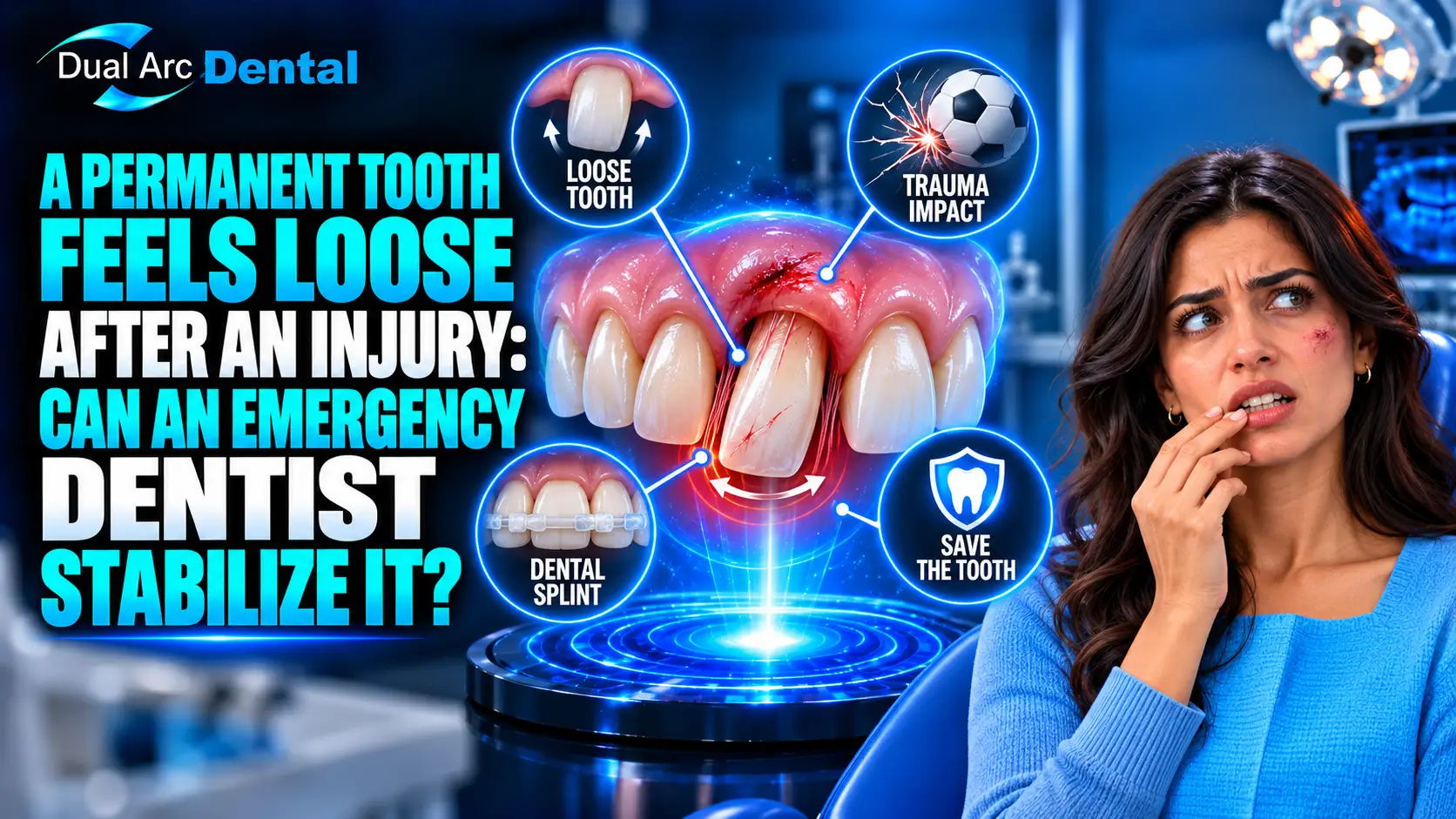
You get hit in the mouth, check your teeth, and thankfully, nothing seems broken. Then you close your mouth and notice that one tooth doesn't feel quite right. Maybe it moves a little when you speak. Maybe biting down feels uncomfortable, even though there's hardly any pain.
It's tempting to leave it alone for a day or two, especially if there's no bleeding. But a permanent tooth shouldn't suddenly become loose after an accident.
The good news is that a loose tooth doesn't necessarily have to be removed. Depending on the damage, an emergency dentist may be able to stabilize it and give the surrounding tissues time to heal.
For anyone dealing with a dental injury in Schertz, TX, knowing what to do during those first few hours can make a real difference.
Why Does a Permanent Tooth Become Loose After Getting Hit?
Your teeth have a small amount of natural movement. They're held in place by tiny fibers called the periodontal ligament, which connect the roots to the jawbone.
When something hits your mouth with enough force, those fibers can stretch or tear. The tooth may loosen without actually breaking.
Dentists see this with sports injuries, falls, bicycle accidents, and unexpected bumps to the face.
Sometimes the injury is limited to the ligament. Other times, the tooth has shifted in its socket, the surrounding bone is damaged, or the nerve inside the tooth has been affected.
Here's the tricky part: you can't always tell the difference by looking in a mirror.
A tooth that appears normal can still have an injury below the gumline. That's one reason dentists recommend having a newly loose permanent tooth examined promptly.
Can an Emergency Dentist Make the Tooth Stable Again?
In some cases, yes. One option is a procedure called dental splinting.
Think of a splint as temporary support for the injured tooth. The dentist bonds a thin, flexible material to the loose tooth and nearby healthy teeth. This reduces unwanted movement while the damaged ligament heals.
It isn't the same as permanently joining teeth together.
The splint is usually removed once the dentist decides the tooth has had enough time to recover.
For certain injuries, that may be around two weeks. A tooth with a root fracture or damage to the surrounding bone could need longer support.
What if the Tooth Is Only Slightly Loose?
Not every injured tooth needs a splint.
If the tooth hasn't moved out of position and the looseness is minor, the dentist may recommend a soft diet, careful cleaning, and follow-up appointments instead.
The decision depends on what the examination shows, not simply how loose the tooth feels.
An emergency dentistry appointment helps determine whether stabilization is needed or whether the tooth can heal with monitoring.
What Should You Do Before Seeing the Dentist?
The biggest mistake people make is repeatedly checking whether the tooth is still loose.
It's understandable. You want to know whether it's getting better. But pushing it with your tongue or fingers can disturb tissues that are already injured.
Until your appointment:
- Leave the tooth alone, even if it feels slightly out of place.
- Avoid chewing on that side of your mouth.
- Eat softer foods and skip anything crunchy or difficult to bite.
- Use a cold compress against your cheek if there's swelling.
- Keep your mouth clean, but be gentle around the injured area.
- Call a dental office as soon as possible.
Don't try to push the tooth back into position yourself or create a homemade splint.
If the injury also involves heavy bleeding that won't stop, significant facial trauma, or difficulty breathing, seek emergency medical attention.
What Will the Dentist Check During Your Visit?
Your dentist will first want to know how the injury happened and whether the tooth feels different when you bite.
They'll check how much it moves, whether it has shifted, and if the nearby teeth or gums were affected.
Dental X-rays may be needed to look for a root fracture or damage to the bone supporting the tooth.
The dentist may also check how the nerve inside the tooth responds to stimulation.
One thing worth knowing is that an injured tooth doesn't always respond normally to these tests right away. That doesn't automatically mean the nerve is dead.
Your dentist may need to repeat certain tests during follow-up visits before deciding whether additional treatment is necessary.
These examinations are part of general dental care, but a recent injury calls for prompt assessment rather than waiting for a routine checkup.
What if the Tooth Stops Hurting After a Few Days?
Less pain is encouraging, but it doesn't always mean everything has healed.
A tooth can become more comfortable while the ligament is recovering. However, problems involving the pulp or root may take longer to appear.
That's why dentists often schedule follow-up examinations after dental trauma.
During these visits, they look for changes in mobility, tenderness, tooth color, and signs of infection.
If the nerve becomes infected or the pulp dies, root canal treatment may be necessary. If the tooth has additional structural damage, restorative dental treatment may be considered.
And if a severely damaged tooth cannot be saved, replacement options such as dental implants can be discussed after evaluating the injury.
But losing the tooth isn't a foregone conclusion. Many injured teeth can remain functional with appropriate treatment and follow-up care.
Are Loose Teeth After an Injury Different in Children?
They can be, especially when a child's permanent teeth are still developing.
A permanent tooth that has only recently erupted may have an unfinished root. That can affect how the dentist approaches treatment and monitors healing.
It's also important to distinguish a loose baby tooth from an injured permanent tooth. They aren't managed the same way.
For parents in Schertz, Cibolo, Universal City, and nearby areas, an examination through a family or pediatric dental practice can help clarify what kind of injury occurred.
If a child is frightened or particularly uncomfortable, the dentist can discuss appropriate ways to make the appointment easier.
Dual Arc Dental also offers sedation dentistry for patients who may need additional support during certain procedures.
A Loose Tooth Deserves a Closer Look
When an adult tooth moves after an accident, the sensible thing to do is have it checked rather than hoping it tightens up on its own.
Some teeth need temporary stabilization. Others only need monitoring and time to heal. An examination helps determine which situation you're dealing with.
At Dual Arc Dental in Schertz, TX, patients can receive an evaluation for dental injuries and discuss the treatment options appropriate for their condition.
If you've noticed a loose permanent tooth after an injury, contact Dual Arc Dental to arrange an emergency dental appointment.
Call: (210) 375-5256
Address: 1248 FM 78, Suite 105, Schertz, TX 78154
Getting the tooth examined early gives you a clearer picture of the damage and the next steps needed to protect your dental health.
Frequently Asked Questions
1. Can a loose permanent tooth become firm again without treatment?
Sometimes. If the supporting ligament is mildly injured and the tooth hasn't moved out of position, it may regain stability as the tissue heals. A dentist still needs to assess the injury.
2. Is dental splinting painful?
Splint placement generally doesn't require drilling into the tooth. The dentist may use local anesthesia when needed, particularly if the tooth must first be repositioned.
3. How long does a loose tooth take to heal after an injury?
It depends on the type and severity of the injury. Some teeth become more stable within a few weeks, while deeper tissue injuries may require longer recovery and continued monitoring.
4. What if my permanent tooth is loose but there's no blood?
You should still arrange a dental examination. Bleeding isn't always present when the ligament, root, or surrounding bone has been injured.
5. Can I continue wearing clear aligners after injuring a tooth?
Don't continue applying orthodontic pressure to an injured tooth without speaking to your dentist. If you're using clear aligners, your treatment may need to be paused or adjusted.
6. How soon should I see an emergency dentist for a loose tooth?
Ideally, the same day. If you're searching for an emergency dentist near me after a fall, sports accident, or other impact, explain that a permanent tooth has become loose so the dental office can assess the urgency.