

Can DIY Teeth Whitening Damage Your Enamel? What Dentists Want You to Know
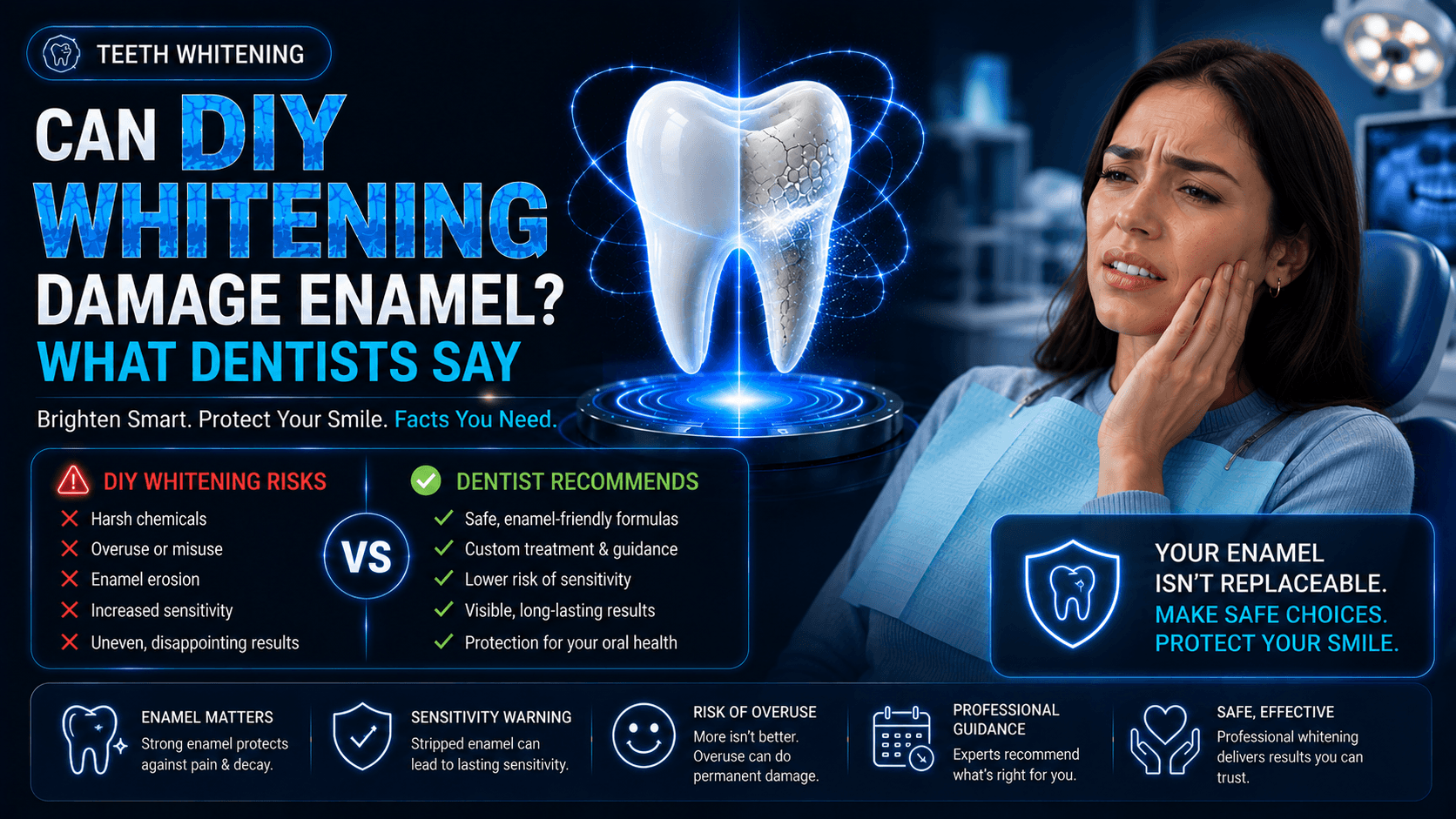
DIY whitening has become increasingly accessible through strips, gels, trays, pens and online bleaching products. Used appropriately, some whitening products can improve tooth colour without permanently damaging enamel. The problem begins when products are overused, applied incorrectly or used without understanding the condition of the teeth beforehand. For patients comparing home options with teeth whitening services nearby, the key issue is not simply how quickly a product can lighten teeth, but whether it can be used safely for that individual's oral condition.
Whitening is a chemical process. That means concentration, contact time, frequency and the health of the underlying tooth structure all matter.
Does Whitening Actually Remove Enamel?
Most conventional peroxide-based whitening treatments do not work by physically removing enamel.
Hydrogen peroxide or carbamide peroxide penetrates the tooth structure and breaks down coloured molecules responsible for discolouration. When an appropriate formulation is used correctly, this process is intended to change tooth colour rather than mechanically strip away enamel.
That distinction is important because some DIY approaches are not true bleaching treatments.
Highly abrasive powders, aggressive brushing techniques or acidic household substances can physically or chemically affect the tooth surface. Repeated exposure may contribute to enamel wear, surface roughness or increased sensitivity.
The Greater Risk Is Often Misuse
A whitening product may be designed for home use, but more product does not necessarily produce a better result.
Common problems occur when users:
- Leave whitening products on longer than instructed
- Apply treatments more frequently than recommended
- Combine several whitening products simultaneously
- Use poorly fitting trays that allow gel to contact the gums
- Continue treatment despite significant sensitivity
- Purchase products without clear ingredients or concentration information
- Use acidic or abrasive substances marketed as natural whitening methods
Patients seeking teeth whitening services nearby may benefit from professional assessment precisely because the dentist can evaluate whether whitening is appropriate before bleaching begins.
Why Tooth Sensitivity Can Develop
Sensitivity is one of the most frequently reported effects of tooth whitening.
Peroxide can diffuse through enamel and dentine towards the dental pulp. This can temporarily increase sensitivity, particularly to cold temperatures.
For many patients, this response is temporary. However, certain dental conditions can make sensitivity more likely or more intense.
These include exposed root surfaces, enamel wear, cracks, gum recession and existing dentine hypersensitivity.
If a tooth already has an underlying problem, whitening can make symptoms more noticeable without addressing their cause.
Persistent or severe pain should therefore not simply be treated as a normal part of whitening.
Acidic DIY Remedies Can Be More Problematic
Some home whitening advice recommends substances such as lemon juice, vinegar or other acidic ingredients.
From a dental perspective, this is concerning because repeated acid exposure can soften and demineralise enamel.
Once enamel is lost through erosion, the body cannot regenerate it in the same way that soft tissue heals. Continued erosion can eventually expose more underlying dentine, potentially making teeth appear yellower rather than whiter.
Abrasive materials present another issue. Excessive scrubbing may remove surface stains initially, but repeated abrasion can also wear tooth structure.
This is one reason professional teeth whitening services nearby should not be viewed as simply stronger versions of DIY whitening. Proper treatment begins by identifying what kind of discolouration is actually present.
Not Every Discoloured Tooth Should Be Whitened
A dark tooth does not always mean there is an external stain.
Discolouration can result from several factors, including:
- Age-related changes
- Previous dental trauma
- Internal changes within the pulp
- Existing restorations
- Developmental changes in enamel or dentine
- Certain medications taken during tooth development
- Surface staining from diet or tobacco
A single tooth that has become noticeably darker than surrounding teeth deserves particular attention. In some cases, colour change may be associated with previous trauma or loss of pulp vitality.
Repeated bleaching without determining the cause could delay appropriate dental assessment.
Whitening Will Not Change Existing Restorations
Crowns, veneers, fillings and bridges do not respond to peroxide whitening in the same way as natural enamel and dentine.
This can create an uneven cosmetic result.
For example, if visible front teeth contain tooth-coloured restorations matched to the current shade, whitening the surrounding natural teeth may leave those restorations appearing darker.
A professional evaluation can identify these limitations before treatment starts and help establish realistic expectations.
What Makes Professional Whitening More Controlled?
The clinical advantage of professional whitening is not simply access to whitening gel.
The process can include examination of the teeth and gums, assessment of existing restorations, identification of sensitivity risks and selection of an appropriate whitening approach.
When considering teeth whitening services nearby, patients should expect the treatment plan to account for oral health rather than focus exclusively on achieving the lightest possible shade.
Professional supervision can also help manage sensitivity and minimise unnecessary contact between whitening agents and the surrounding gum tissues.
Whitening Should Improve Colour, Not Compromise Tooth Health
DIY whitening does not automatically damage enamel, but incorrect products, excessive treatment, acidic remedies and aggressive abrasion can create avoidable problems. The safest approach begins with understanding why the teeth are discoloured and whether whitening is appropriate in the first place.
Dual Arc Dental provides professional teeth whitening as part of its cosmetic dental services in Schertz. Patients considering whitening can have their oral health assessed first and discuss an appropriate approach based on tooth condition, sensitivity and existing restorations.
Frequently Asked Questions
1. Can whitening strips permanently damage enamel?
When recognised whitening products are used according to their instructions, they are designed to change tooth colour without removing enamel. Overuse or inappropriate products may increase the risk of sensitivity and irritation.
2. Is baking soda safe for whitening teeth?
Baking soda has abrasive properties and may help remove some surface staining, but excessive or aggressive use can contribute to tooth surface wear. It should not replace professionally recommended oral care.
3. Why do my teeth hurt after whitening?
Whitening agents can temporarily increase dentine and pulpal sensitivity. If pain is severe, localised to one tooth or persists after treatment stops, dental assessment is advisable.
4. Can lemon juice whiten teeth?
Acidic substances such as lemon juice can erode enamel and are not an appropriate whitening method. Repeated acid exposure may permanently damage tooth structure.
5. Should I see a dentist before using a whitening product?
A dental assessment is particularly useful if you have existing sensitivity, dental restorations, gum recession, cavities, cracked teeth or unexplained discolouration. It can help determine whether whitening is suitable and what results are realistic.