

Can a Tooth Infection Spread? Warning Signs You Shouldn’t Ignore
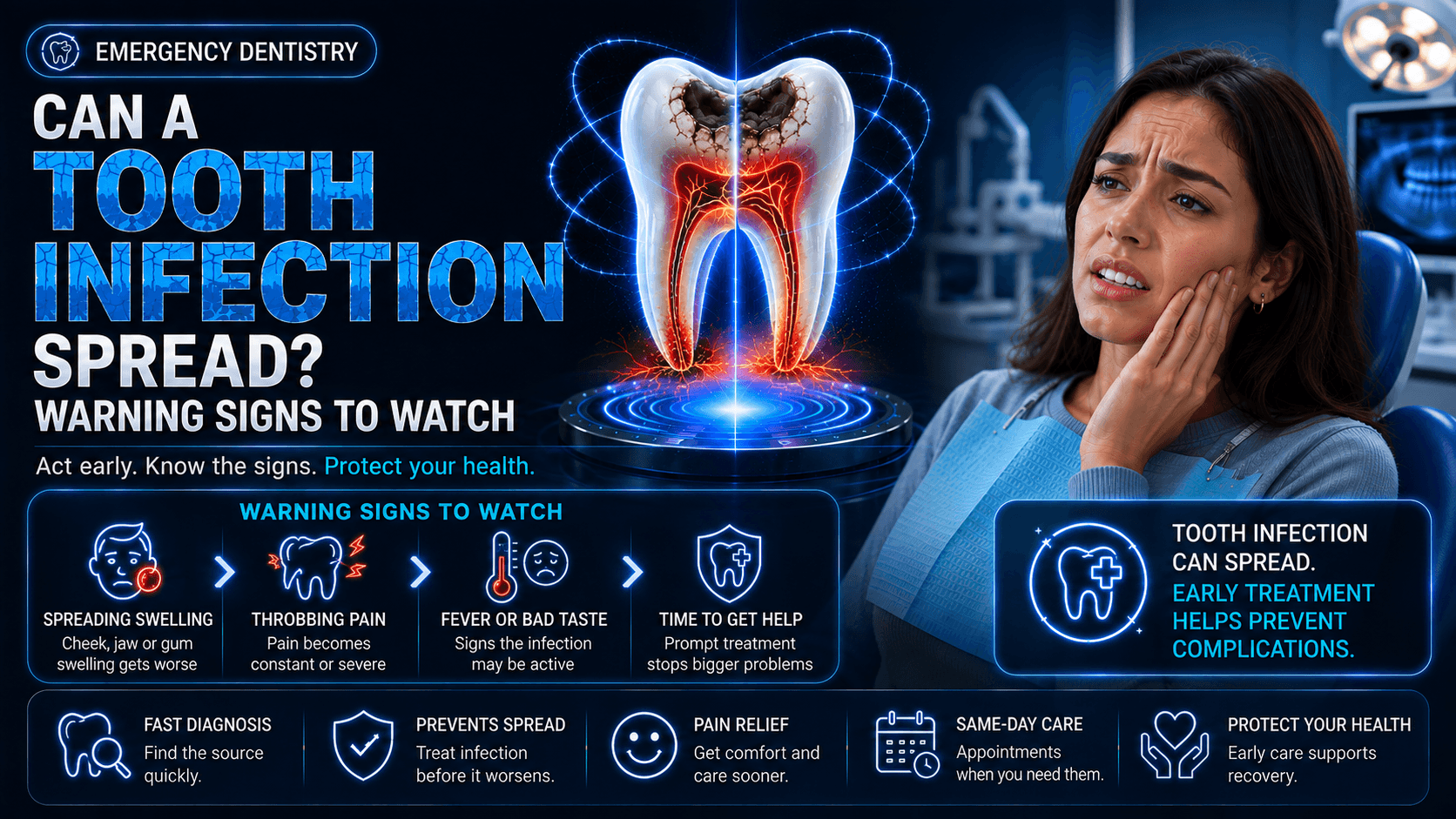
A tooth infection may begin in a very small area, but it does not necessarily remain confined there. Bacteria originating inside a severely decayed, damaged or infected tooth can extend into the tissues surrounding the root and, in more serious cases, spread through facial and neck spaces. This is why increasing swelling, fever or rapidly worsening symptoms should prompt assessment at an emergency dental clinic rather than waiting to see whether the infection settles.
The important issue is not pain alone. The location of swelling, speed of progression and presence of systemic symptoms can provide important clues about the severity of an infection.
How Does an Infection Get Beyond the Tooth?
A healthy dental pulp is protected by enamel and dentine. Deep decay, cracks, trauma or other structural damage can create a pathway through which bacteria reach this internal tissue.
Once the pulp becomes infected and loses vitality, bacteria can travel through the root canal system towards the end of the root. Infection may then enter the surrounding bone and soft tissues.
An abscess can develop when pus accumulates as part of the body's response to infection. Depending on where the affected tooth is located and the path of least resistance, swelling may appear around the gum, jaw, cheek or other facial tissues.
This progression is why an untreated dental infection is not simply a prolonged toothache.
Pain Is Not a Reliable Measure of Infection Severity
One common misconception is that a serious infection must cause extreme pain.
That is not always the case.
When the pulp is severely inflamed, pain can be intense. If the pulp subsequently becomes necrotic, nerve activity within the tooth may reduce. The original toothache can then become less noticeable even though bacteria remain present.
The infection may continue progressing around the root without the same level of dental pain.
A sudden reduction in pain should therefore not automatically be interpreted as healing, particularly if swelling, tenderness or drainage remains.
Warning Signs That Need Prompt Dental Assessment
A dental infection can present differently from one patient to another. Some remain relatively localised, while others progress more quickly.
Contacting an emergency dental clinic becomes particularly important when symptoms include:
- Increasing swelling around a tooth or gum
- Facial or jaw swelling
- Persistent throbbing dental pain
- Significant tenderness when biting
- Pus or drainage around the tooth
- An unpleasant taste associated with drainage
- Fever or chills
- Difficulty opening the mouth normally
- Feeling generally unwell alongside dental symptoms
These findings may indicate that infection is no longer limited to the internal tissues of the tooth.
When Does a Dental Infection Become a Medical Emergency?
Certain symptoms require a different level of urgency because infection may be affecting deeper anatomical spaces.
Immediate emergency medical attention is required if swelling begins interfering with breathing or swallowing. Rapidly expanding swelling involving the neck or floor of the mouth also requires urgent medical evaluation.
Other concerning features include substantial facial swelling, significant systemic illness or swelling extending towards the eye.
These symptoms should not be managed by waiting for a routine dental appointment.
The airway and surrounding structures take priority when an infection has progressed beyond a straightforward dental problem.
Will Antibiotics Stop a Tooth Infection?
Antibiotics have an important role in selected dental infections, particularly when there is evidence of spreading infection or systemic involvement. They are not, however, a universal substitute for treating the source.
If bacteria are contained within infected or necrotic pulp tissue, medication alone may not eliminate the underlying dental problem.
Definitive management may require:
- Root canal treatment to remove infected pulp tissue
- Drainage where clinically indicated
- Extraction when the tooth cannot be predictably retained
- Additional treatment according to the extent of infection
A dentist must determine which approach is appropriate after examination.
Repeatedly relying on antibiotics without addressing the dental source can allow the problem to recur.
What Happens During an Emergency Dental Examination?
The immediate objective is to determine where the infection originated and how far it appears to have progressed.
At an emergency dental clinic, assessment may include examination of the affected tooth, gums and surrounding facial tissues. The dentist may evaluate tenderness, swelling, tooth vitality and other clinical signs.
Dental radiographs can provide additional information about the roots and surrounding bone.
The dentist will also consider whether the tooth is restorable. A tooth with adequate remaining structure may have different treatment options from one that is severely fractured or extensively decayed.
This diagnostic stage is important because similar symptoms can arise from different dental conditions.
What Should You Avoid Doing at Home?
Home measures cannot remove an established infection from inside a tooth.
Do not attempt to puncture, squeeze or drain an abscess yourself. Doing so can injure surrounding tissues and does not address the source of infection.
Pain relief medication may temporarily reduce discomfort when used appropriately and according to its instructions, but symptom control should not be confused with treatment.
Continue gentle oral hygiene where possible and avoid chewing on the affected area while arranging professional assessment.
Early Treatment Matters When Infection Is Progressing
A localised dental infection may become more difficult to manage if bacteria spread into surrounding tissues. Increasing swelling, fever, drainage, restricted jaw opening or systemic symptoms should therefore change how urgently the problem is treated.
Dual Arc Dental provides emergency dentistry and treatment for dental infections in Schertz. If symptoms are worsening and you need an emergency dental clinic, the team can assess the source of the problem and determine an appropriate treatment approach.
Frequently Asked Questions
1. How do I know if my tooth infection is spreading?
Increasing facial or jaw swelling, fever, worsening tenderness, difficulty opening the mouth and feeling generally unwell can indicate progression and require prompt assessment.
2. Can a tooth infection spread without severe pain?
Yes. Pain may decrease if the dental pulp loses vitality, while infection can remain or progress into tissues surrounding the root.
3. Can a dental abscess heal by itself?
Symptoms may temporarily improve, particularly if an abscess drains, but the source of infection can remain and requires professional evaluation.
4. When should I go to hospital for a tooth infection?
Seek immediate emergency medical attention if swelling interferes with breathing or swallowing, spreads significantly into the neck or towards the eye, or is accompanied by serious systemic symptoms.
5. Does every infected tooth need to be extracted?
No. Some infected teeth may be treated with root canal therapy and restored. Extraction may be considered when the tooth cannot be predictably retained or another clinical factor makes removal appropriate.