

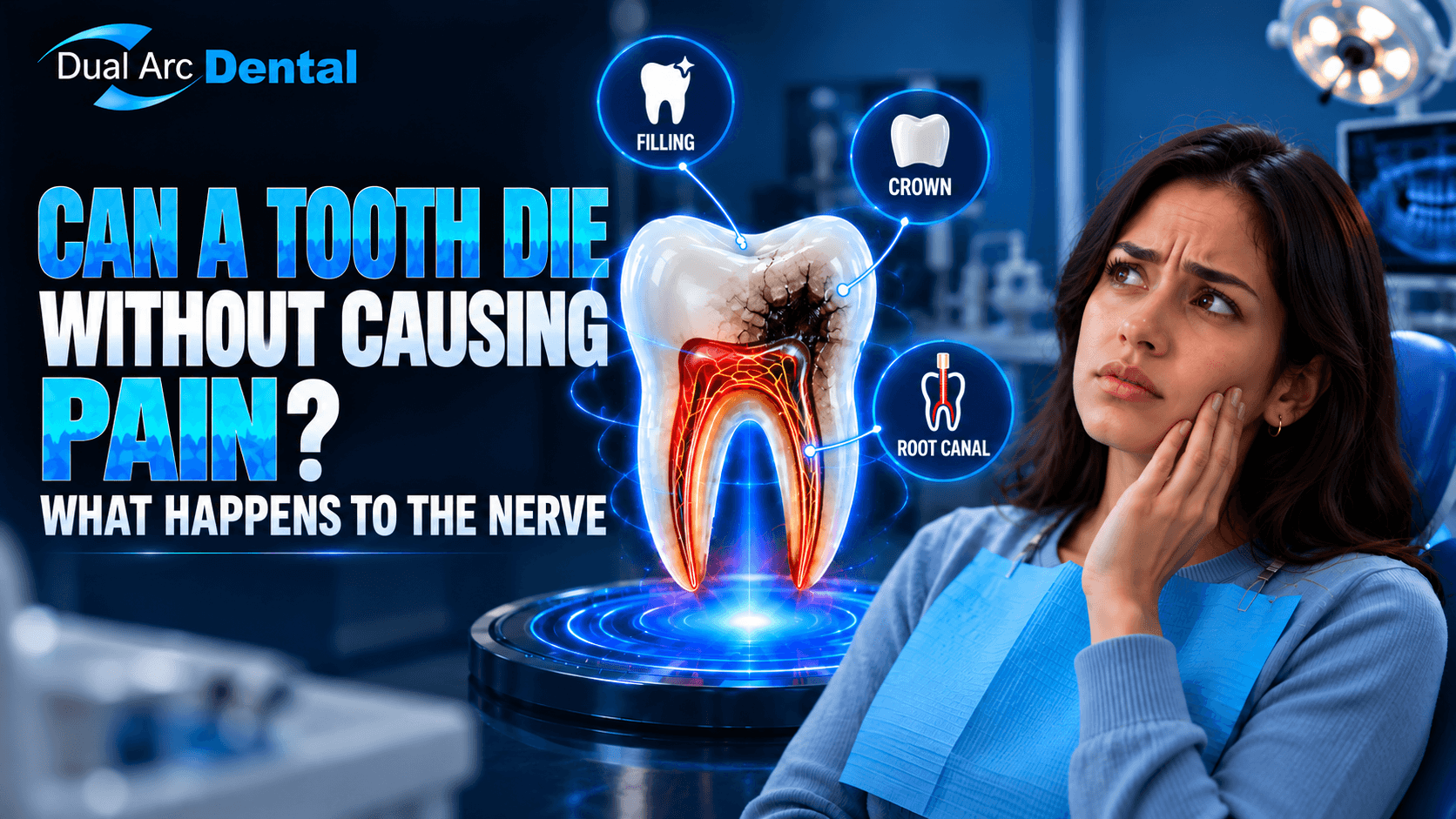
Can a Tooth Die Without Causing Pain? What Happens to the Nerve
Yes, an affected tooth can lose the health or function of the tissue within the tooth without being painful. But toothache is not the only warning sign. If a tooth is different in appearance, has been subjected to trauma or simply doesn't feel the same, an endodontist in Schertz, TX or a dentist may be able to determine what is going on in the interior of the tooth.
Many people naturally judge their dental health by how they feel. If nothing hurts, everything must be fine. Teeth do not always work that way. Changes affecting the nerve and other tissue inside a tooth can sometimes progress with surprisingly little discomfort.
What Do People Mean When They Say a Tooth Has “Died”?
A "dead tooth" is an everyday term rather than a precise diagnosis. It generally describes a tooth in which the soft tissue inside, known as the dental pulp, has lost its vitality.
Nerves and blood vessels are in the pulp. It is located within the hard outer layers of the tooth and is very important during the growth of the tooth.
Deep decay, cracks, repeated dental work or trauma may cause problems if the pulp is involved. They can occur rapidly or slowly in some instances.
That is one reason two people with problems inside a tooth may have very different experiences.
Why Might a Damaged Tooth Stop Hurting?
This is where dental problems can feel counterintuitive. A tooth that stops hurting has not necessarily recovered.
A simplified way to understand the process is:
- Initial irritation
- Changes inside the tooth
- Sensation may change
- The underlying problem may remain
Early irritation of the pulp can sometimes cause sensitivity or pain. As the condition inside the tooth changes, however, the nerve may no longer respond in the same way.
The person may then notice less discomfort or none at all.
It is easy to interpret that as improvement. But a reduction in pain by itself cannot confirm that the tooth is healthy. A dental assessment is needed to understand why the symptoms changed.
Can a Tooth Change Without You Feeling Anything?
Sometimes the clues are visual or connected to the tooth's history rather than pain.
Changes worth mentioning to your dentist can include:
- One tooth gradually becoming darker than the teeth around it
- A tooth that was previously injured, even if the injury happened years ago
- A chipped or cracked tooth that no longer feels sensitive
- Swelling or a small bump developing on the gum near a tooth
- An unusual taste or drainage around the area
- Previous discomfort that disappeared without an obvious reason
- A tooth that seems to respond differently to hot or cold compared with nearby teeth
None of these signs proves on its own that the pulp has died. Multiple dental conditions can result in the same changes.
The question is not whether it hurts, but whether something has changed with this tooth?
What Can the Color of a Tooth Tell You?
A darkening tooth may warrant attention especially if only one tooth is darkening.
After an injury, changes inside a tooth can sometimes affect its appearance. The tooth may gradually look grayish, darker, or simply different from neighboring teeth.
However, for discoloration there are numerous causes. Medications, restorations, aging, foods and drinks can also change the appearance of the teeth.
But color cannot be used to determine if the nerve is healthy.
A single tooth that changes color, especially after previous trauma, gives a dentist a reason to investigate rather than make assumptions based only on appearance.
What About an Old Injury You Almost Forgot?
So, picture getting a blow to the mouth as a teenager, playing a sport. After days of tooth pain, it was no longer an issue.
Years later, that same tooth begins looking slightly darker.
Previous trauma is an important concern as the consequences of an injury may not appear immediately. A tooth can also be injured by a fall, collision, sports injury or hard impact without breaking at the time.
This is why your dental history can be useful during an examination. An injury that seems insignificant now may provide important context for a change your dentist notices.
If you remember an old impact involving the affected tooth, mention it, even if it happened a long time ago.
Why Is Pain a Poor “All Clear” Signal?
Pain tells you something deserves attention. The absence of pain does not provide the opposite guarantee.
Some dental problems hurt intensely. Others develop quietly. And symptoms can change as the condition inside or around a tooth changes.
This creates a potentially misleading situation: someone experiences toothache, waits for it to settle, and assumes the problem is resolved because the pain disappeared.
Instead of using discomfort as the only measure, pay attention to the tooth as a whole.
If something looks unusual, previous pain has unexpectedly disappeared, or an old injury is causing concern, speaking with your dentist or an endodontist nearby can help determine whether further evaluation is appropriate.
You do not need to wait for severe pain before asking about a tooth.
How Can a Dentist Find a Problem That Doesn't Hurt?
A dental evaluation looks beyond what you can feel at home.
Your dentist may begin by asking about previous symptoms, injuries, dental treatment, and changes you have noticed. They can then examine the tooth and surrounding tissues and assess how it compares with neighboring teeth.
Depending on what they find, appropriate diagnostic tests or dental imaging may be used to gather more information about the tooth and surrounding structures.
The goal is to answer a few important questions:
- Is the tooth responding as expected?
- Is there evidence of damage or decay?
- Have the tissues around the tooth changed?
- Does the tooth require monitoring or treatment?
- Would assessment by another dental professional be appropriate?
The answer is not automatically a root canal simply because a tooth does not respond normally. Treatment depends on the actual diagnosis and condition of the tooth.
Don't Wait for a Tooth to Become Painful
A quiet tooth can still deserve attention.
At Dual Arc Dental, we assess the tooth itself rather than relying on pain alone to tell us what is happening. If you have seen discoloration, changes around an old injury, some unusual sensations or a tooth that no longer hurts for no reason, we can assess the area and talk to you about what the results are.
Frequently Asked Questions
1. Can a tooth really die without hurting?
Yes. Changes affecting the pulp can sometimes occur without obvious pain. Symptoms also vary depending on the tooth and what is happening inside or around it. A dental examination is needed to determine the condition of the tooth.
2. Does a dark tooth mean the nerve is dead?
Not necessarily. A tooth can change color for several reasons. However, a single tooth becoming darker, particularly after an injury, is worth discussing with a dentist.
3. Can an injury from years ago affect a tooth now?
It can. Dental trauma does not always produce immediate or obvious long-term symptoms. Tell your dentist about previous injuries involving the tooth, even if they happened years earlier.
4. Can a tooth have an infection without severe pain?
Some dental infections may not initially produce severe pain. Swelling, gum changes, drainage, an unusual taste, or other changes can also warrant assessment. Seek prompt dental care if you develop facial swelling, fever, difficulty swallowing or breathing, or rapidly worsening symptoms.
5. Should I see a dentist if my toothache suddenly disappears?
A disappearing toothache does not necessarily confirm that the underlying cause has been resolved. If you experienced unexplained or persistent tooth pain that suddenly stopped, it is reasonable to have the tooth evaluated.
6. How does a dentist know whether the inside of a tooth is healthy?
Dentists consider your symptoms and dental history, examine the tooth and surrounding area, and may use appropriate diagnostic tests or imaging when necessary. These findings together help determine what is happening and whether treatment or monitoring is needed.