
Team Dualarcdental June 10, 2026
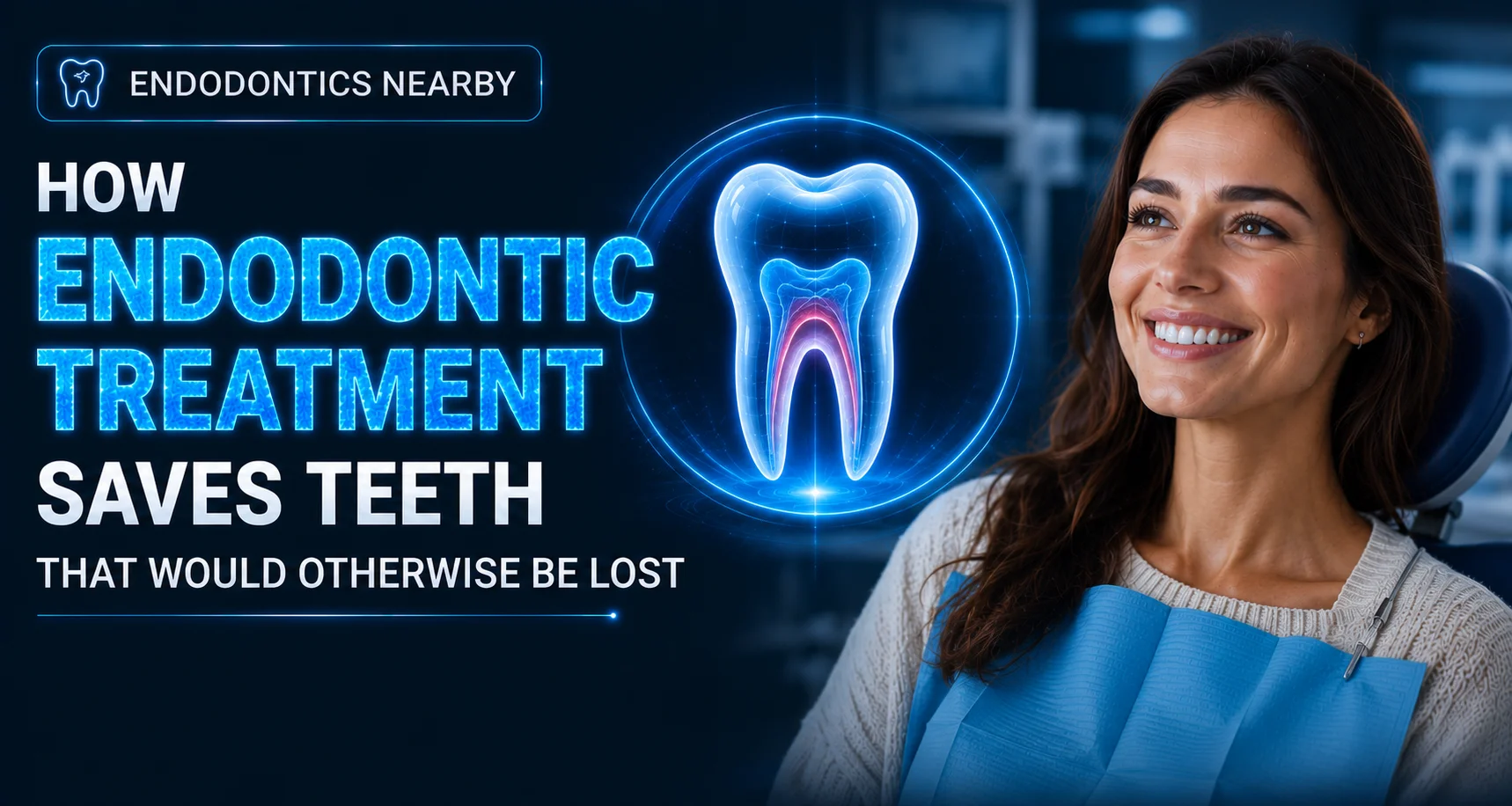
Endodontics is a word most patients have never said out loud before the day someone uses it on them. It just means treatment of the tooth's inner pulp, root canals being the most common version of it. If you've been told you need this kind of care and started searching endodontics nearby without fully knowing what you're looking for, that's normal. Almost nobody walks in already knowing the term.
What's worth understanding is what this branch of dentistry is actually built to do: keep teeth that would otherwise come out.
The Tooth Isn't As Solid As It Looks
Underneath the enamel sits a chamber of soft tissue, nerves, and blood vessels, called the pulp. It's what made the tooth feel pain or temperature as a kid. Once decay, a crack, or trauma reaches that chamber, the tissue inside can get infected, and infected pulp doesn't heal on its own. It either gets treated or it keeps spreading.
For a long time, the only answer to that was extraction. Pull the tooth, deal with the gap later. Endodontic treatment exists specifically to skip that step.
What The Treatment Actually Involves
The infected or damaged pulp gets removed. The inside of the root canal gets cleaned out and shaped. Then it's sealed, usually followed by a crown to protect what's left of the tooth structure above the gumline.
A few things that tend to surprise patients:
- The procedure itself doesn't cause the pain people associate with it, the infection already did that, before treatment even started
- Most cases finish in one to two visits, depending on how complex the tooth's root structure is
- The tooth, once treated and crowned, can function normally for decades in plenty of cases
- It's not limited to back molars; front teeth need this just as often after trauma or deep decay
Why Saving The Natural Tooth Matters More Than People Assume
Here's the part that doesn't get explained well enough at the chairside. Pulling a tooth doesn't end the story, it starts a new one.
Once a tooth is gone, neighboring teeth start drifting toward the space, slowly, but it happens. The tooth across from the gap, with nothing left to bite against, can start over-erupting. The jawbone underneath begins to resorb because it's no longer getting the stimulation a tooth root normally provides. None of this happens overnight, but all of it happens eventually if the gap sits unaddressed.
Which means the real comparison isn't root canal versus nothing. It's root canal versus extraction plus whatever replaces it later, a bridge or an implant, both of which usually cost more in the long run than the treatment that would've kept the original tooth in place.
When This Approach Genuinely Can't Save The Tooth
Not every tooth qualifies, and pretending otherwise would be dishonest. A tooth fractured below the gumline, cracked vertically through the root, or with so little structure left that a crown has nothing to grip onto, isn't a good candidate. Severe bone loss around the root can tip the decision the other way too.
In those specific cases, extraction isn't a failure of treatment. It's just that the damage was already decided.
What This Actually Comes Down To
Most teeth that look like a lost cause aren't. The pain that sends someone in convinced extraction is the only option is, more often than not, exactly the kind of pain that endodontic treatment is built to resolve.
If you've been told you might need this kind of care, or you're already typing endodontics nearby trying to figure out your next step, Dual Arc Dental in Schertz, TX provides endodontic treatment as part of routine care, not a last resort referral.
Call our clinic, and we'll tell you straight whether your tooth is worth saving.
FAQs
1. What is endodontic treatment?
Endodontic treatment focuses on the inside of the tooth, specifically the pulp and root canals. The most common endodontic procedure is a root canal, which removes infected or damaged tissue to help save the natural tooth.
2. Why would I need endodontic treatment?
You may need endodontic treatment if decay, infection, trauma, or a crack has reached the tooth's pulp. Common symptoms include persistent tooth pain, sensitivity to temperature, swelling, or signs of infection.
3. Is a root canal better than having the tooth extracted?
In many cases, yes. Preserving a natural tooth helps maintain proper chewing function, prevents neighboring teeth from shifting, and reduces the need for more extensive tooth replacement treatments later.
4. How long can a tooth last after endodontic treatment?
With proper care and a well-fitted crown when needed, a tooth that has undergone endodontic treatment can often remain functional for many years or even decades.
5. Can every damaged tooth be saved with endodontic treatment?
No. Teeth with severe fractures below the gumline, extensive root damage, advanced bone loss, or insufficient remaining tooth structure may not be suitable candidates. A dentist can evaluate whether saving the tooth is possible.