
Team Dualarcdental June 19, 2026
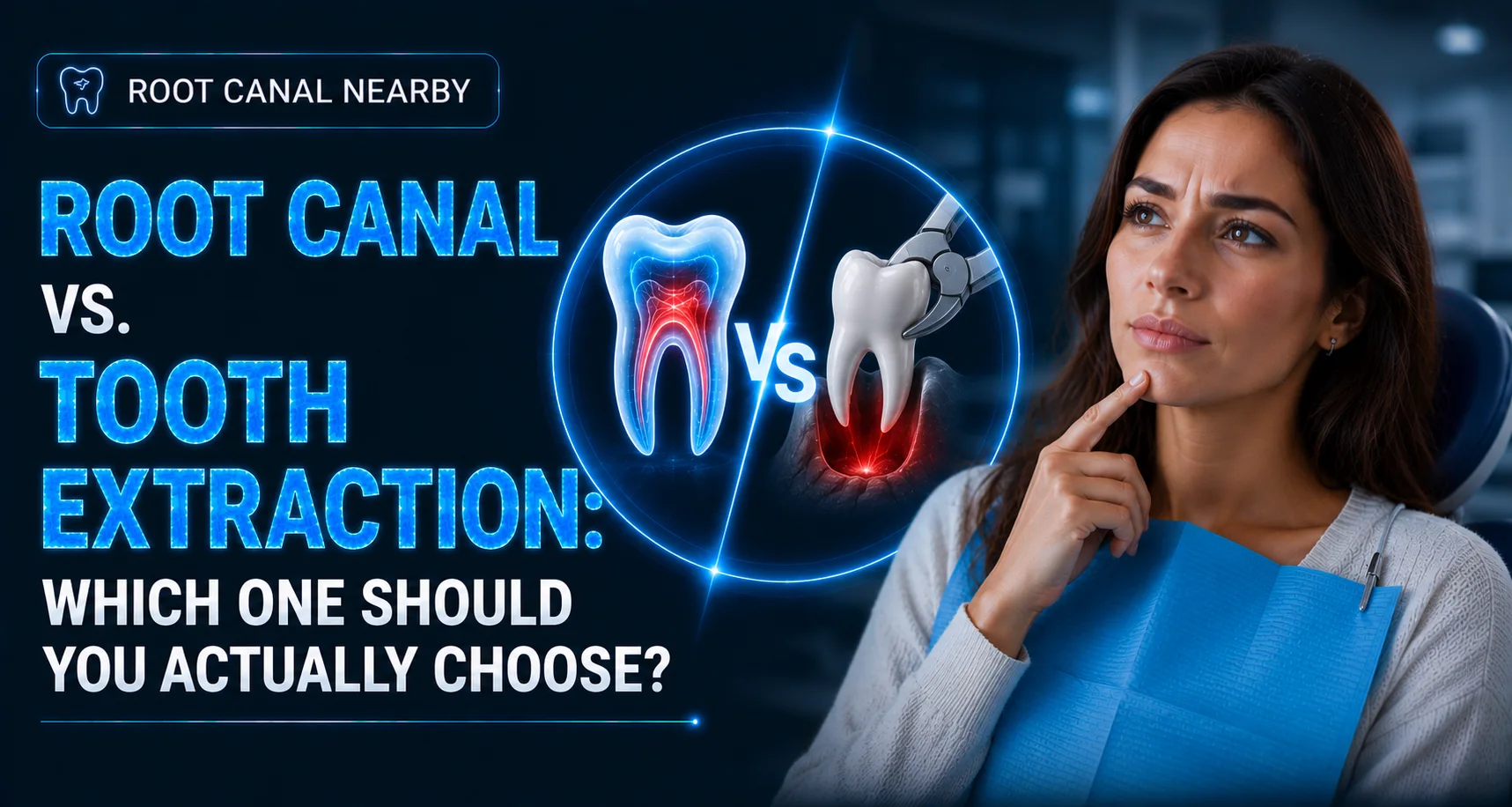
Save the tooth if you can. That's the bias almost every dentist has, and it's the right one most of the time, but "most of the time" isn't "always," and pretending otherwise does patients a disservice. If you've been told you need either a root canal or an extraction and you're stuck deciding, or quietly searching for a root canal nearby trying to figure out what you're actually signing up for, the honest answer depends on more than just cost.
Both options solve the same immediate problem: an infected or badly damaged tooth that can't be left alone. They solve it very differently.
What A Root Canal Actually Does
It removes infected tissue from inside the tooth, cleans the canal, seals it, and usually caps it with a crown afterward. The tooth stays. Your bite stays roughly the same. Nothing shifts.
The tradeoffs:
Takes one to two visits depending on the tooth and how complex the canal structure is
Costs more upfront than extraction, especially once a crown gets added
A treated tooth can sometimes need retreatment years later if infection returns, though this isn't the norm
Requires enough healthy tooth structure left to support a crown afterward, if there isn't enough, this option may not even be on the table
What you get in return is your actual tooth, doing its actual job, without needing a bridge or implant to fill a gap later.
What An Extraction Actually Does
Pull it. Simpler procedure, fewer steps, lower upfront cost. Sounds appealing until you think past the next six months.
Here's the part that doesn't get explained enough: removing a tooth leaves a gap, and gaps don't just sit there quietly. Neighboring teeth drift toward space. Opposing teeth, with nothing to bite against anymore, can over-erupt. Bone in that area starts to resorb because it's no longer getting stimulated by a tooth root.
Which means extraction often isn't actually the end of treatment. It's the start of a different decision:
- Do nothing, and accept the drift and bone loss that follows over time
- Get a bridge, which uses neighboring teeth as anchors
- Get an implant, which usually costs more than the root canal would have, once you add it all up
That last point surprises a lot of patients. The "cheaper" option upfront can end up being the pricier one once you factor in what comes after.
So When Does Extraction Actually Make Sense
Not ever. Sometimes it's genuinely the better call.
A tooth that's fractured below the gumline, cracked vertically through the root, or so badly decayed there's no structure left to save, root canal treatment isn't going to fix what's structurally gone. Severe bone loss around the tooth can also tip the decision toward extraction, since a saved tooth sitting in compromised bone may not last anyway.
In those situations, pushing to save the tooth just delays an outcome that was already decided by the damage itself.
The Question Worth Asking Before You Decide
Is the tooth actually savable, or are we extending its life by a year or two before extraction becomes inevitable anyway? That's the real question, and it's one an exam and X-ray can usually answer better than guessing based on pain alone.
If a dentist tells you a root canal is viable, that's generally not a coin-flip recommendation. It typically means the tooth has enough structure left to be worth keeping, and that matters more long-term than the extra cost or extra visit.
Where This Actually Lands
Save it when saving it makes sense. Pull it when the tooth itself has already decided the outcome. The mistake most people make isn't picking the wrong option, it's picking based on upfront cost alone, without weighing what happens to the gap afterward.
If you're weighing this decision and typing root canal nearby into your phone trying to figure out your options, Dual Arc Dental in Schertz, TX can take a look and tell you plainly whether your tooth is worth saving or better off extracted.
Call our clinic, and let's get an actual answer instead of a guess.
FAQs
1. Is a root canal better than a tooth extraction?
In many cases, yes. A root canal allows you to keep your natural tooth, which helps maintain proper chewing function, jawbone health, and tooth alignment. However, the best option depends on the condition of the tooth and surrounding structures.
2. When is a tooth extraction the better choice?
Extraction may be recommended when a tooth is severely fractured, extensively decayed, affected by advanced bone loss, or lacks enough healthy structure to support a long-term restoration.
3. What happens if I don't replace a tooth after an extraction?
Leaving a gap can lead to neighboring teeth shifting, changes in your bite, bone loss in the jaw, and potential difficulties with chewing and oral health over time.
4. Is a root canal more expensive than an extraction?
A root canal typically costs more upfront, especially when a crown is needed afterward. However, replacing an extracted tooth with a bridge or dental implant can make extraction the more expensive option in the long run.
5. How do dentists determine whether a tooth can be saved?
Dentists use examinations, X-rays, and an assessment of the tooth's structure, root condition, and surrounding bone support to determine whether root canal treatment is a viable long-term solution or if extraction is the better option.