
Team Dualarcdental December 05, 2025
When a tooth is severely damaged or infected, the decision of which treatment to choose can be very confusing. Many of the patients ask us whether the best option is to save the tooth with a root canal or a tooth extraction. Both treatments are standard in modern dentistry, and the decision is made depending on the condition of the tooth, your oral health goals, and comfort in the long run. Knowing how these alternatives work can help you make an informed decision with confidence.
Understanding Root Canal Therapy
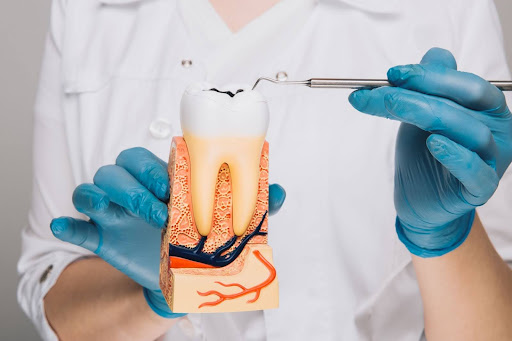
Root canal therapy aims at rescuing a natural tooth that suffers from infection or has been inflamed in the deep parts. In this operation, the infected pulp is taken out with detailed care, the inside of the tooth is cleansed and sanitized, and then it is sealed to prevent any subsequent issues. Generally, a protective crown is put later on to regain the tooth's strength and function.
According to our practice, the advantages of keeping the natural tooth are quite obvious. It makes normal chewing possible, is good for the dental health of the other teeth, and prevents alterations of the bite alignment. Nowadays, due to the progress of the technique and the use of anesthesia, the treatment is much more bearable than people imagine.
When a Root Canal Is a Good Choice
Root canal therapy is often recommended when:
- The tooth structure is largely intact
- Infection has not spread extensively to the surrounding bone
- The tooth can be fully restored with a crown
- You want to maintain your natural smile and chewing function
In such cases, tooth preservation turns out to be the most reliable and durable solution.
When Extraction Becomes Necessary
There are situations in which tooth extraction is the only option, despite our commitment to preservation. Examples include severe decay, advanced gum disease, vertical root fractures, or extensive trauma that makes the tooth irreparable.
We look at the decision for extraction from the middle of the treatment planning perspective. We do this only after closely examining the X-rays, bone support, and general oral conditions; thus, removal is our last resort. The purpose, however, is to stop the pain, infection, or damage to neighboring teeth in their tracks. Extraction is also the right choice when a tooth jeopardizes the rest of the mouth.
Situations Where Removal May Be Recommended
- Severe structural damage below the gum line
- Recurrent infection despite prior treatment
- Insufficient bone support around the tooth
- Crowding that affects overall alignment
In these situations, the removal of the tooth will not only alleviate the pain but also provide room for a more stable solution in the future.
Comparing Comfort, Recovery, and Daily Life
One concern about which many patients ask is the pain and the period of rest after the intervention. Both operations greatly respect the patients' comfort, and thus are far from being painful. Root canal therapy is usually followed by very mild pain, while extraction may cause a bit more extended healing period, especially if it involves bone or gum tissue.
What is going to be the case after the intervention is what really weighs most. A rescued tooth is a naturally functioning one, whereas a tooth that has been taken out should be replaced if we want to keep the efficiency of chewing and not have the teeth next to it shifting. That is why the planning after the operation is equally important as the first step.
Long-Term Oral Health Considerations
Besides the present moment and the following weeks, the decision about whether to save or get rid of a tooth will have an impact on your oral health as well. If a natural tooth is properly treated, its lifespan can be extended for quite a few years. In order to keep it healthy, one has to do good oral hygiene with regular brushing and flossing, and of course, going to the dentist for checks.
On the other side of the coin, once a tooth has been taken out, initiatives for substitution are done to ensure that the jawbone remains healthy and that the bite is balanced. Not doing anything about the gap can cause gradual bone resorption and even changes in the facial structure.
Cost and Value Over Time
In the beginning, root canal therapy and extraction may look like a cost that is about the same. But nevertheless, options for replacement that come after removal have the potential of increasing the spending over time. We always let the patient know about these factors so that they are not only aware of the immediate operation but also the whole picture over time.
We are here to enlighten you with ease and lead you through these thinking points. In the end, your choice would be in line with your needs for oral health and personal priorities.
A Decision Rooted in Care and Clarity
At Dual Arc Dental, we put the spotlight on thorough examination, open talk, and procedures that are good for oral wellness in the long run. Our advice, whether it is to save the tooth or proceeding for tooth extraction, is driven by the fact of what will keep your smile healthy and working for years to come. We also facilitate patients' comprehension of the related care options like root canal treatment, dental implants, dental crown, cosmetic dentistry, emergency dentist, and family dentistry, thus every step is a smooth integration into an entire oral health plan.