
Team Dualarcdental June 07, 2026
Short answer: no, not the way people imagine. The procedure itself is done under local anesthesia, so you shouldn't feel sharp pain while it's happening, what most patients describe is pressure, some vibration from the instruments, and a dull ache for a day or two afterward as the area settles. The pain people associate with root canals usually comes before the appointment, from the infected tooth itself.
That gap between expectation and reality is worth talking about, because it's the single biggest reason people put off treatment until they're in real trouble.
Where The Fear Actually Comes From
Nobody walks into a dental office afraid of root canals because they've had one. They're afraid because of what they've heard, a cousin's bad experience from fifteen years ago, a sitcom punchline, and a forum post written by someone who was clearly having a rough week. Dental anesthesia and rotary instruments have changed a lot since those stories got told.
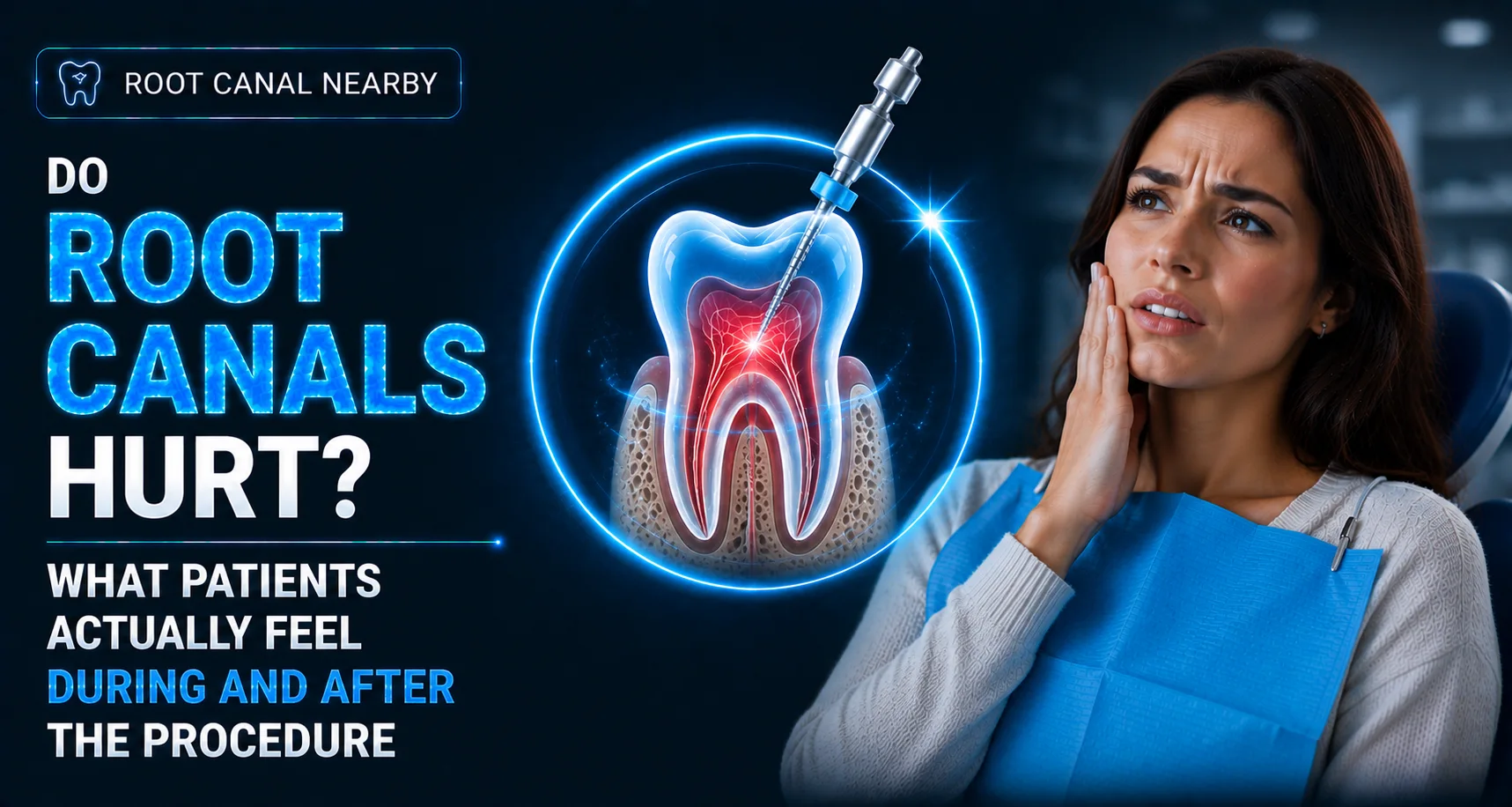
Here's what's actually going on inside your tooth before treatment: an infection has reached the pulp, the soft tissue packed with nerves and blood vessels. That's what's been throbbing. The procedure removes the infected pulp, cleans the canal, and seals it, which is closer to relief than to injury once you're past the numbing stage.
What You Feel During The Procedure
Most patients report:
- A pinch from the anesthetic injection, similar to a routine filling
- Pressure or mild vibration as the dentist works, but no sharp pain
- Numbness in the jaw and lip area that can last a couple of hours after
- Occasionally, slight discomfort if the infection was severe going in, which your dentist will manage with adjusted anesthesia
If at any point during treatment you feel actual pain rather than pressure, tell your dentist immediately. That's not something to grit your teeth through, it usually means more anesthesia is needed, and a good office will pause and address it on the spot.
What Happens In The Days After
This is where most of the lingering soreness shows up, and it's normal. Your tooth and the surrounding tissue went through a procedure, and inflammation takes a few days to fully calm down.
Typical post-treatment experience includes:
- Mild to moderate soreness for 24 to 72 hours, manageable with over-the-counter pain relievers
- Some tenderness when biting directly on that tooth, especially in the first day or two
- A temporary filling or crown that may feel slightly different from your natural bite until the permanent restoration is placed
Compare that to what you were dealing with before treatment, throbbing pain, sensitivity to hot or cold, sometimes swelling. Patients consistently describe the post-procedure ache as milder and more predictable than the infection that brought them in.
Why People Search For A "Root Canal Nearby" Instead Of Just Booking
There's a pattern we see often: someone's tooth has been bothering them for a week, sometimes longer, and instead of calling right away, they search "root canal nearby" late at night trying to gauge what they're walking into. That hesitation is understandable. It's also the reason small infections turn into bigger, more painful problems.
The honest truth is that waiting rarely makes things easier. An infected tooth doesn't heal on its own, and the longer it sits, the more likely the pain gets worse before it gets better. If you're already at the point of searching "root canal nearby" or wondering whether your tooth pain warrants a same-day visit, that's usually a sign it's time to come in rather than wait it out.
Conclusion
A root canal isn't the dramatic ordeal it's been made out to be. It's a routine procedure that ends pain rather than causing it, and most of what patients feel afterward is manageable, short-lived soreness rather than anything resembling what brought them in.
If you've been putting off care because of stories you heard secondhand, or you've typed "root canal nearby" into a search bar more than once this week, Dual Arc Dental in Schertz, TX is set up to see you quickly, including same-day appointments for tooth pain and infection. Dr. Viral Patel and Dr. Vaidehi Mehta handles endodontic treatment as part of routine care here, not as a last resort.
Call our Schertz clinic or book online, and let's get that tooth looked at before it gets worse.
FAQs
1. Does a root canal hurt during the procedure?
No. Root canal treatment is performed under local anesthesia, so most patients feel pressure or vibration rather than pain. The goal of the procedure is to remove the source of pain caused by infection.
2. What does a root canal feel like?
Patients typically experience numbness, light pressure, and occasional vibrations from dental instruments. If discomfort occurs during treatment, additional anesthesia can usually be provided.
3. How long does pain last after a root canal?
Mild soreness or tenderness is common for a few days after treatment, usually lasting between 24 and 72 hours. Most patients can manage this discomfort with over-the-counter pain medication.
4. Why is my tooth still sore after a root canal?
Some post-treatment soreness is normal because the surrounding tissues need time to heal. However, severe pain, increasing swelling, or symptoms that worsen over time should be reported to your dentist.
5. Can I wait to get a root canal if the pain comes and goes?
It's generally not recommended. Tooth infections do not heal on their own, and delaying treatment can allow the infection to worsen, potentially leading to more extensive dental procedures in the future.