
Team Dualarcdental June 04, 2026
A guy called in March holding his jaw shut with his hand, more or less, asking if he needed to come in "right now right now" or if morning would do. Couldn't tell from his voice alone. Asked him three questions, had him in the chair for twenty minutes. Knocked-out tooth, as it turned out, the kind of thing where twenty minutes is the difference between saving it and not.
Most people calling about dental pain aren't that clear-cut. They're somewhere between fine and panicking, unsure whether what they're feeling qualifies for emergency dental services or just a regular appointment slot next week. There's no shame in not knowing. Nobody teaches this.
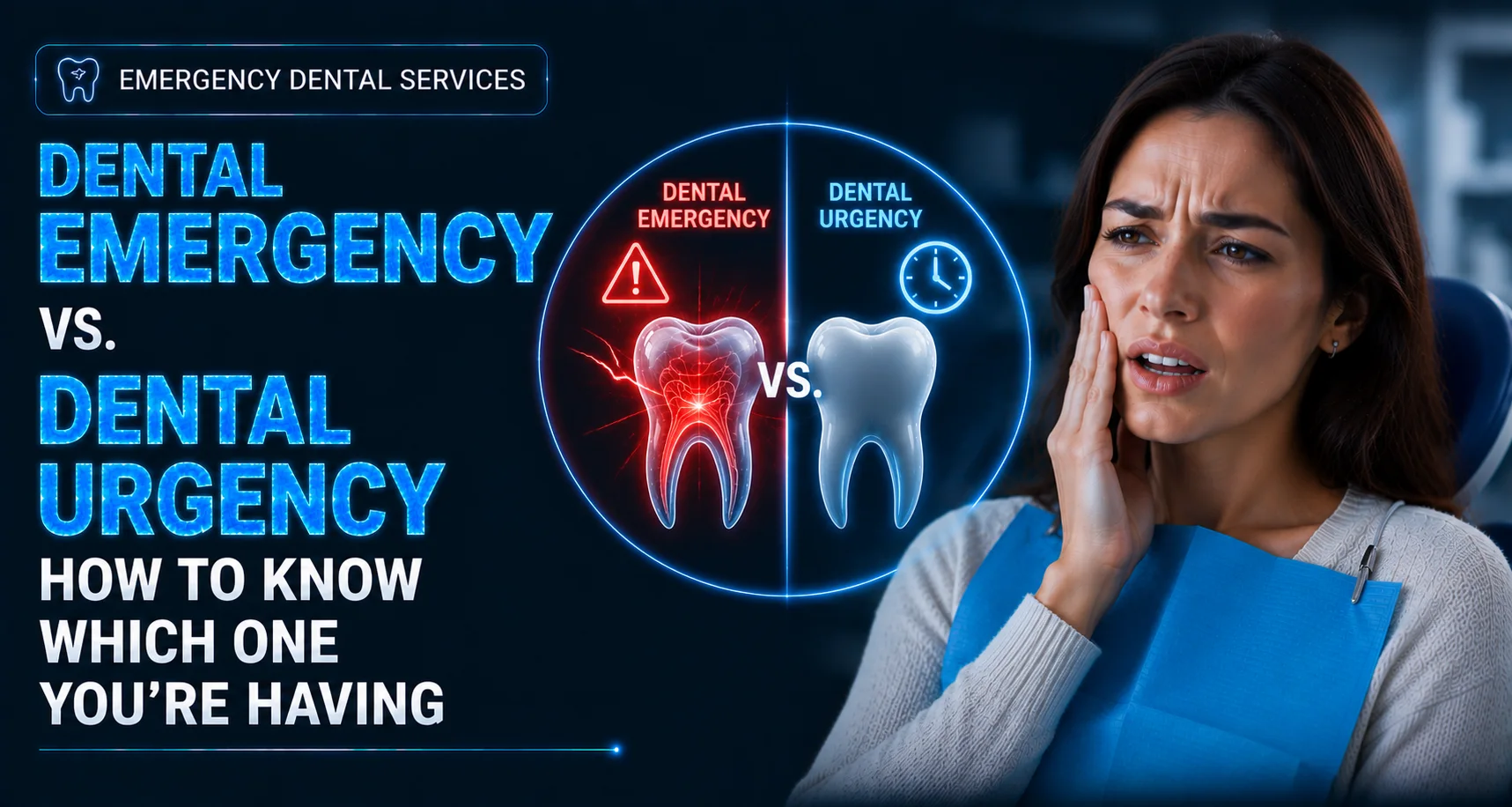
So, roughly: an emergency is something getting worse by the hour. An urgency is something uncomfortable that holds steady. That's most of the distinction, honestly, even though it sounds too simple to be useful.
The Stuff That Actually Can't Wait
Knocked-out tooth. Top of the list, no close second. The tissue and root surface start drying out almost immediately, and viability drops fast after the first half hour or so, sometimes faster depending on how it was handled in the meantime.
After that:
- Swelling near the eye, under the jaw, or down toward the neck. Not the same as a swollen cheek from a regular toothache, this pattern usually means infection is on the move, not sitting still.
- Bleeding that won't stop on its own after fifteen, twenty minutes of pressure.
- A tooth broken badly enough that you can see pink or feel a constant, sharp, can't-ignore-it pain. That's nerve exposure, not just a chip.
- Trauma to the jaw itself, especially if it doesn't sit right when you bite down.
None of these are "wait and see" situations. Call. Don't text the office, don't email, call.
The Stuff That's Miserable But Not Urgent In The Same Way
Lost filling with no real sensitivity attached. Chipped teeth that don't hurt. Gums that bleed a little when you floss two nights in a row. A crown that feels slightly loose but hasn't actually come off.
All annoying. None of them are racing against a clock the way the list above is. A same-day or next-day visit covers it, and honestly, rushing in after-hours for these usually just means paying more to sit in a waiting room for something that would've been kept till morning anyway.
Where It Actually Gets Confusing: Pain Itself
Pain lies. That's the blunt version. A dull ache from a cavity and a sharp one from an abscess both just register as "my tooth hurts" if you're not the one trained to tell them apart.
A few things tend to separate them:
- Pain bad enough to wake you up, or pain that shrugs off ibuprofen entirely, leans serious
- Pain plus a fever, plus swelling, plus a bad taste you can't place, that combination usually means infection, and infections don't politely wait for Monday
- A quick zing from something cold that fades in a few seconds, probably just sensitivity
- An ache that lingers thirty seconds or longer after hot or cold contact, that's often the nerve talking, and it's worth getting looked at sooner rather than later
When it's genuinely unclear, call and describe it instead of guessing alone in your kitchen at midnight, the way that guy in March almost did before deciding to dial first.
What This Actually Comes Down To
Most people overcorrect one direction or the other. Either everything feels like a crisis, or nothing does until it's undeniable. Both cost something, stress in one case, a bigger bill later in the other.
If you're not sure which one you're holding, Dual Arc Dental in Schertz, TX runs same-day emergency dental services for the genuine emergencies, and keeps room for the urgent-but-not-dire stuff too. Call, tell us what's going on, and we'll tell you how fast to get in.
FAQs
1. What is the difference between a dental emergency and a dental urgency?
A dental emergency typically involves symptoms that are worsening quickly or could lead to serious complications if not treated immediately, such as severe swelling, uncontrolled bleeding, or a knocked-out tooth. A dental urgency is uncomfortable but usually can wait for a scheduled appointment within a day or two.
2. Is a knocked-out tooth always considered a dental emergency?
Yes. A knocked-out tooth requires immediate attention because the chances of saving and reattaching the tooth decrease significantly the longer treatment is delayed.
3. When should facial swelling be treated as an emergency?
Swelling that extends toward the eye, jaw, neck, or is accompanied by fever, difficulty swallowing, or breathing problems should be evaluated immediately, as it may indicate a spreading infection.
4. Can a severe toothache be a dental emergency?
It can be. Tooth pain that is intense, wakes you up at night, does not respond to pain medication, or occurs alongside swelling, fever, or a bad taste in the mouth may require same-day dental care.
5. What dental problems can usually wait for a regular appointment?
Minor chips, a lost filling without pain, mild tooth sensitivity, or a slightly loose crown are often considered urgent rather than emergency situations. However, they should still be evaluated by a dentist to prevent further complications.