
Team Dualarcdental December 30, 2025
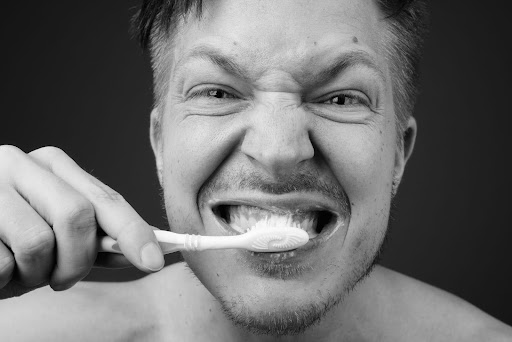
Brushing your teeth is a daily habit that should keep your smile healthy, but if you do it the wrong way, it can harm you slowly. The truth is that people often think that brushing harder will clean better, but in reality, by far the worst thing you can do to your teeth is to aggressively brush them. In reality, aggressive brushing often leads to long-term dental problems that may eventually require urgent dental care if ignored. Understanding the process of the damage and the reasoning of the injury is the motivation for the behavior change.
When Good Intentions Go Too Far
Most of the time, an aggressive toothbrush attack is evaluated by dental care providers when patients are diagnosed with excessive pressure, toothbrushes with hard bristles, and harsh movements of the brush made with a back-and-forth motion. This continuous friction gradually takes off the teeth's outer layer, rips the gum tissue, and inflames it. The process of damage is not quick, so people often don’t realize that they are engaging in this kind of behavior.
Dental professionals are increasingly confronted with patients whose complaints are related to tooth wear and receding gums. However, most of the sensitivity problems of teeth can be traced back to excessive brushing. Experts agree that technique is everything when it comes to cleaning one’s teeth.
How Teeth and Gums Are Affected
One of the earliest signs that may lead to the detection of an aggressive style of brushing is the loss of the gums near the teeth. As gums pull away from the teeth, the softer root surfaces become exposed. Not only are roots more sensitive, but they are also prone to tooth decay.
Other effects include:
- Thinning of tooth enamel, making teeth appear dull or yellow
- Increased sensitivity to hot, cold, or sweet foods
- Small notches near the gumline, known as abrasion lesions
In those cases where the problem is severe, discomfort caused by lost enamel will make people look for urgent dental care, especially when things such as eating or drinking become difficult.
Common Brushing Mistakes to Watch For
There are different ways that a person can unintentionally hurt their teeth. The most common habits include:
- Using a hard-bristle toothbrush
- Applying too much pressure while brushing
- Brushing immediately after acidic foods or drinks
- Brushing for too long or too frequently
The advice of dental professionals is to use soft bristled toothbrush with a small head, brushing the teeth and gums in a gentle circular motion, and not forgetting to always use fluoride toothpaste. Also, brushing twice a day for two minutes is enough to keep a healthy oral hygiene without doing any harm.
Correcting Damage and Preventing More
In case you have been guilty of aggressive brushing leading to harm, you can take measures to reverse the situation before it escalates. The procedures might involve the use of special toothpastes against sensitivity, fluoride applications, or even protective restorations for the parts that are open and exposed. Changing your brushing routine is a very important step not only to solve the existing problem but also to make sure that there won't be any new ones.
A Thoughtful Perspective on Long-Term Oral Care
At Dual Arc Dental, we believe that most problems related to improper oral hygiene can be avoided if one gets the right guidance and pays attention to the problem at an early stage. If there is discomfort, sensitivity, or visible wear, do not hesitate to go for urgent dental care, as it is the only way to get a professional evaluation and solution before the problem worsens. Oral health in the long run is dependent on tender daily routines and professional assistance, which is especially needed when one starts to experience erosion of the enamel, gingival recession, root sensitivity, dental abrasion, or the wrong use of a soft-bristle toothbrush.